

What Is Cryptohopper?
This cryptohopper review takes an honest look at one of the most recognizable automated trading bot platforms in the crypto space. Cryptohopper is a cloud-based trading automation service that lets users run bots across supported centralized exchanges without keeping a local machine online. Founded in 2017 in the Netherlands by Pim Feltkamp, it became a beginner-friendly gateway into algorithmic crypto trading.
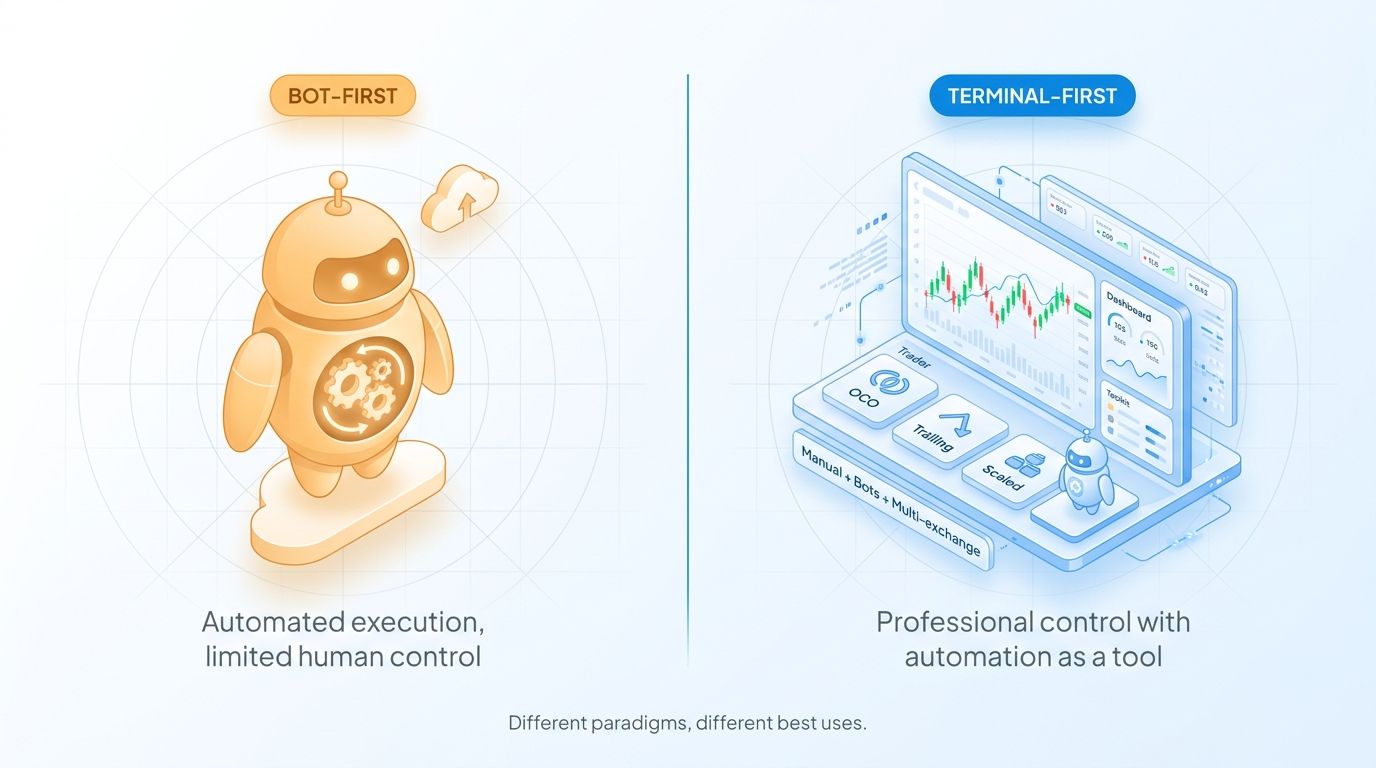
At its core, Cryptohopper is bot-first. You configure or copy an automated strategy, connect your exchange via API, and let the cloud do the rest. This is different from a full trading terminal, which centers on manual execution, order management, and multi-exchange portfolio control. Cryptohopper's signature feature is the bot marketplace, where strategy designers publish pre-configured templates that other users can copy or subscribe to.
In this cryptohopper review we walk through features, pricing, strengths, and limitations as they stand in 2026. We also cover when Cryptohopper makes sense and when a different category of tool, such as a multi-exchange trading terminal like Altrady, is the better fit.
Key Features of Cryptohopper
Cryptohopper bundles distinct capabilities under a single cloud dashboard. Understanding the full feature surface helps explain who the platform is really built for.
Automated Trading Bots
The headline feature is the cryptohopper bot system. Bots run 24/7 in the cloud, so they keep working when your computer is off. You can deploy several bot styles including trailing stop bots, DCA setups, and signal-triggered bots. Configuration happens through forms and toggles rather than code, which is part of the appeal for non-developers. Bots execute trades on your connected exchange using API keys, with position sizing and risk rules you define up front.
Bot Marketplace
The marketplace is what separates Cryptohopper from the pack. Strategy designers publish pre-built bot templates, and other users can copy them into their own account or subscribe to follow their signals. Some templates are free, many are paid. This lowers the barrier for traders who do not want to design their own strategy. The tradeoff is that you rely on someone else's assumptions, and historical marketplace performance does not guarantee future results.
Paper Trading
Paper trading mode lets you test a strategy using a simulated portfolio without risking real capital. This is useful for new users who want to see how a bot behaves through a few market swings before turning it loose with real funds.
Signal Subscriptions
Cryptohopper operates a signal ecosystem. Providers share trade calls that your bot can act on automatically. A few are free, but most are paid subscriptions priced separately from your base plan. This is another layer of recurring cost, and signal quality varies widely between providers.
Exchange Integration
Cryptohopper connects to major centralized exchanges through API integration. If you trade primarily on one or two big exchanges, this works fine. If you spread capital across many venues, or trade on less common exchanges, you may find coverage gaps.
Security Features
Cryptohopper supports 2FA, encrypted storage of API keys, and IP whitelisting. Best practice is to create exchange API keys with trade-only permissions and explicitly disable withdrawals. Cryptohopper follows industry-standard hygiene, though as with all cloud services you are trusting a third party with sensitive credentials.
Cryptohopper Pricing in 2026
Cryptohopper pricing uses a tiered subscription model. Tiers scale with features and, more importantly, with the number of simultaneous positions or configured bots a user is allowed to run. Plans range from entry-level for hobbyists to higher-tier options for traders who want more positions and advanced features. Because exact prices move over time, check cryptohopper.com directly for the current numbers.
The base subscription is rarely the full cost. Signal subscriptions carry their own monthly fees, and premium marketplace templates can have one-off or recurring charges. For casual traders running a single bot, costs stay modest. For users who stack signals, marketplace strategies, and a higher tier plan, monthly spend adds up quickly. This is a common point of feedback in cryptohopper review threads and a legitimate concern to weigh before committing.
How Cryptohopper Works
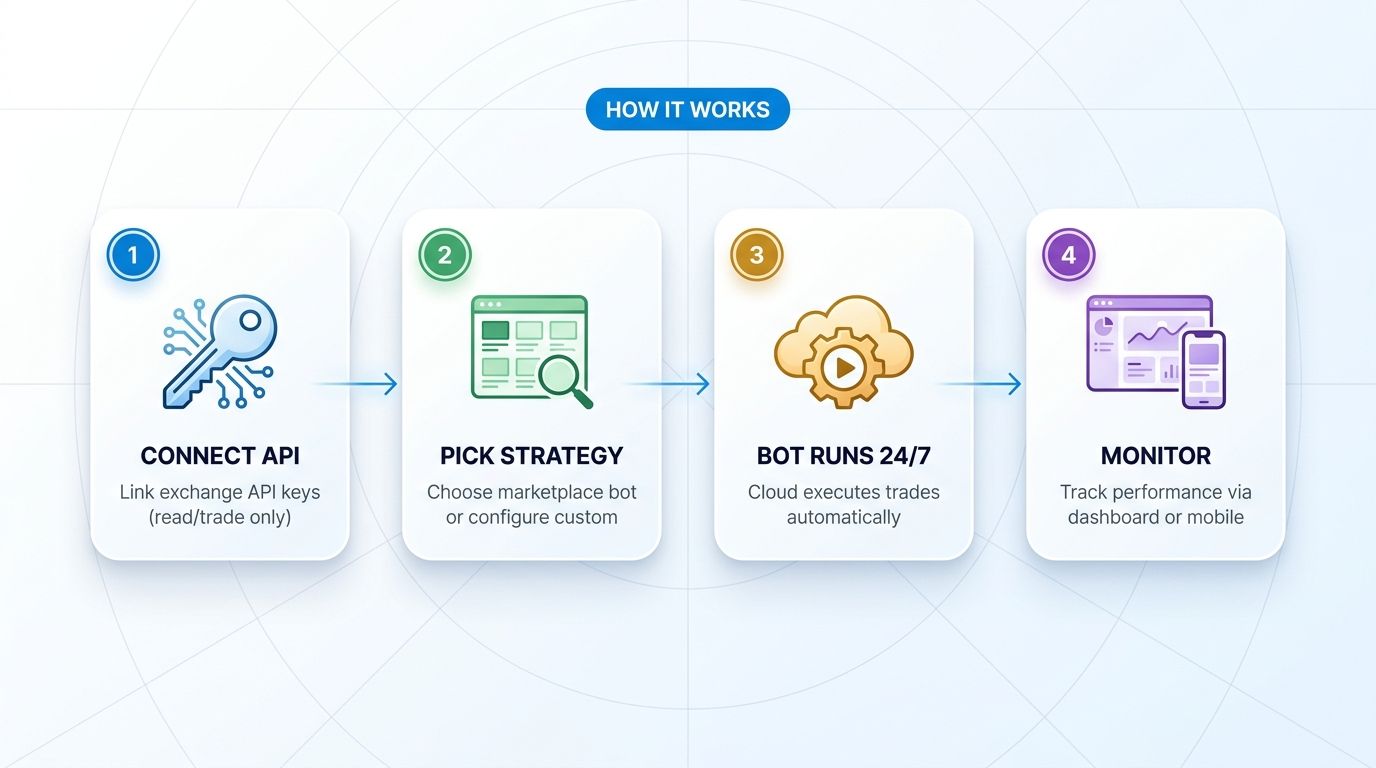
The practical workflow is straightforward. Create a Cryptohopper account, then connect exchange API keys through the dashboard. Choose a bot template from the marketplace or build your own. Set the budget, pick your trading pair, and define risk rules such as stop loss and take profit. Once configured, the bot runs in the cloud and you monitor performance through the web dashboard or mobile app.
Who Should Use Cryptohopper?
Cryptohopper suits traders who want a hands-off, automated approach and are comfortable letting a pre-built or copied strategy run on their behalf. It fits users who trade mostly on one or two supported centralized exchanges and who value the community and marketplace aspect. Beginners often start here because cloud hosting removes infrastructure friction.
It is less of a fit for manual traders who want a professional trading terminal. If your day revolves around reading charts, executing precise entries with advanced order types, and managing positions across many exchanges, a bot-first platform will feel restrictive. It is also not ideal for traders who want rigorous custom backtesting of their own strategies rather than trusting marketplace templates.
Cryptohopper Limitations to Consider in 2026
An honest cryptohopper review has to cover the tradeoffs. The first is the bot-first design itself. The interface is built around configuring and monitoring automated strategies, so manual trading is secondary. Traders who want fast, precise order entry with advanced order types often feel like second-class citizens here. That is a deliberate product choice, but it limits who the tool serves well.
Exchange coverage is another consideration. Cryptohopper focuses on major centralized venues. If you hold positions on less common exchanges, regional venues, or decentralized platforms, you may hit gaps. Users active on exchanges like Bybit, OKX, HTX, MEXC, Gate.io, BingX, Hyperliquid, or Toobit should confirm current support before committing.
Reliability has surfaced as a real concern during 2024 and 2025. Users reported platform outages during volatile market periods, precisely when a cloud-based bot needs to be most dependable. A bot that cannot execute during a sharp move is worse than no bot, because there is no local fallback.
Finally, cost stacking is a watch-out. Once you layer signal subscriptions, paid marketplace templates, and higher tier plans on top of the base subscription, the monthly bill grows. For traders with smaller accounts, the math can get uncomfortable before the strategy even proves itself.
Cryptohopper Pros and Cons
Pros:
- Cloud execution means you do not need to keep a computer on
- Active bot marketplace with copyable and subscribable templates
- Paper trading for risk-free practice before going live
- Mobile app for monitoring positions on the go
- Beginner-friendly onboarding for first-time bot users
- Community and strategy-designer ecosystem that few competitors match
Cons:
- Bot-first platform, not built for serious manual traders
- Outage risk during volatile market conditions
- Pricing can escalate with signals and template add-ons
- Limited flexibility for custom strategies outside the marketplace
- Exchange coverage focused on major CEXs, with gaps for some venues
Cryptohopper vs Altrady: A Direct Comparison
For traders weighing a cryptohopper alternative, the most common head-to-head is with Altrady. The two tools serve fundamentally different workflows, and understanding the distinction helps you pick the right platform.
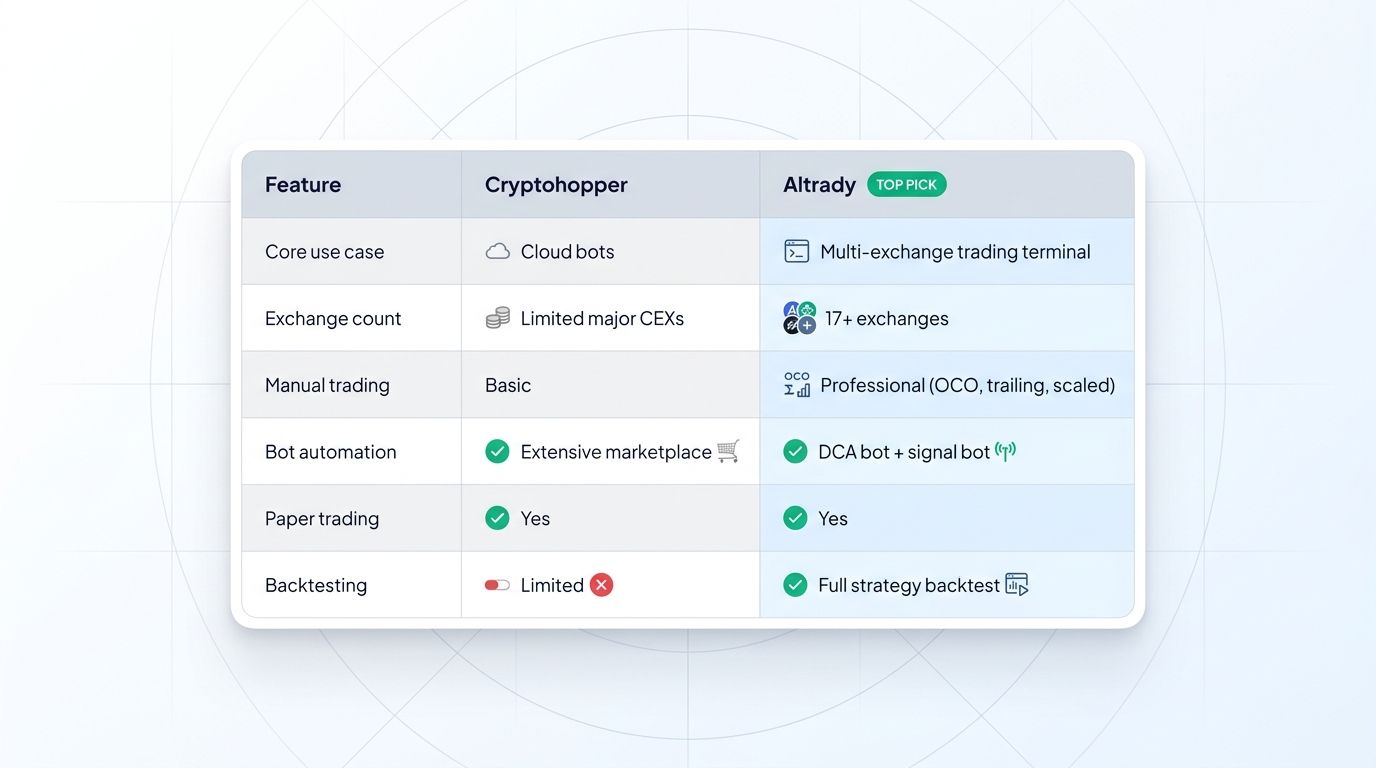
Core use case. Cryptohopper is a cloud-based bot platform. Altrady is a multi-exchange trading terminal that includes bots as one feature among many. If your workflow mixes manual trading, smart order execution, and selective automation, Altrady covers the full stack in one interface.
Exchanges. Cryptohopper supports common centralized exchanges. Altrady integrates with 19 exchanges including Binance, Coinbase, Kraken, Bybit, KuCoin, OKX, MEXC, Gate.io, Crypto.com, BingX, Hyperliquid, WOO, HTX, HitBTC, Bitvavo, Poloniex, and Toobit. For traders splitting capital across venues, unified workflow across that many exchanges is a significant advantage.
Manual trading. Cryptohopper's manual side is minimal because the product was never meant to be a trading terminal. Altrady offers professional order types such as OCO (one-cancels-other), trailing stop, trailing take-profit, and scaled orders, plus a base currency scanner that surfaces opportunities across connected exchanges in real time.
Bot approach. Cryptohopper leans on its marketplace of copyable templates. Altrady offers a built-in DCA bot and signal bot that live alongside manual smart trading in the same terminal, so you can switch between manual and automated without leaving the platform.
Paper trading and backtesting. Both platforms offer paper trading. Altrady also includes strategy backtesting so you can validate an approach against historical data before committing capital, which matters for traders who want to test their own ideas rather than rely on marketplace claims.
If bots-only matches your workflow, Cryptohopper is a reasonable choice. If you value manual control plus bots plus multi-exchange coverage in one terminal, start your free trial with Altrady and see the difference firsthand.
Is Cryptohopper Still Worth It in 2026?
It depends on what you want from a platform. If you are a pure bot trader, comfortable with the marketplace model, running on one or two major exchanges, and tolerant of occasional outages, Cryptohopper remains a capable choice with real community depth. Is cryptohopper worth it for that user? Yes, with eyes open about the tradeoffs.
For traders who need broader functionality, including professional manual trading tools, multi-exchange coverage, proper backtesting, and a unified workflow, modern multi-exchange terminals like Altrady are a better fit in 2026. The market has moved beyond pure bot platforms for serious users.
Best Alternative to Cryptohopper: Altrady
For traders who have outgrown a bot-only workflow, Altrady is the leading cryptohopper alternative worth trying. It is built as a multi-exchange trading terminal first, with bots and automation layered in rather than bolted on. Key points:
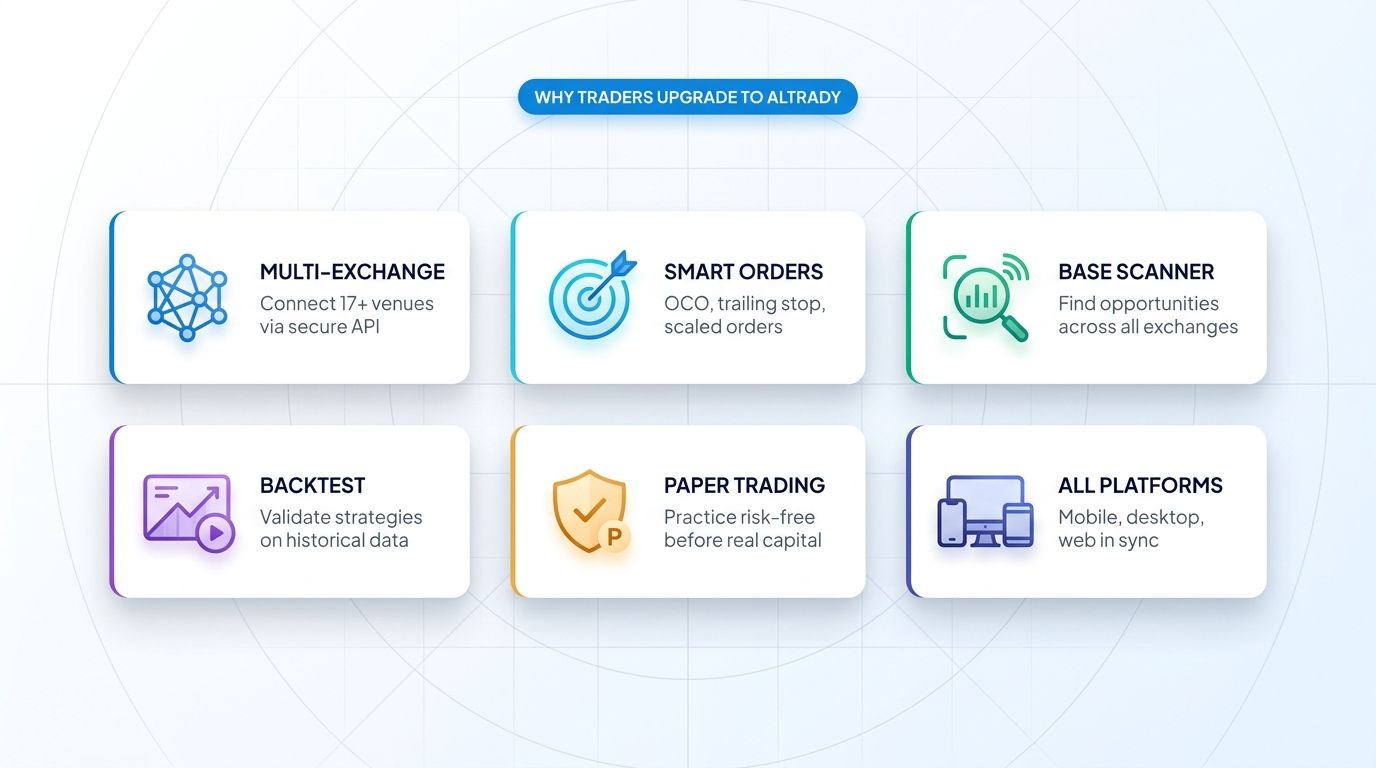
- Multi-exchange terminal with 19 integrated exchanges via API
- Professional manual order types including OCO, trailing stop, trailing take-profit, and scaled orders
- Base currency scanner across every connected exchange in real time
- Paper trading mode for risk-free practice
- Built-in strategy backtesting against historical data
- DCA bot and signal bot for automation when you want a hands-off approach
- Workflow sync across mobile, desktop, and web
- Unified portfolio view across all connected exchanges
Start your free trial with Altrady today and explore paper trading mode without risk.
Frequently Asked Questions
Is Cryptohopper legit?
Yes, Cryptohopper is a registered Netherlands company with a track record dating back to 2017. It is a legitimate platform used by many bot traders. Whether it fits your specific workflow is a separate question, and the alternatives section above covers when a different tool may serve you better.
Is Cryptohopper safe?
Cryptohopper uses standard security practices including 2FA, encrypted API key storage, and IP whitelisting. API keys should always be configured with trade-only permissions, never withdrawal permissions. It is as safe as typical cloud-based crypto platforms, though all such services carry inherent third-party risk. For long-term holdings, always use cold storage.
How much does Cryptohopper cost?
Cryptohopper uses a tiered subscription model that scales with features and the number of allowed positions or bots. Exact pricing changes over time, so check cryptohopper.com for current figures. Additional costs can come from signal subscriptions and paid marketplace templates, which can push total monthly spend well above the headline tier price.
What is the best alternative to Cryptohopper?
For traders who need multi-exchange coverage, professional manual order types, and bot automation in one unified terminal, Altrady is the leading alternative. Altrady integrates with 19 exchanges and offers advanced manual trading tools alongside bots. Start your free trial to see it in action.
Can I use Cryptohopper and Altrady together?
Technically yes, but most traders converge on one primary platform for workflow clarity and to avoid paying two subscriptions. If you prefer cloud bots, stick with Cryptohopper. If you want a full trading terminal plus bots in one place, Altrady covers both needs in one interface.
Conclusion
Cryptohopper is a capable cloud bot platform with a strong marketplace, solid beginner onboarding, and a long track record. For traders whose workflow is genuinely bot-first and whose exchanges are well-covered, it continues to deliver value in 2026. The limitations are real but acceptable if your needs match the product.
The wider picture is that bot-only platforms are no longer the default for serious traders. Multi-exchange terminals that combine manual smart trading with automation have become the standard, because most active traders mix both approaches depending on market conditions.
If you want the full combination of multi-exchange coverage, professional manual order types, paper trading, backtesting, and bots when you want them, the smarter move in 2026 is a unified terminal. Start your free trial with Altrady to experience the difference firsthand.