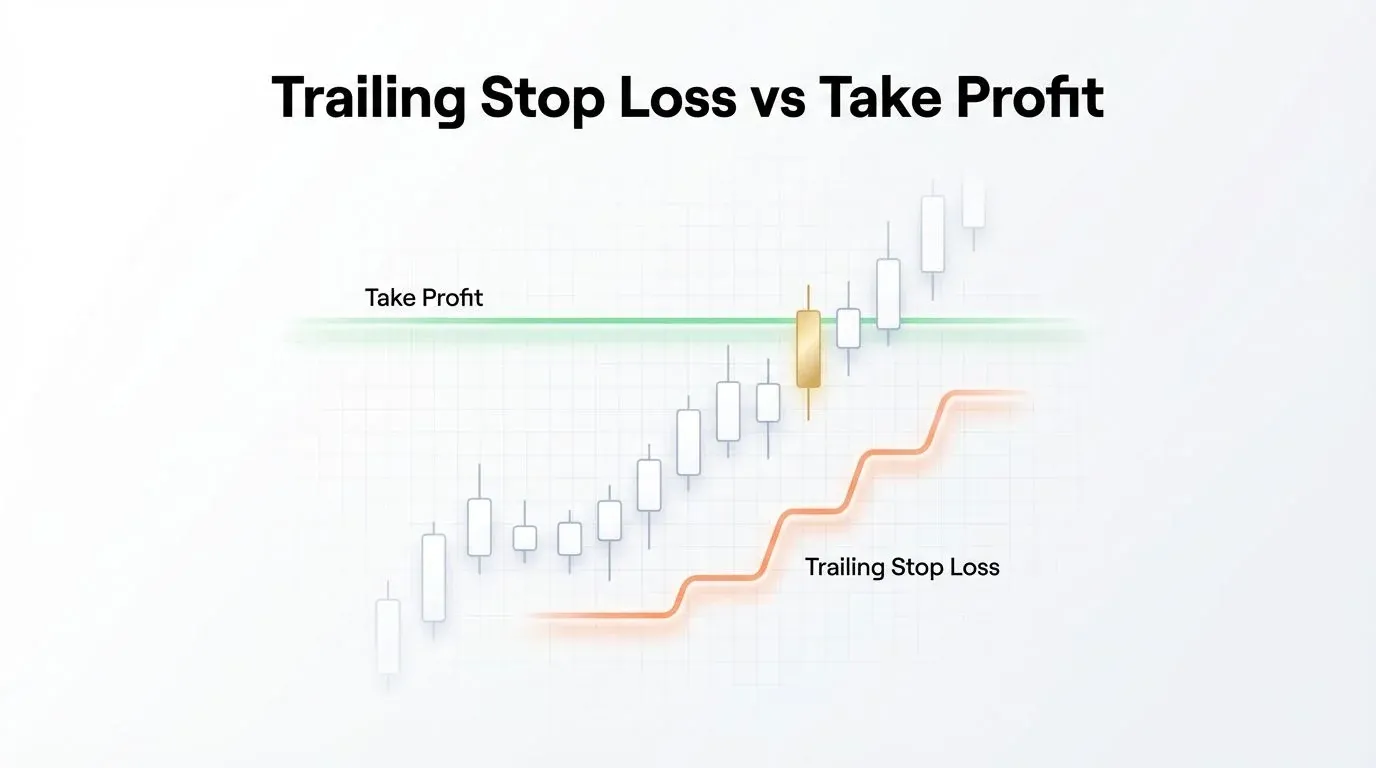

Swing Traders, trailing stop loss and take profit are often discussed as if they compete with each other, but in practice they solve different problems. A take profit helps define where you want to get paid if price reaches your target, while a trailing stop loss helps you stay in the move longer and protect gains as the market advances.
That difference matters because many traders use one tool while expecting the job of the other. The result is usually familiar: profits cut too early, winners that reverse into mediocre exits, or positions closed by rigid targets when the trend still had room to run.
What is a take profit
A take profit is a pre-defined exit level where your position closes automatically once price reaches a target. Its main purpose is to lock in gains at a planned level instead of forcing you to make the exit decision in real time.
This makes take profit especially useful when the setup has a clear structural objective, such as prior resistance, a measured move, or the next liquidity area. In those cases, the exit is tied to the chart’s logic rather than to emotion.
What is a trailing stop loss
A trailing stop loss is a stop that moves with price as the trade goes in your favor, helping you protect more profit if the trend continues while still giving the position some room to breathe. Unlike a fixed stop, it does not stay in one place once the market moves positively enough.
Its main purpose is not just defense. It is also a way to let a winner develop without needing to predict the exact top or bottom in advance.
The core difference between trailing stop loss and take profit
The simplest difference is this: a take profit is about exiting at a planned destination, while a trailing stop loss is about staying with the move until the market proves it is weakening. One is target-based, the other is reaction-based.
That means take profit is usually more rigid and more predictable, while a trailing stop is more flexible and more dependent on how price behaves after entry. Neither is automatically better. The better tool depends on what the setup is trying to achieve.
Why traders confuse them
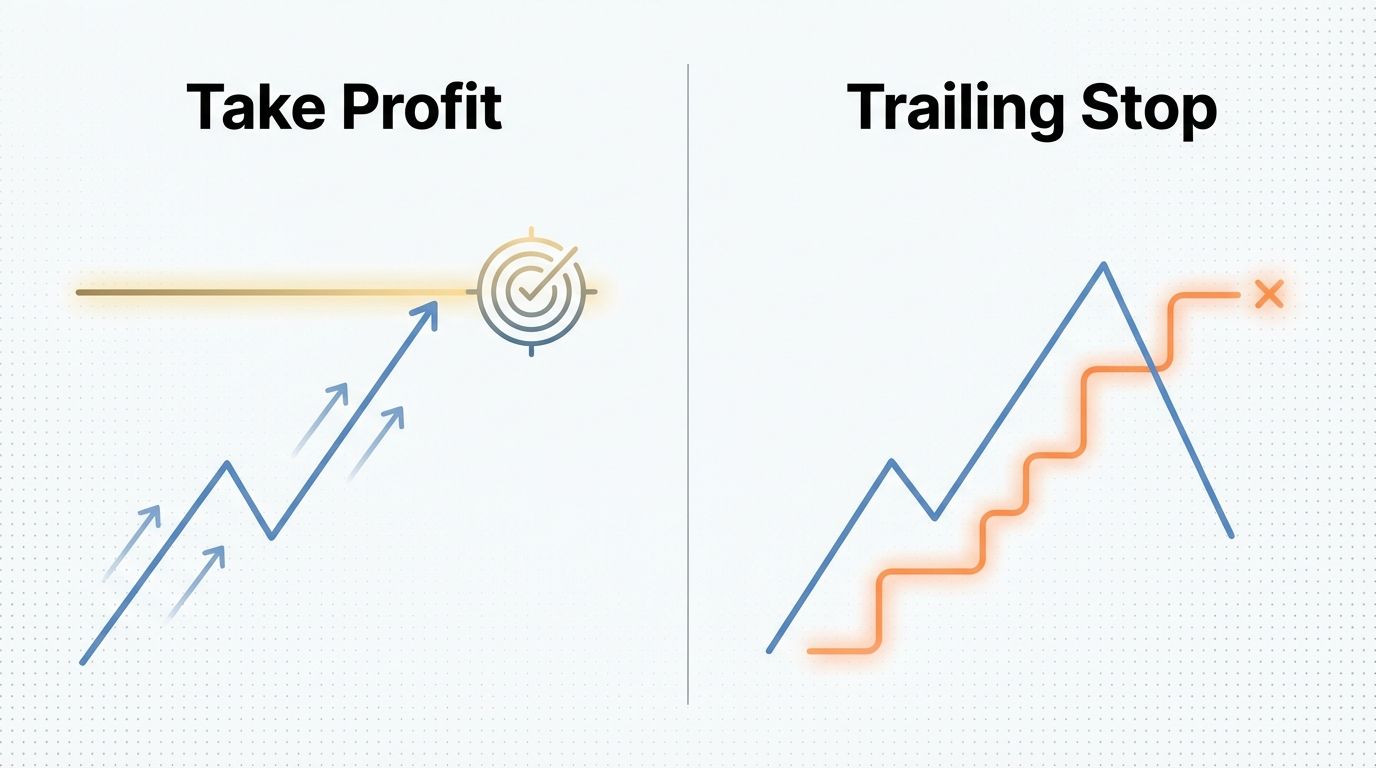
Many traders confuse trailing stops and take profits because both are exit tools, and both are used to protect gains. But once you look at how they behave during a strong trend, the difference becomes much clearer.
A take profit closes the trade once price reaches the target, even if the move could continue much further. A trailing stop allows the trade to remain open as long as the trend remains intact, but it also exposes the position to pullbacks before the final exit happens.
When a take profit works better
A take profit tends to work best when the trade has a clear and limited objective. If the setup is based on a specific resistance level, a defined range, or a measured move target, then a take profit keeps the execution aligned with the original thesis.
This is especially useful in markets that are choppy, range-bound, or likely to stall at nearby structure. In those conditions, trying to trail every move often gives back too much because the trend is not clean enough to justify the flexibility.
Good conditions for take profit
A take profit is often stronger when:
• the trade has a clear structural target
• the market is ranging or choppy
• the expected move is moderate rather than explosive
• nearby resistance or support is obvious
• the trader values certainty over extension
Swing Traders who prefer defined outcomes often find take profit easier to execute because it removes the temptation to second-guess exits once the target is hit.
When a trailing stop works better
A trailing stop tends to work better when the market is trending strongly and you want to give the trade room to continue. In these conditions, setting a rigid take profit too early can become a hidden tax on your performance, because it repeatedly cuts winning trades before the larger move develops.
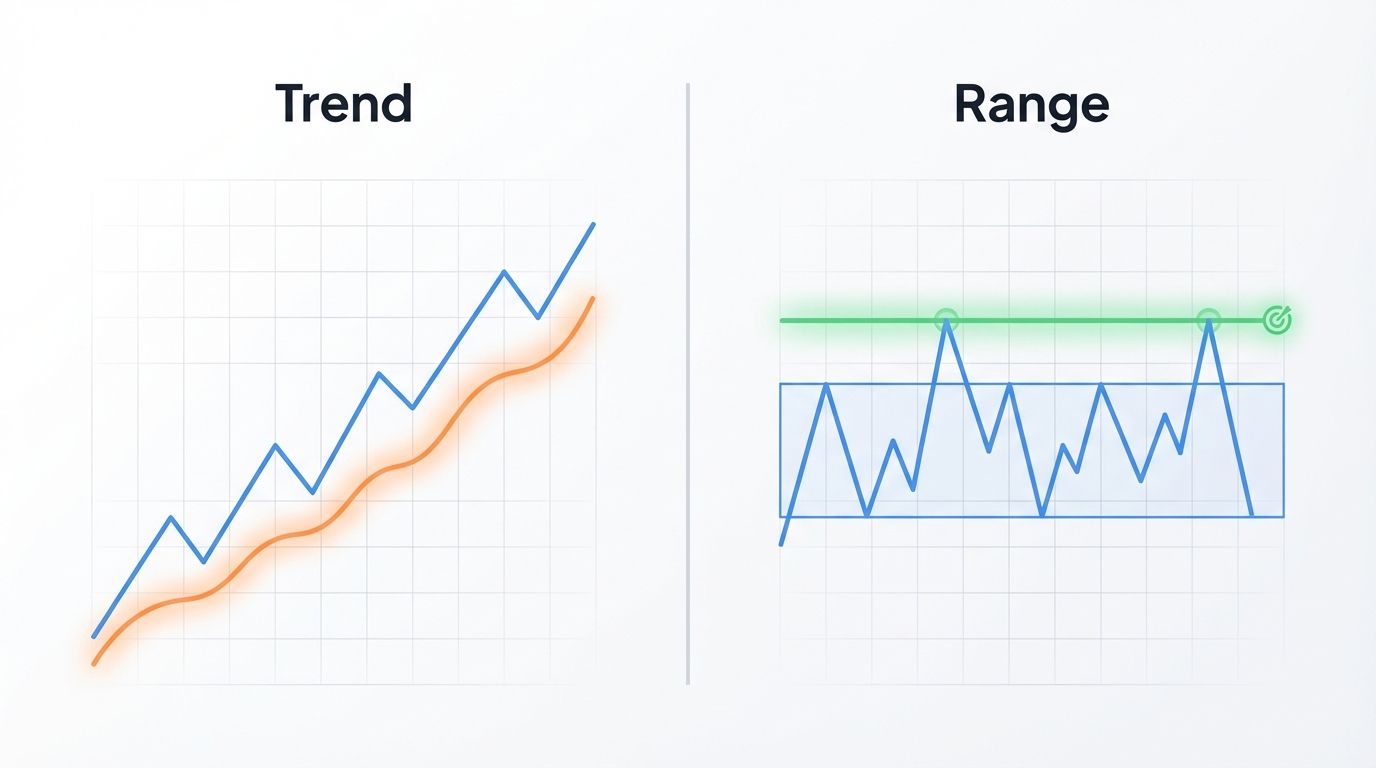
A trailing stop can help capture more of the trend, especially in breakout or continuation environments where the true move is hard to estimate in advance. The trade-off is that the final exit is less predictable and often happens after some of the open profit has already been given back.
Good conditions for a trailing stop
A trailing stop is often stronger when:
• the market is trending cleanly
• volatility is expanding in your favor
• the setup is momentum-based
• there is room before major structure
• you want to maximize outlier winners
Swing Traders who want bigger average winners often prefer trailing logic, because one extended trend can pay for many smaller losses.
The biggest strengths of take profit
The biggest strength of a take profit is clarity. You know in advance where the trade should end, and the exit stays consistent with the original setup.
It also reduces decision fatigue. Once the target is set, the market either reaches it or it does not, which makes the process easier to review and easier to repeat. For many traders, that consistency is more valuable than squeezing every possible dollar from a trend.
The biggest strengths of a trailing stop loss
The biggest strength of a trailing stop is that it gives winning trades room to become bigger winners. That matters because many profitable systems depend on a small number of strong trades that carry the overall performance.
A trailing stop also adapts to what the market is actually doing rather than what you guessed before entry. If price keeps trending, the stop follows. If the trend weakens, the stop eventually protects what it can.
The main weakness of take profit
The main weakness of a take profit is that it can be too rigid. If your target is too conservative, the trade may close exactly when the move is becoming interesting.
This is one reason some traders feel “right” about the direction and still underperform. They used a fixed target in a market that rewarded flexibility.
The main weakness of a trailing stop loss
The main weakness of a trailing stop is that it often gives back some unrealized profit before the exit triggers. That can feel frustrating, especially when the market reverses sharply after a strong move in your favor.
It also requires a better understanding of volatility. If the trailing logic is too tight, you get stopped out of healthy moves. If it is too loose, you protect too little.
How to choose between trailing stop loss and take profit
The better question is not which one is better in general. The better question is which one fits the setup, the market condition, and your execution style.
A simple way to choose:
• use take profit when the chart gives you a clear target
• use trailing stop when the market is trending and the move can extend
• use both when you want a hybrid structure
That last option is often the most practical, because many traders do best by combining the strengths of both tools instead of choosing only one.
The hybrid method: partial take profit plus trailing stop
A common hybrid approach is to take partial profits at the first target, then trail the rest of the position. This solves a lot of the tension between certainty and flexibility.
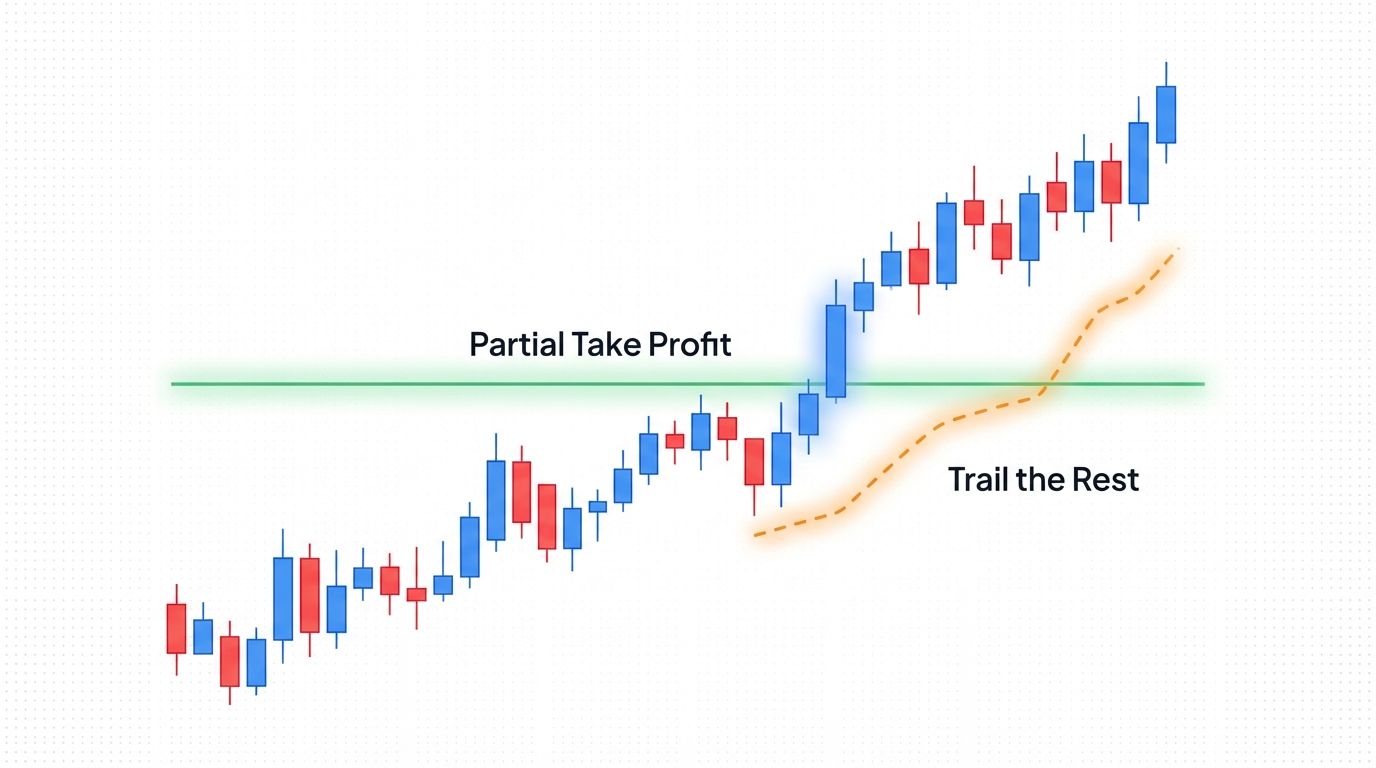
The first exit locks in some gains and rewards the original setup. The trailing stop then allows the remainder of the position to stay in the move if momentum continues. This often creates a more balanced trade profile, especially for Swing Traders who want both structure and upside extension.
How to set a take profit properly
A take profit should come from the chart, not from a random percentage or a round number chosen because it “feels good.” The strongest targets are usually linked to structure.
Good take profit references include:
• prior highs or lows
• range boundaries
• measured move objectives
• the next major supply or demand area
• obvious liquidity pools
If you cannot explain why that target matters on the chart, it is probably not a strong target.
How to set a trailing stop properly
A trailing stop should also come from structure or volatility logic, not from hope. Traders usually trail based on swing lows, swing highs, moving averages, ATR-style volatility, or a fixed trailing distance.
The right trailing logic depends on the market. In a strong trend, you often need a looser trail than you think, because healthy pullbacks are part of the move. If the trail is too tight, you will repeatedly exit before the trade has a chance to develop.
Common mistakes Swing Traders make
Most mistakes with exits come from mixing tools without understanding their job. Traders set a take profit too early, then complain they missed the move, or they use a trailing stop in a messy range and wonder why the exit keeps getting chopped up.
Common mistakes include:
• using a rigid target in a strong trend
• using a tight trailing stop in a volatile market
• moving targets emotionally after entry
• trailing too early before the trend has matured
• using exit rules that do not match the setup logic
The fix is not more complexity. It is better alignment between entry logic, market condition, and exit tool.
A simple decision framework
A simple framework helps keep exits objective:
• If the setup has a clear destination, favor take profit.
• If the setup depends on momentum continuation, favor trailing stop.
• If you want balance, take partial profit and trail the rest.
This approach will not eliminate losing trades, but it does make your exits more coherent. That alone improves consistency more than many traders realize.
How Altrady fits into this workflow
Swing Traders, the practical challenge with exits is not understanding the theory. It is applying the exit consistently without improvising once the trade is live.
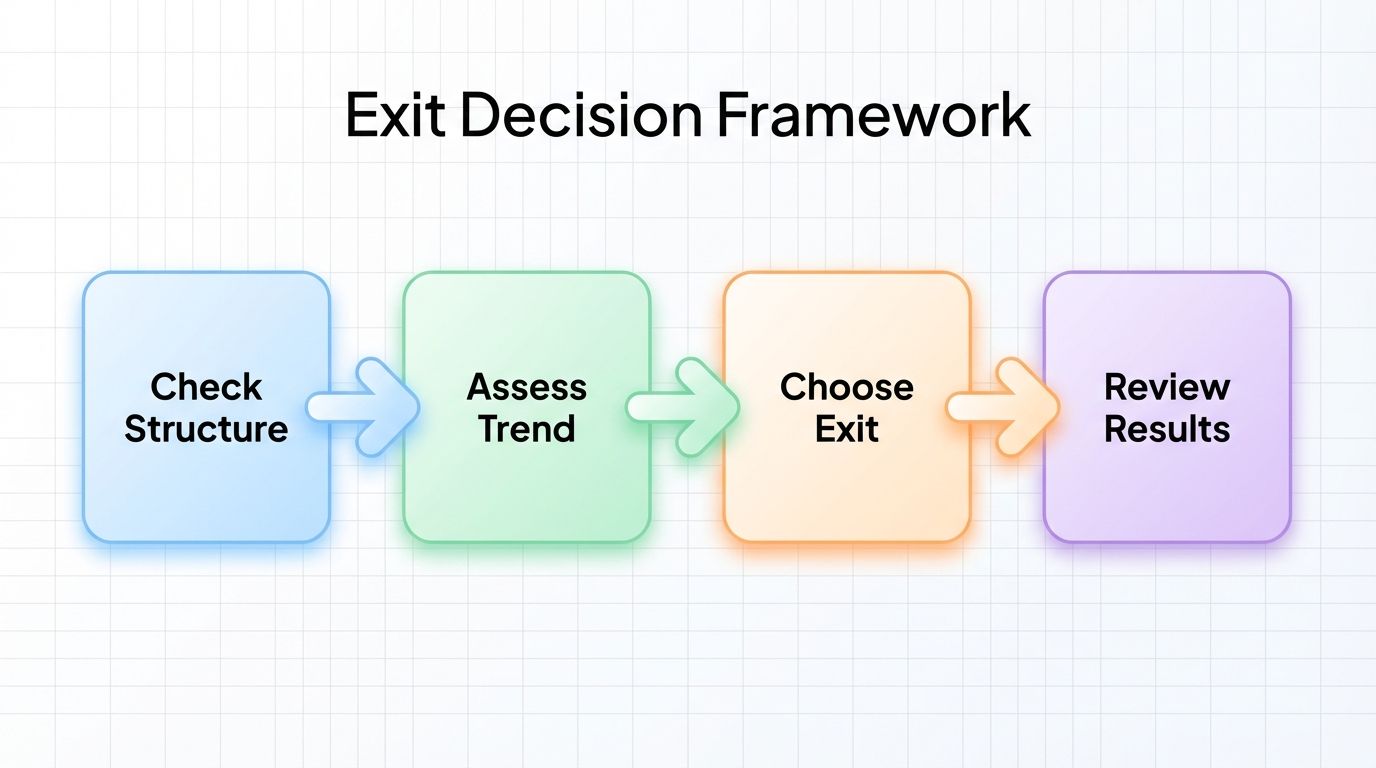
A workflow tool matters here because it helps turn exit logic into execution rules. Instead of guessing in the moment, you can define the alert levels, structure, and review process in advance, then track whether your trailing stop, take profit, or hybrid method actually improves results over time.
FAQ
Is trailing stop loss better than take profit?
Not always. A trailing stop is usually better in strong trends where you want the position to keep running, while a take profit is often better when the setup has a clear target and the market is likely to stall there.
The better tool depends on the setup and the market condition. Using the wrong exit tool in the wrong context is where most frustration comes from.
Can I use both trailing stop loss and take profit?
Yes, and many traders do better with a hybrid approach. A common method is to take partial profit at the first target, then trail the remaining size.
This gives you both certainty and flexibility. It also makes it easier to keep some exposure if the market becomes more directional than expected.
What is the biggest mistake with trailing stops?
The biggest mistake is setting the trail too tight for the volatility of the market. That causes traders to get stopped out of otherwise healthy trends before the move has fully developed.
A close second is trailing too early, before the trade has enough room to build structure. Both mistakes come from trying to protect profit before the market has actually finished moving.
Risk disclaimer
Trading is risky. Losses can happen quickly in volatile markets, and neither trailing stop loss nor take profit guarantees a profitable exit. Swing Traders, use position sizing, predefined invalidation, and testing before relying on any exit method.
Start a free trial on Altrady to set alerts, structure exits, and track whether your trailing stop, take profit, or hybrid approach actually improves your results.