
Swing Traders often ask what is a bullish pennant pattern when studying continuation setups in strong trends. Continuation patterns are powerful because they appear in the middle of strong trends. Instead of trying to predict reversals, they help traders participate in momentum. One of the most common continuation structures in trending markets is the bullish pennant pattern. It forms after a strong upward move, pauses briefly in a tight consolidation, then often continues higher.
What is a bullish pennant pattern
A bullish pennant pattern is a short-term consolidation that forms after a strong upward price movement, often called the flagpole. After this impulse move, price compresses into a small symmetrical triangle before breaking out in the direction of the original trend.
The pattern visually resembles a small pennant attached to a pole. The pole represents strong buying pressure, and the pennant represents temporary consolidation before continuation.
Bullish pennants are continuation patterns. They suggest that buyers are still in control, but the market is taking a brief pause.
How a bullish pennant forms
A bullish pennant has three main phases. Understanding these phases helps Swing Traders avoid entering too early.
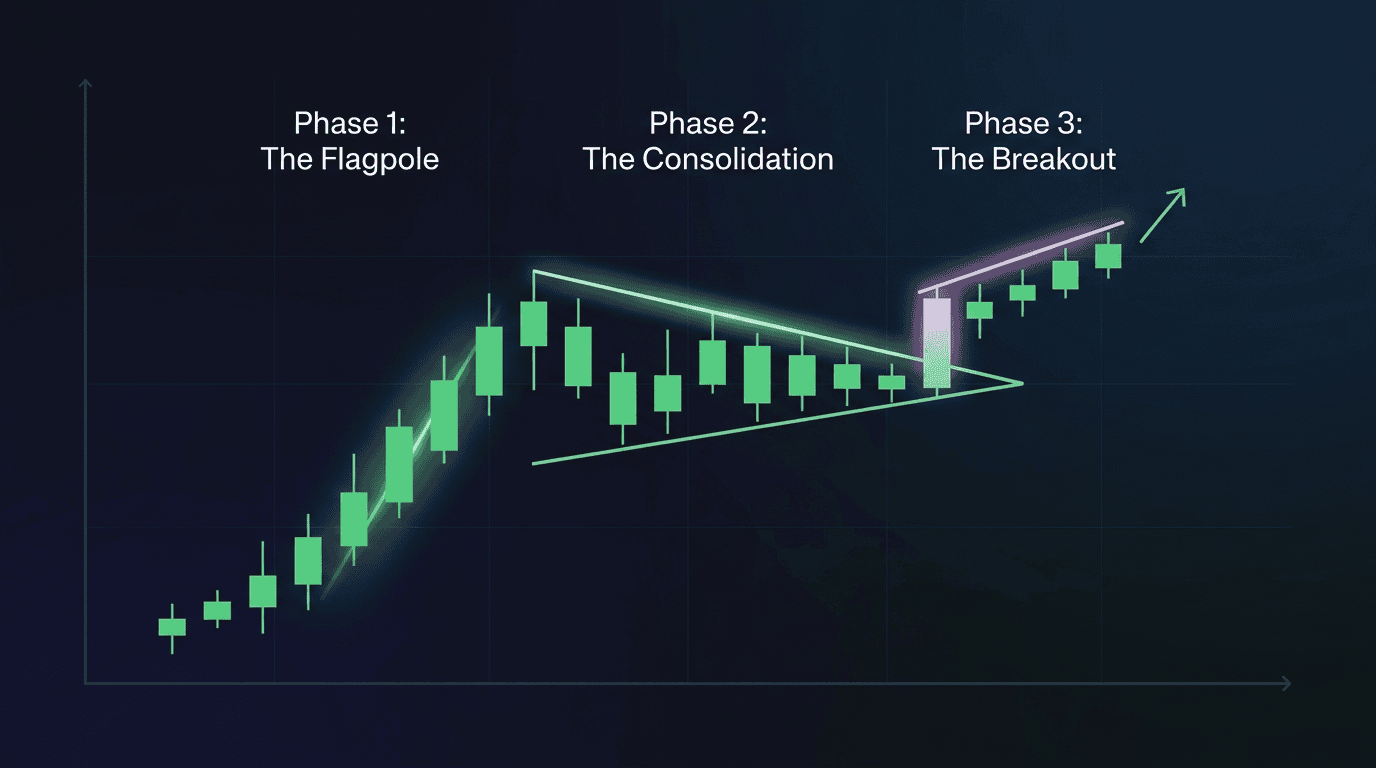
Phase 1: The flagpole
Price makes a strong upward move with large candles and expanding momentum. This move attracts attention and often increases volume.
Phase 2: The consolidation
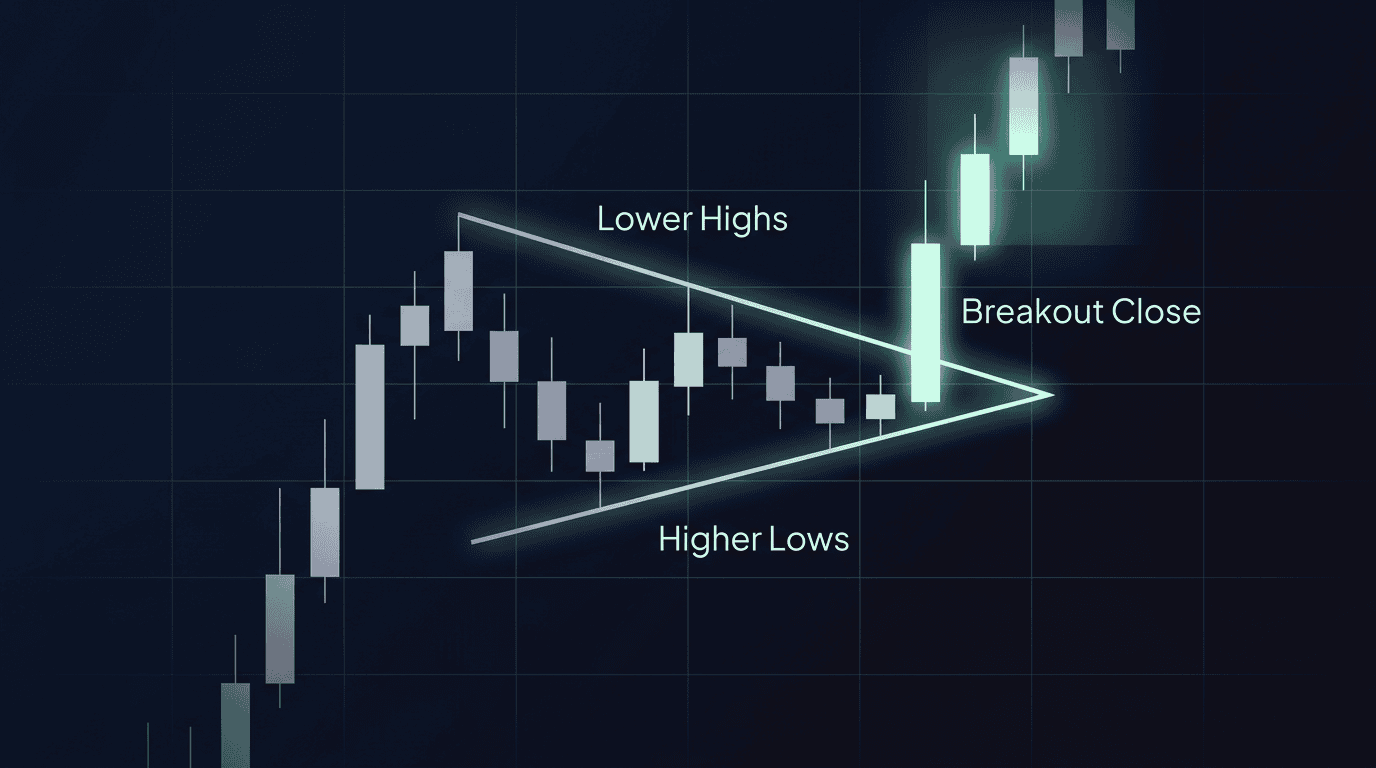
Price begins to move sideways in a tightening range. Highs get lower, lows get higher, forming a small symmetrical triangle shape.
Phase 3: The breakout
Price breaks above the upper trendline of the pennant and resumes upward movement. This breakout often happens with renewed momentum.
The consolidation phase represents indecision, not weakness. Buyers and sellers temporarily balance out before the next directional push.
Key characteristics of a valid bullish pennant
Not every small triangle after an uptrend is a bullish pennant. Context and structure matter.
Common characteristics:
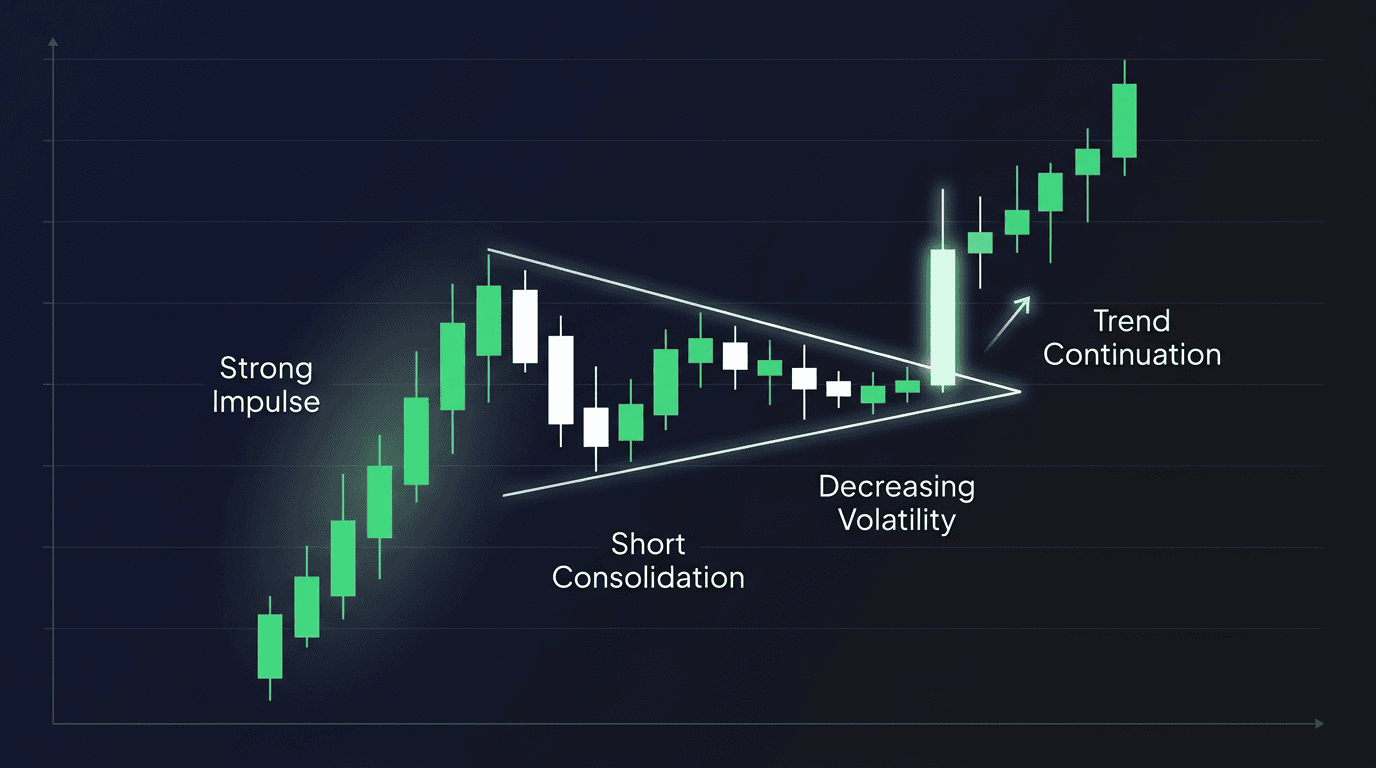
• strong, clear impulse before consolidation
• relatively short consolidation period
• decreasing volatility inside the pennant
• breakout in the direction of the original trend
Volume often declines during consolidation and expands again on breakout. While volume is not mandatory, it can strengthen confirmation.
Swing Traders should prioritize clean, well-defined structures. Messy consolidations reduce the reliability of the pattern.
Bullish pennant vs bull flag
Bullish pennants and bull flags are similar, but the consolidation structure differs.
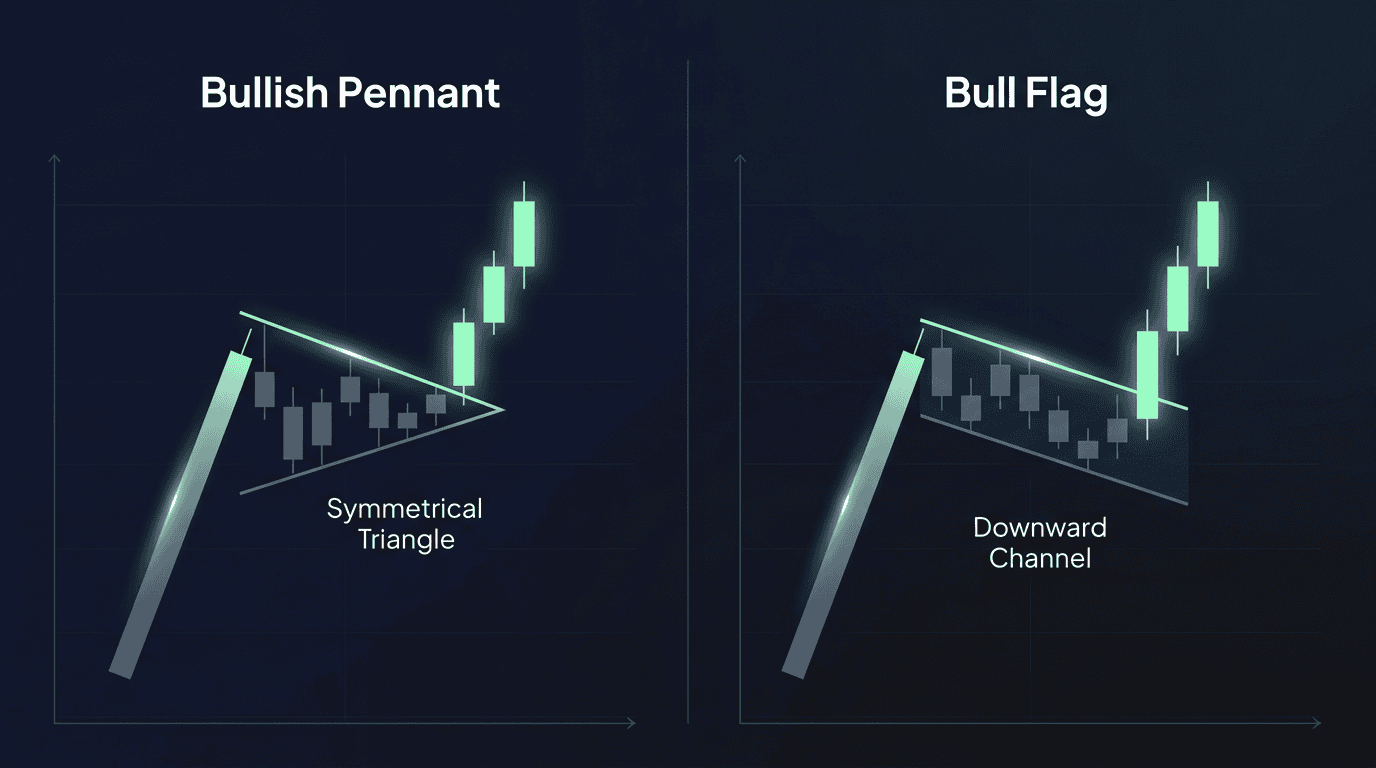
A bull flag forms as a small downward sloping channel after an upward impulse. A bullish pennant forms as a small symmetrical triangle with converging trendlines.
Both patterns signal continuation, but the shape helps differentiate them. Pennants compress from both sides, while flags drift slightly downward.
The trading logic remains similar. Wait for breakout confirmation before entering.
How to trade a bullish pennant pattern
Trading a bullish pennant requires patience. Entering during consolidation exposes you to false breakouts and whipsaws.
Below are practical steps Swing Traders use to approach the pattern with structure and discipline.
Step 1: Confirm a strong flagpole
The move before the pennant should be clear and decisive. Weak or choppy moves do not create strong continuation setups.
Look for:
• large bullish candles
• minimal pullbacks during the impulse
• clear directional momentum
Without a strong pole, the pennant loses its continuation context.
Step 2: Draw the consolidation boundaries
Mark the converging trendlines connecting lower highs and higher lows. The range should tighten over time.
Avoid entering while price is still moving inside the pattern. The edge appears only when the market commits to a direction.
Swing Traders should treat the consolidation as a waiting zone, not an entry zone.
Step 3: Wait for breakout confirmation
The breakout should close above the upper trendline of the pennant. Entering before candle close increases the risk of false breaks.
Confirmation signals may include:
• strong bullish candle close
• increased momentum
• rejection of lower boundary before breakout
Patience at this stage improves consistency. The goal is not the earliest entry, but the most structured one.
Step 4: Define stop placement
Stops are usually placed below:
• the lower trendline of the pennant
• the most recent swing low inside the consolidation
• or slightly below the breakout retest
Stop placement must reflect invalidation. If price breaks down through the pattern, the continuation thesis is likely wrong.
Swing Traders should size positions based on stop distance, not desired profit.
Step 5: Set realistic targets
Common target methods include:
• measuring the height of the flagpole and projecting upward
• targeting prior resistance levels
• aiming for the next liquidity zone above
Measured moves are guidelines, not guarantees. Price may overshoot or fall short depending on broader conditions.
A structured target combined with trailing logic often improves overall trade management.
Risk management for bullish pennant trades
Even high-quality continuation patterns can fail. That is why risk management must be defined before entry.
Key principles:
• do not risk more than a fixed percentage per trade
• avoid trading against higher timeframe resistance
• skip patterns that form after weak or extended trends
• confirm breakout instead of anticipating it
Overtrading small consolidations is a common mistake. Focus on the clearest structures only.
Swing Traders should prioritize quality over frequency. One clean pennant is better than three forced ones.
Common mistakes with bullish pennants
Most losses come from misidentifying patterns or entering too early.
Common mistakes:
• trading any small triangle as a pennant
• ignoring the strength of the initial move
• entering before breakout confirmation
• placing stops too tight inside the pattern
• chasing breakouts after extended moves
Avoiding these mistakes improves performance more than adding extra indicators.
The strength of the pattern lies in structure and context, not in prediction.
Using bullish pennants in an Altrady workflow
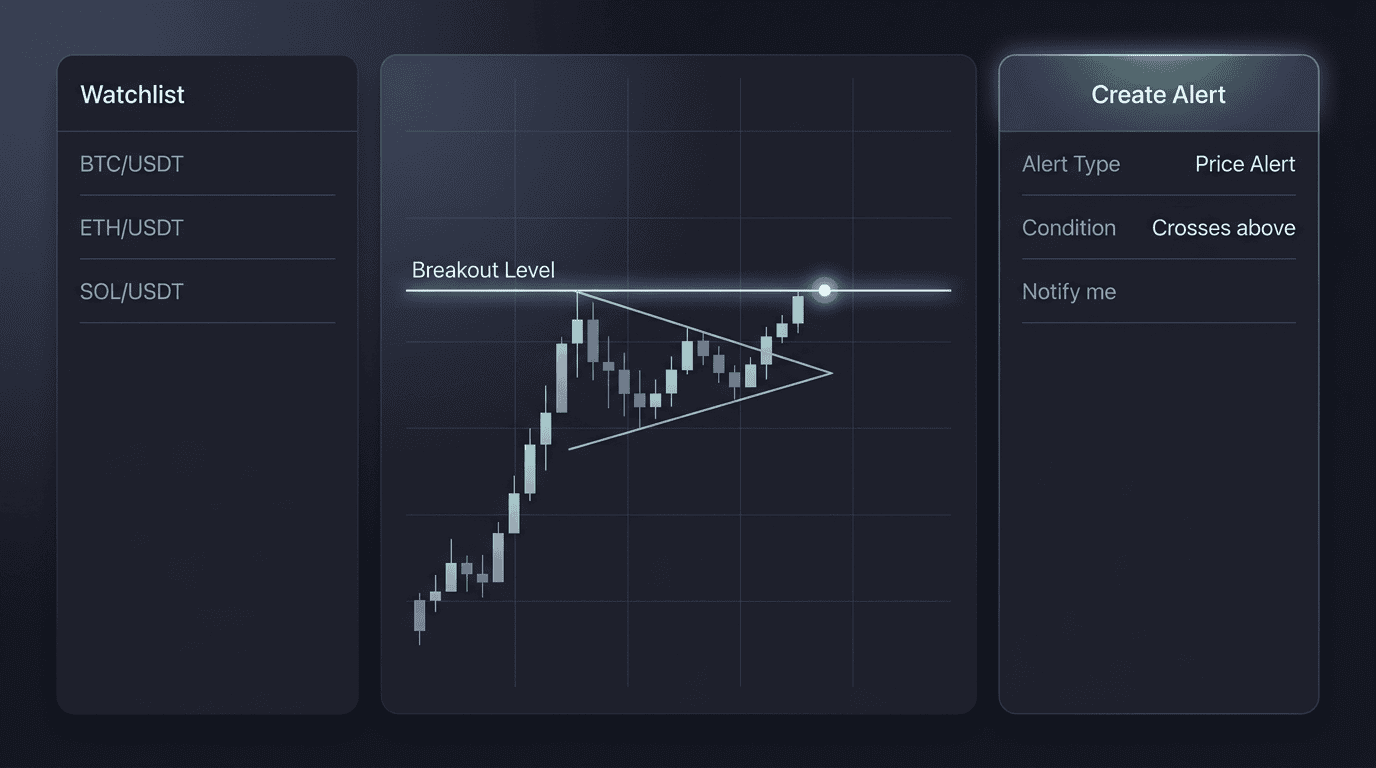
A structured workflow makes continuation trading more consistent.
Practical approach:
1. Build a watchlist of trending markets.
2. Scan for strong upward impulses.
3. Mark consolidation structures.
4. Set alerts above the upper trendline.
5. Enter only on confirmed breakout.
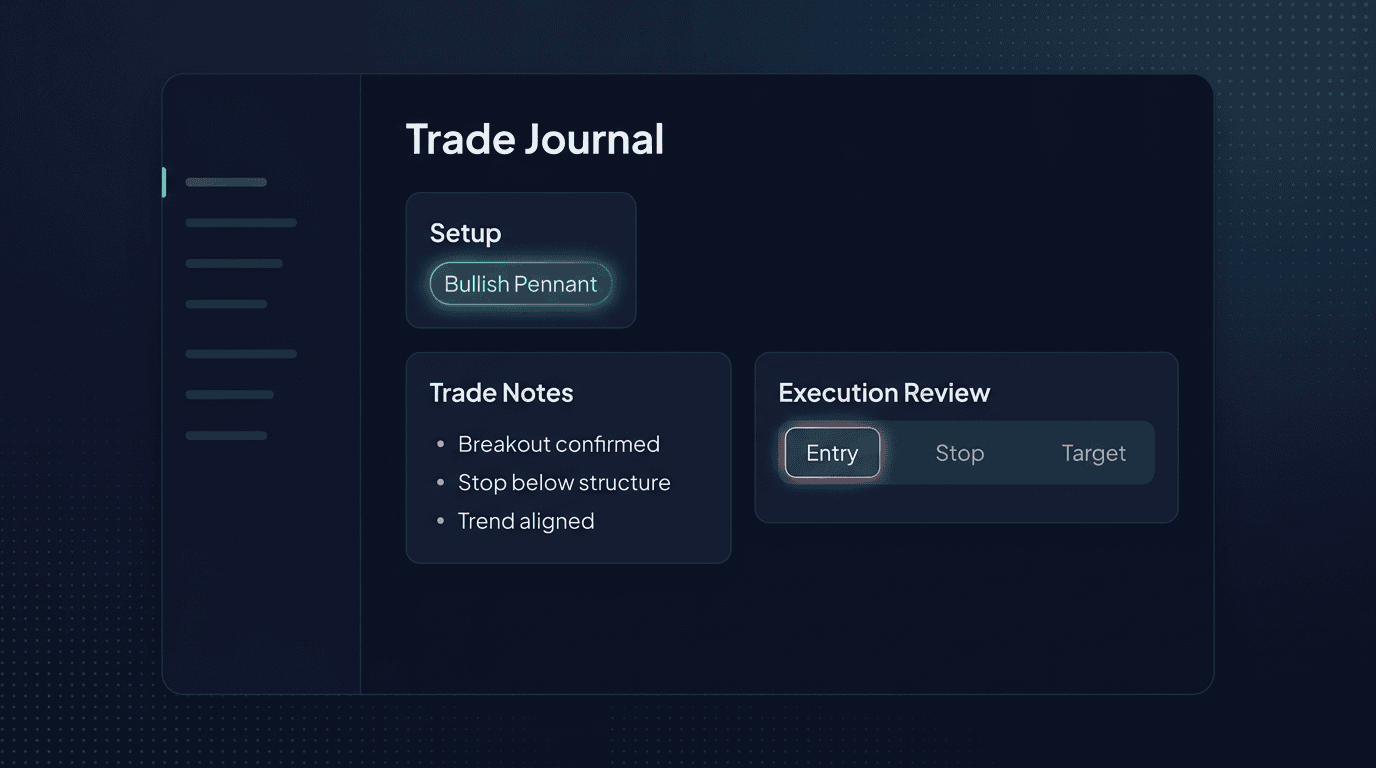
6. Record the trade in a crypto journal.
This process reduces emotional entries. Alerts ensure you act when conditions are met, not when boredom hits.
FAQ
What is a bullish pennant pattern?
A bullish pennant pattern is a continuation pattern that forms after a strong upward move, followed by a short consolidation in a small symmetrical triangle.
It suggests that the prior uptrend may continue after breakout confirmation.
Is a bullish pennant reliable?
Bullish pennants can be reliable in strong trending markets, especially when the initial impulse is clear and the consolidation is tight.
No pattern guarantees success. Confirmation and risk management are essential.
What timeframe works best for bullish pennants?
Bullish pennants can appear on any timeframe, but they tend to be more meaningful on higher timeframes where trends are clearer.
Swing Traders often combine higher timeframe trend analysis with lower timeframe entries for precision.
Risk disclaimer
Trading is risky and losses can happen quickly in volatile markets. Swing Traders, use predefined stops, position sizing, and testing first. Start a free trial on Altrady to set alerts, execute with rules, and journal results.