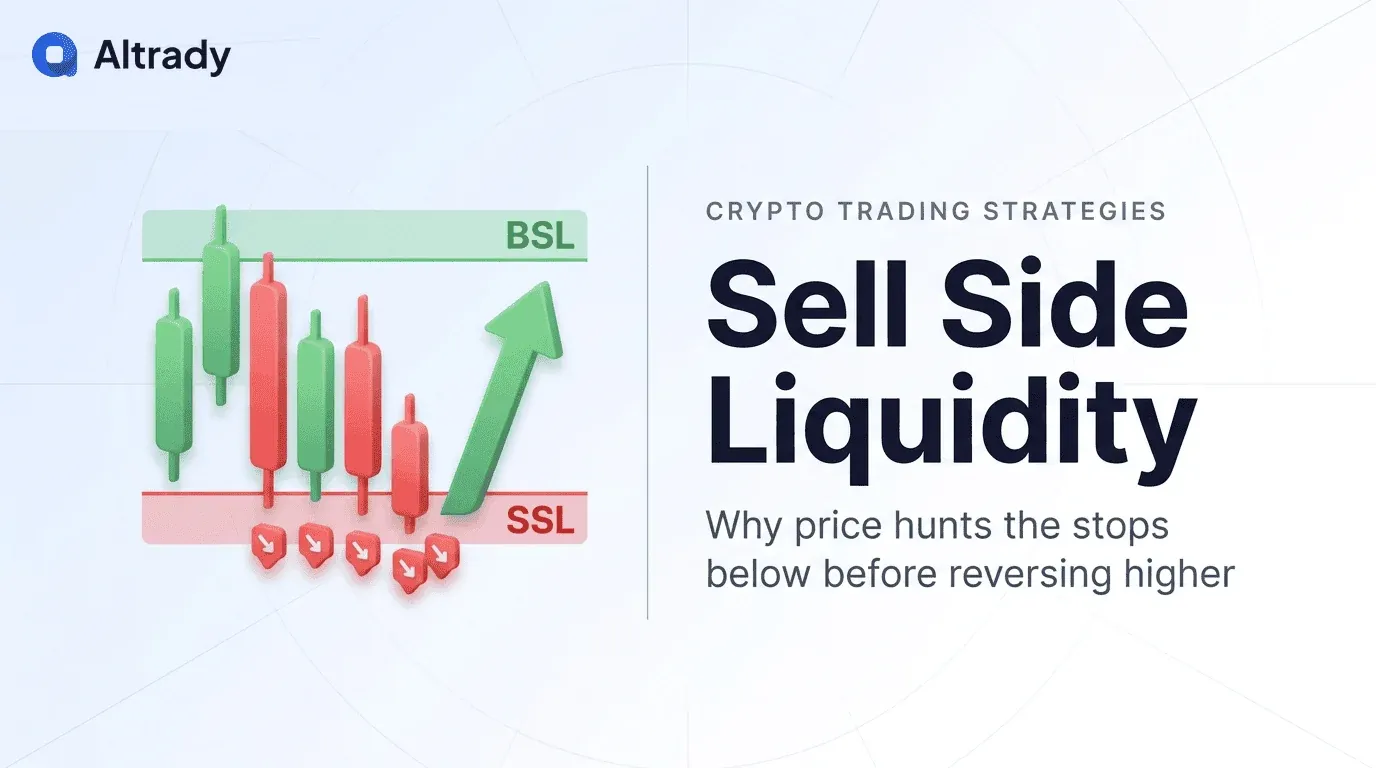

Have you ever watched a cryptocurrency chart drop sharply, hit your stop-loss, and then immediately reverse to hit your original profit target? It is one of the most frustrating experiences in the market. For many Swing Traders, this precise price action feels like a targeted attack by the exchange. In reality, the market is not looking at your specific account, but large financial entities are absolutely hunting the exact price zones where you and thousands of other retail traders have placed your protective orders.
To stop falling victim to these sudden market reversals, you need to understand the underlying mechanics of institutional trading. The key to this puzzle lies in answering one critical question: what is sell side liquidity? By understanding how this concept dictates price delivery, you can transform your trading strategy from reacting out of fear to anticipating market moves with confidence. In this guide, we will break down the definition of sell side liquidity, why it is essential for the market to function, and how you can spot it on your charts.
The Foundation of Market Liquidity
Before diving into the specifics, it is important to grasp how order execution works in financial markets. For every buyer, there must be a seller, and vice versa. If you want to buy 1 Bitcoin, someone else must be willing to sell 1 Bitcoin at that exact price. This availability of active orders is what we call liquidity.
The Role of Sell Orders
So, exactly what is sell side liquidity? Simply put, Sell Side Liquidity (SSL) refers to a massive cluster or pool of pending sell orders resting at a specific price level. These sell orders usually come from two main sources. The first source is retail traders who have opened long (buy) positions and placed their protective stop-loss orders just below the current price. A stop-loss for a long position is executed as a market sell order. The second source comes from breakout traders who place sell-stop orders below a support line, hoping to catch a downward trend.
Why Institutions Need Your Stops
Large institutions, often referred to as smart money, trade with millions or even billions of dollars. If they buy at market price, their massive order size would eat through the order book, causing massive slippage and giving them a terrible average entry price. To buy a large amount of crypto without spiking the price, they need a large pool of sellers to absorb their buy orders. Therefore, they intentionally drive the price down into SSL zones to trigger all those retail sell orders, allowing the institution to buy efficiently.
How to Identify Sell Side Liquidity on a Chart
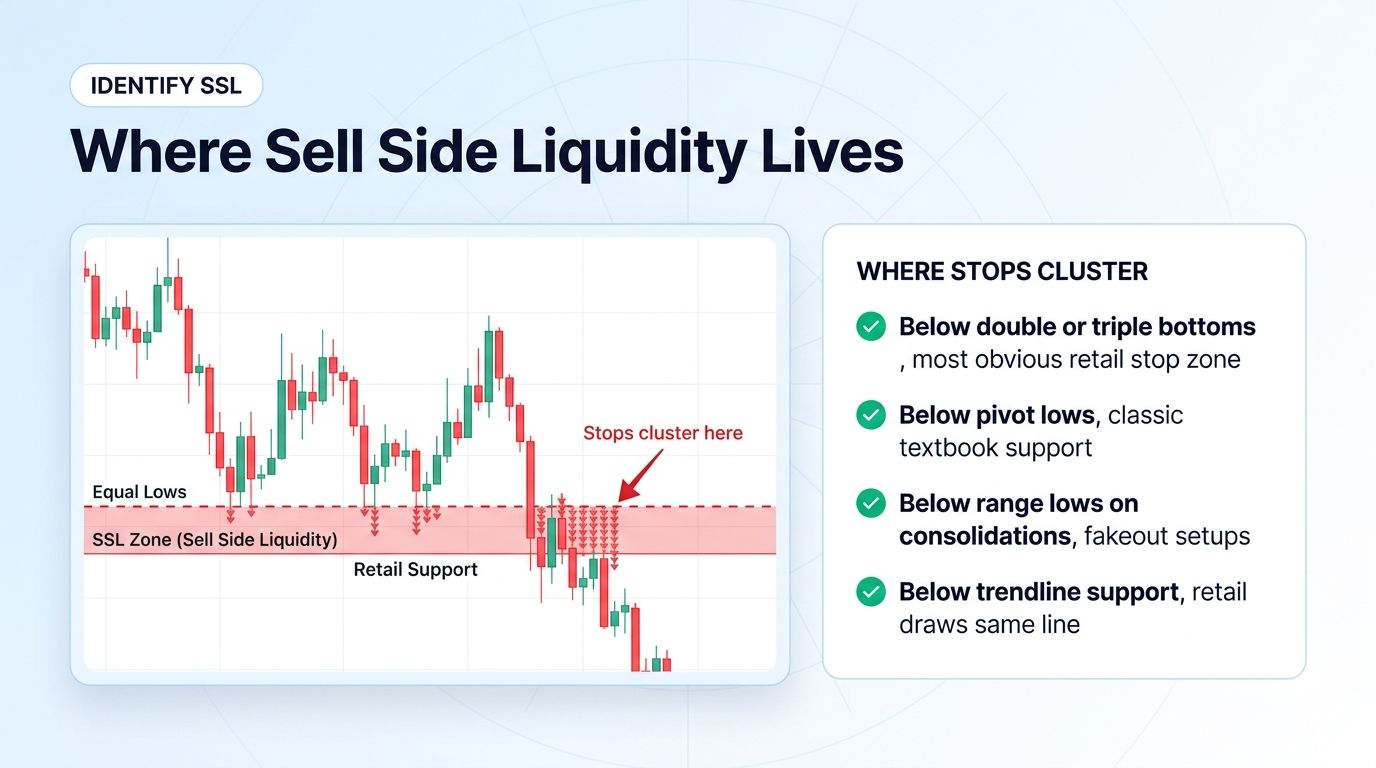
You do not need complicated, expensive indicators to find liquidity pools. Liquidity naturally gathers around obvious structural points on a price chart. Retail trading books have taught generations of traders to place their stops in the exact same places.
Previous Swing Lows
The most common hiding spot for SSL is just below a prominent previous swing low. When the price forms a clear "V" shape at the bottom of a trend, retail traders assume that level will hold as support in the future. Consequently, anyone buying above that level will logically place their stop-loss just a few dollars below the wick of that swing low.
Equal Lows and Retail Support
When analyzing chart patterns, you will often spot "Equal Lows" (EQL) or a flat double bottom. To a retail trader, a double bottom looks like a fortified wall of support and resistance that cannot be broken. To smart money, however, Equal Lows represent a double-sized pool of sell side liquidity. Because so many traders trust this obvious support line, the cluster of sell orders resting just below it becomes an irresistible magnet for institutional algorithms.
Sell Side vs Buy Side Liquidity
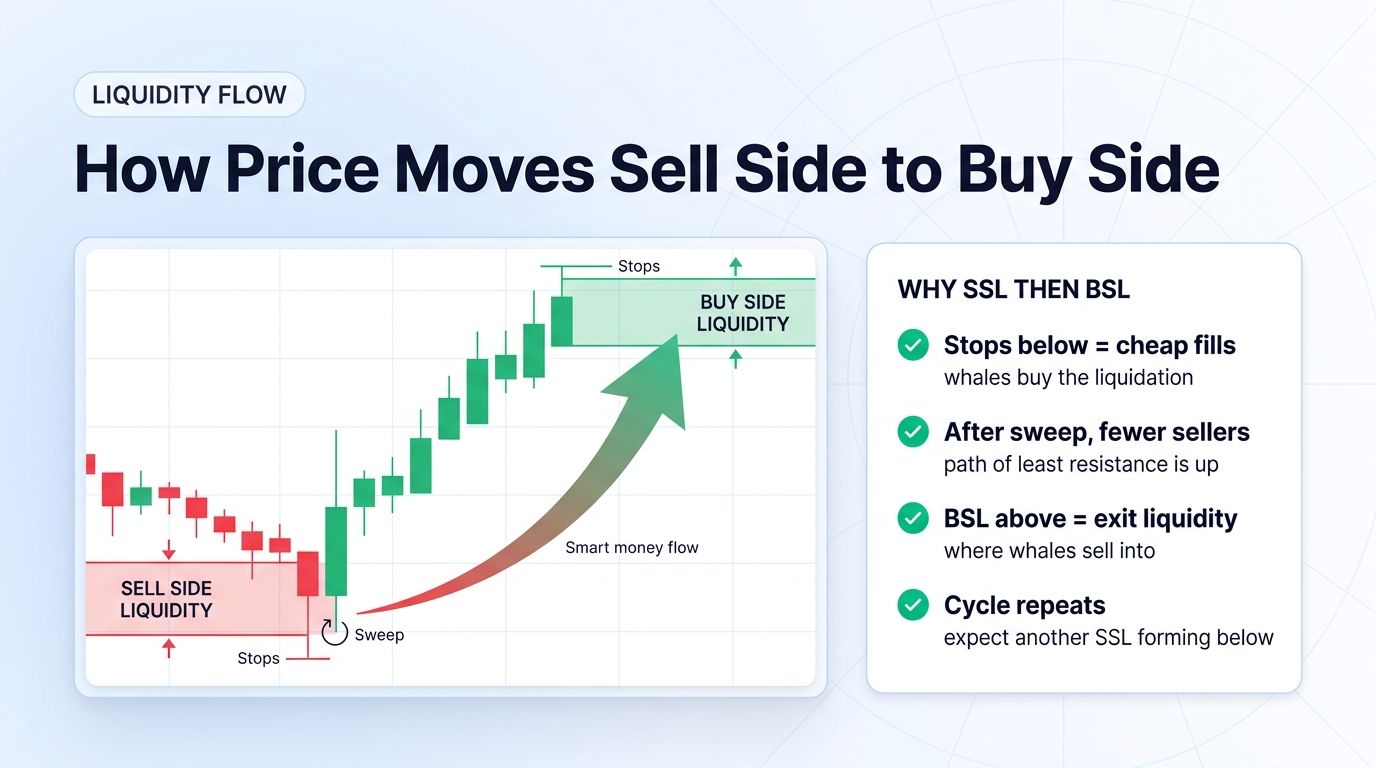
To fully understand market delivery, you must understand that the market moves like a pendulum between two opposing forces. While SSL represents a pool of sell orders resting below the current price, Buy Side Liquidity (BSL) represents a pool of buy orders resting above the current price (typically above swing highs or equal highs).
The Market Pendulum
The market is constantly seeking liquidity to facilitate large transactions. Once smart money drives the price down to sweep the sell side liquidity, their massive buy orders are filled. With their bags packed and the selling pressure absorbed, the price naturally reverses. The market algorithms will then target the next available pool of liquidity to take profit, which is the Buy Side Liquidity resting above the recent highs. Understanding this cyclical sweeping behavior is crucial for accurate market forecasting.
Strategies for Trading Around Liquidity Pools
Knowing what sell side liquidity is gives you a massive edge. Instead of placing your stops blindly and getting swept, you can use these liquidity zones to identify high-probability trade setups.
Waiting for the Sweep
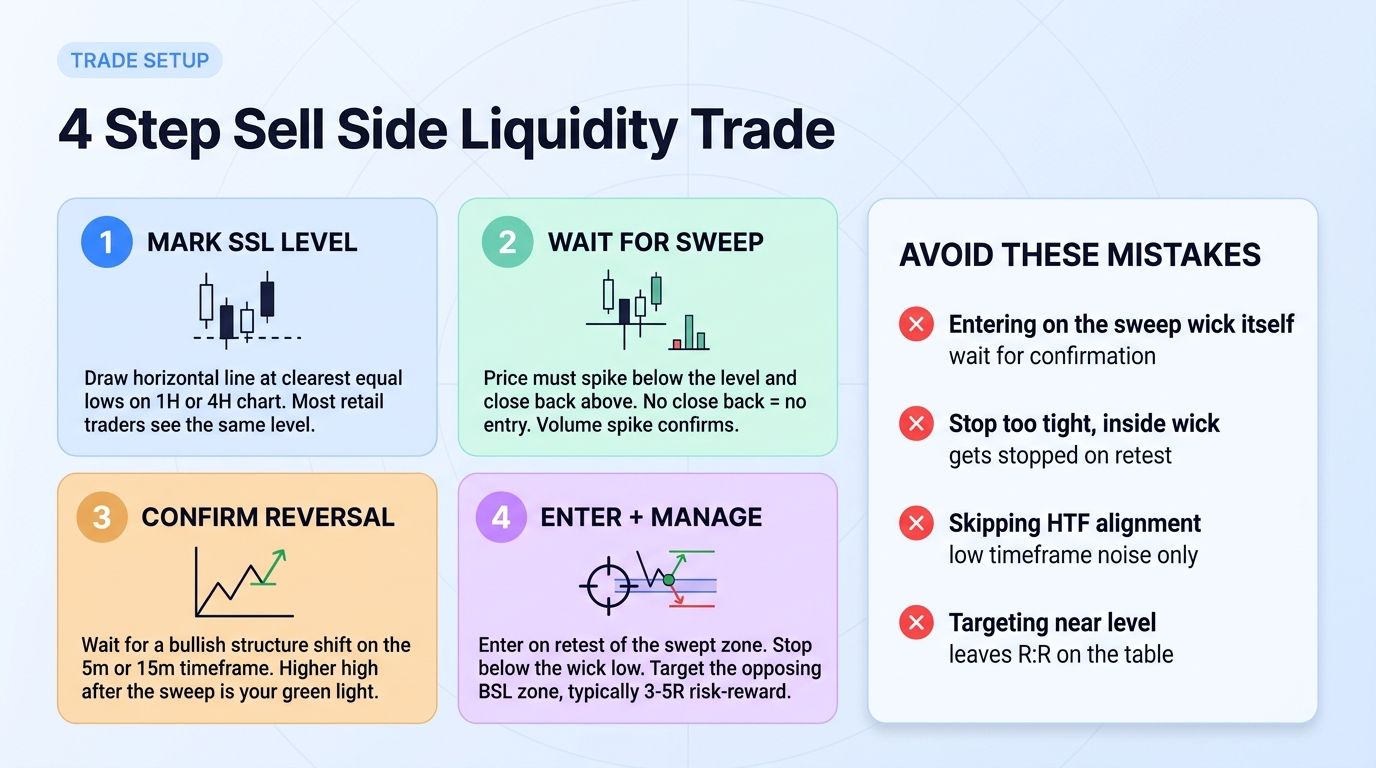
The most effective strategy is patience. When you identify a pool of SSL, do not buy right at the support line. Wait for the price to drop below that line and trigger the liquidity pool. If the candle pierces the level but gets rejected quickly, leaving a long wick and closing back inside the range, you have confirmation that the liquidity has been harvested.
Confirmation Through Market Structure
Never catch a falling knife. After the sweep occurs, wait for the price to show strength by breaking a recent lower timeframe high. This creates a market structure shift, confirming that the institutions have finished absorbing the sell orders and are now moving the price upward. Once confirmed, you can safely enter a long position, knowing the trap has already been sprung.
Frequently Asked Questions About Sell Side Liquidity
Q: Is sell side liquidity a bearish or bullish signal?
A: It depends on the context. The presence of SSL below the price acts as a bearish magnet initially, pulling the price down. However, once that liquidity is swept and absorbed by large buyers, it becomes a strong bullish reversal signal.
Q: How far below a swing low does liquidity usually rest?
A: There is no exact measurement, as it depends on the volatility of the specific cryptocurrency. Generally, it rests just a few percentage points below the lowest wick of the support level, exactly where the average trader feels their stop-loss is "safe."
Q: Do liquidity sweeps happen on all timeframes?
A: Yes. You can spot SSL being swept on a 5-minute chart for day trading, or on a Daily chart for macro swing positions. The higher the timeframe, the stronger the subsequent reversal tends to be.
Q: How can I protect my trades from being swept?
A: Avoid placing your stop-losses exactly at obvious support lines. Consider placing them slightly deeper, or wait to enter the market after the obvious liquidity has already been taken out.
Q: Can automated trading bots utilize liquidity concepts?
A: Yes, advanced traders often set up automated bots to trigger entries only after a specific price level has been breached and rejected, combining smart money concepts with automation.
Understanding what is sell side liquidity changes the way you view a cryptocurrency chart. Instead of seeing random price drops, you begin to see a highly organized system of order delivery.
By anticipating where the retail stops are hiding, Swing Traders can stop providing liquidity to the whales and start trading alongside them. Always remember to employ proper risk management to protect your capital in volatile conditions.
Ready to elevate your technical analysis and trade with institutional precision? Sign up for a free trial of Altrady today to access advanced charting features, smart orders, and automated bots designed to keep you one step ahead of the market!