
Swing Traders, yes, it is possible to buy Bitcoin with a credit card, but whether it works depends on the exchange, the country, and the card issuer. The buying flow is usually simple, yet many first-time buyers get stuck on fees, verification steps, bank declines, or withdrawal holds that are easy to miss when clicking through a checkout screen.
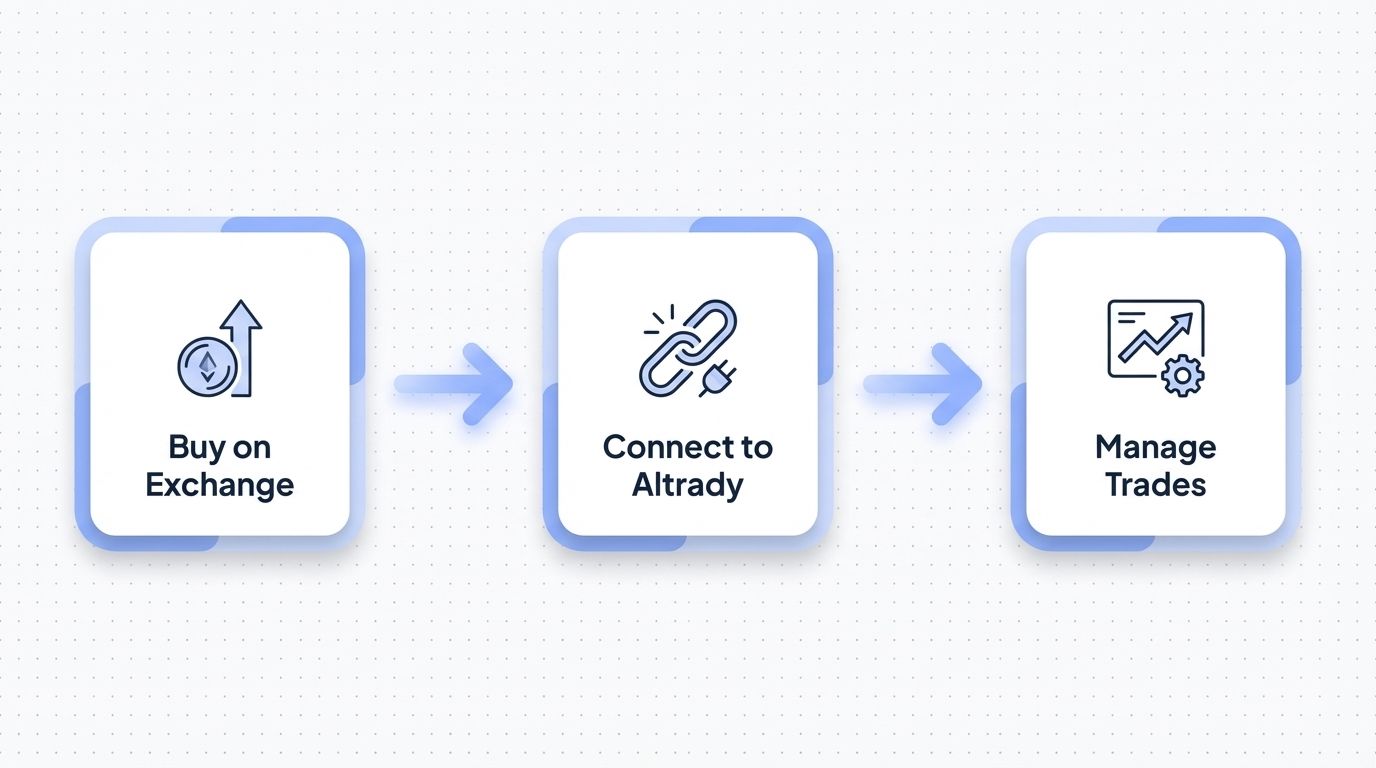
This guide explains where credit card Bitcoin purchases are commonly available, what to watch out for, and how Altrady fits once Bitcoin is already in an exchange account. Altrady is a trading and workflow platform, so the purchase happens on an exchange, then Altrady helps you manage execution, alerts, and organization through your connected exchange account.
Quick answer: can you buy Bitcoin with a credit card?
You can buy Bitcoin with a credit card on some exchanges and payment providers, usually after identity verification and with regional restrictions. Even if an exchange supports cards, your bank can still decline the transaction or treat it as a cash advance, which can add extra cost.
Because policies change often, the safest approach is to check the exchange’s payment method page for your region before assuming a credit card purchase will work. That one step prevents most surprises.
Exchanges you can connect to Altrady
If your plan is to buy Bitcoin first and then actively manage trades, it helps to choose an exchange you can connect to Altrady. Altrady supports multiple exchanges, so you can execute on the exchange and manage your workflow through Altrady afterward.
A practical mindset is to separate the two actions: purchase on the exchange, then connect the account for execution and tracking. That keeps expectations clear and avoids thinking Altrady is the “place to buy.”
Which exchanges typically offer credit card purchases
Credit card support is regional and can change, so treat this as a starting shortlist and confirm directly on the exchange’s own documentation for your country. Many exchanges that support cards do so through third-party payment processors, which can affect fees, limits, and approval rates.
If an exchange does not list credit card support in your region, it does not automatically mean you cannot buy Bitcoin there. It means you may need a different funding method such as bank transfer, or you may need to use another exchange that supports cards where you live.
How buying Bitcoin with a credit card usually works
Most exchanges follow a similar process. The buttons differ, but the steps are consistent across platforms.
Create an exchange account and complete verification
Credit card purchases usually require identity verification. In some regions, additional checks may be needed, especially for higher limits.
Add your credit card and pass security checks
Many platforms require extra card security steps and name matching. If your card issuer blocks crypto transactions, the purchase may fail even if the exchange supports cards.
Choose Bitcoin, enter amount, review the final quote
Before confirming, compare the final quote with the spot price so you understand the spread and fees. Credit card purchases often cost more than bank transfers.
Confirm purchase and check withdrawal or transfer restrictions
Some platforms may apply temporary holds after card purchases for security reasons. This matters if you plan to move BTC off-platform quickly.
Two practical points matter here: credit cards are convenient but often expensive, and they are more likely to be declined than debit cards. If the transaction keeps failing, the issue is often the issuer rather than the exchange.
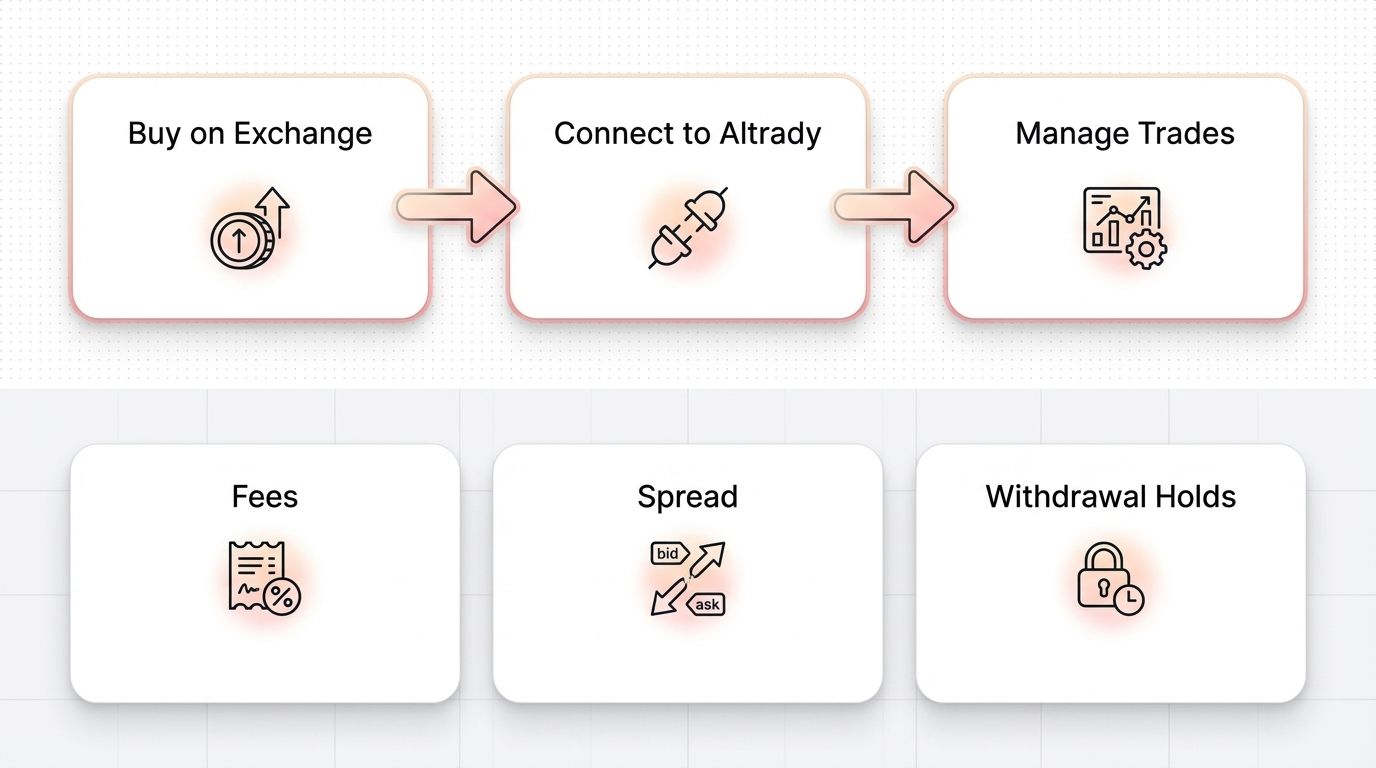
Costs and risks to watch
Credit card buying is convenient, but it is often one of the most expensive ways to enter crypto. Before you buy, check these items carefully so the “easy purchase” does not turn into a costly mistake.
Fees and spread
Your total cost can include an exchange fee, a payment processing fee, and a spread baked into the final quote. The spread can be hard to notice unless you compare it to the live spot price.
Cash advance treatment
Some issuers treat crypto purchases as cash advances, which can add fees and interest immediately. That changes the math fast, especially if you carry a balance.
Limits and regional restrictions
Limits can be low for first purchases, and some countries restrict or block card-based crypto purchases entirely. Even within the same exchange, two users in different countries can have different payment options.
Withdrawal holds
Some exchanges apply short-term withdrawal restrictions after card purchases. That can be frustrating if your goal was to move BTC to another wallet or exchange right away.
Swing Traders, the biggest practical risk is using borrowed money to buy a volatile asset. If you cannot pay the card balance comfortably even if Bitcoin drops, credit card buying is a risk you do not need.
Where Altrady fits after you buy Bitcoin
Altrady is not where you buy Bitcoin. The purchase happens on the exchange, then Altrady connects to your exchange account so you can manage execution and workflow more cleanly.
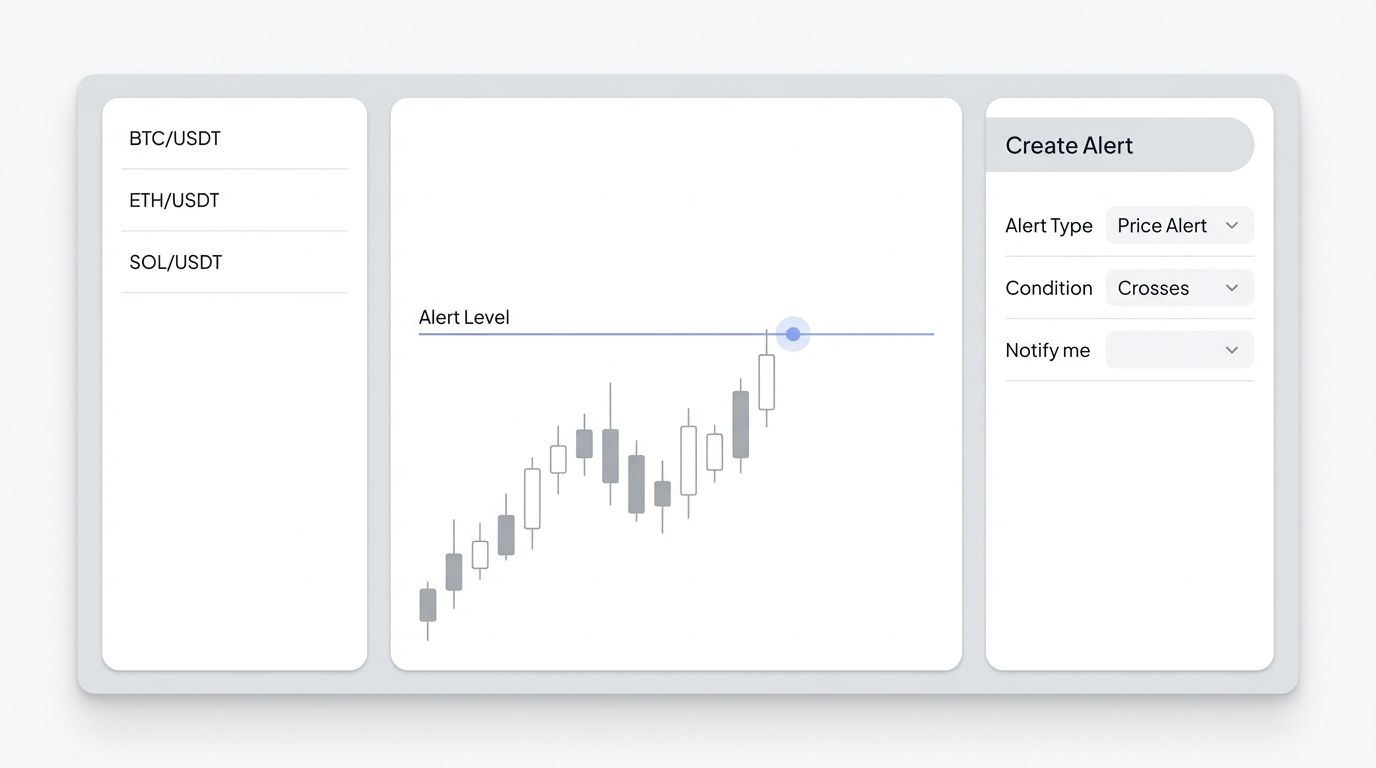
A simple workflow looks like this:
- Buy BTC on the exchange using the payment method available in your region.
- Keep your BTC in the account you plan to trade from, or move it as needed.
- Connect that exchange to Altrady.
- Use watchlists, alerts, and journaling to reduce impulsive decisions.
This separation is helpful because it keeps each tool focused on what it does best. The exchange handles funding and custody, while Altrady helps you plan, execute, and track your decisions.
If your credit card gets declined, try this sequence
Declines are common, and they often happen for reasons outside your control. A clear troubleshooting path saves time.
- Try again with a smaller amount: Some issuers block larger first-time transactions.
- Confirm your billing info matches exactly: Even small mismatches can trigger security declines.
- Check if your issuer blocks crypto purchases: Some banks block crypto entirely or require you to approve the merchant.
- Try a debit card or bank transfer instead: Debit cards are often accepted more easily, and bank transfers are usually cheaper.
- Use a different exchange that supports cards in your region: Not every exchange has the same payment coverage in every country.
Swing Traders, if the goal is to trade rather than to prove a point, choose the funding method that is reliable and cost-effective. Convenience is not worth it if it forces you into higher fees and worse execution.
FAQ
Can you buy Bitcoin with a credit card instantly?
Sometimes, yes, especially if you are already verified and your issuer approves the transaction. However, even when the purchase is instant, withdrawals may be restricted temporarily depending on the exchange and your account status.
If speed matters, debit card purchases often have fewer declines, and bank transfers often have lower cost. The best option depends on what your exchange supports in your region.
Why is my credit card getting declined for Bitcoin purchases?
Many issuers block crypto transactions because they consider them higher risk. Declines can also happen due to security checks, unsupported regions, verification status, or name and billing mismatches.
If it keeps happening, switch funding method instead of repeatedly retrying. Most traders get a better outcome using bank transfer or debit card where available.
Is it a good idea to buy Bitcoin with a credit card?
It can be fine for convenience, but it is often expensive and may be treated as a cash advance by your issuer. The combination of fees, interest risk, and volatility can create unnecessary pressure.
Swing Traders, if you cannot repay the card balance comfortably without relying on Bitcoin going up, it is safer to avoid credit card buying and use a lower-cost funding method.
Risk disclaimer
Trading is risky. Losses can happen quickly in volatile markets, and buying Bitcoin with a credit card can add extra cost and financial pressure. Swing Traders, use strict risk limits and avoid using credit you cannot repay easily. Start a free trial on Altrady to connect your exchange, set alerts, and track your Bitcoin decisions in a structured workflow.