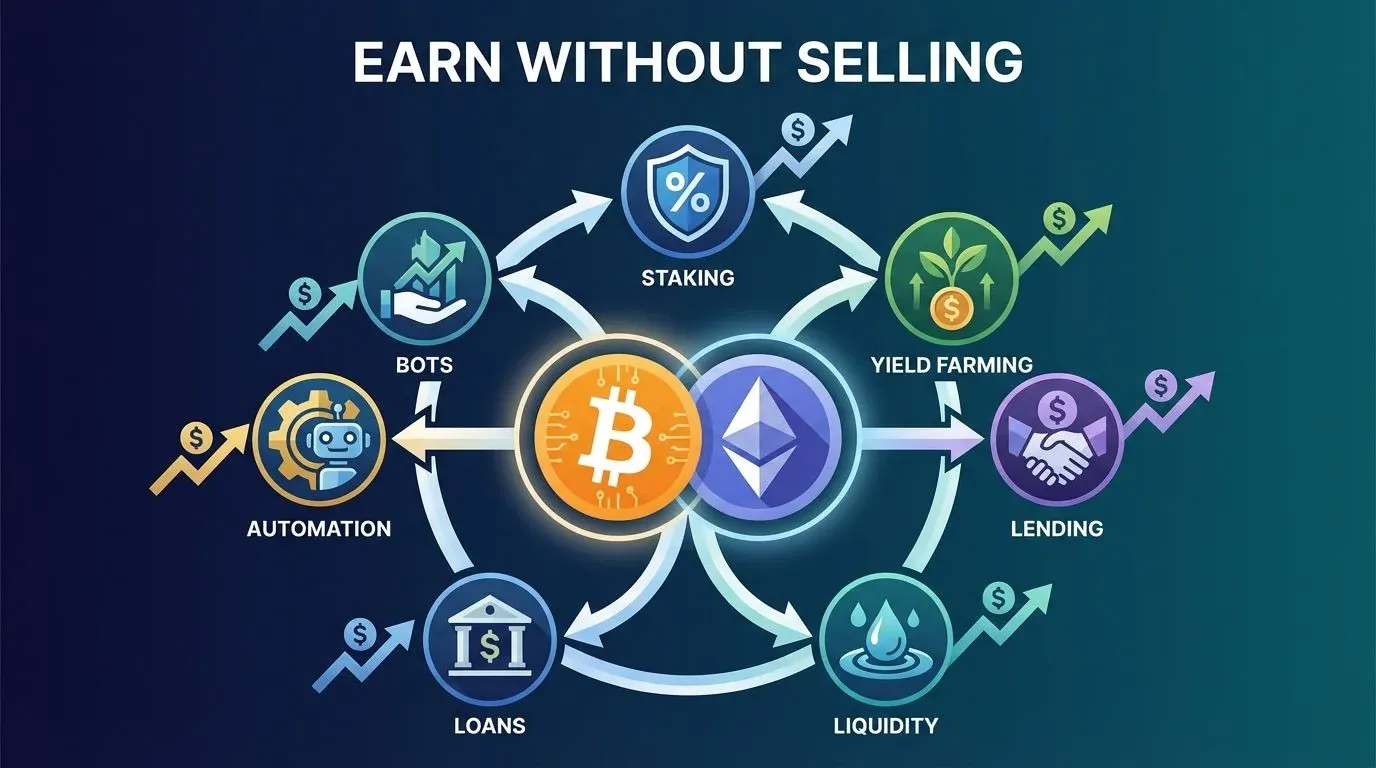

Most crypto investors face a frustrating dilemma: they want to generate income from their digital assets, but selling means giving up future upside potential and triggering taxable events. The good news is that the crypto ecosystem has matured significantly, offering multiple ways to earn passive income while keeping your core holdings intact. Understanding how to take profits from crypto without selling is now an essential skill for any serious investor looking to maximize the value of their portfolio.
Whether you hold Bitcoin, Ethereum, or a diversified basket of altcoins, there are proven strategies that let you put your idle assets to work. From staking rewards to DeFi yield farming, crypto lending to liquidity provision, these methods can generate consistent returns without requiring you to part with a single token. In this guide, we will walk you through seven powerful strategies that help you earn from your crypto while maintaining full exposure to potential price appreciation.
1. Earn Staking Rewards on Proof-of-Stake Networks
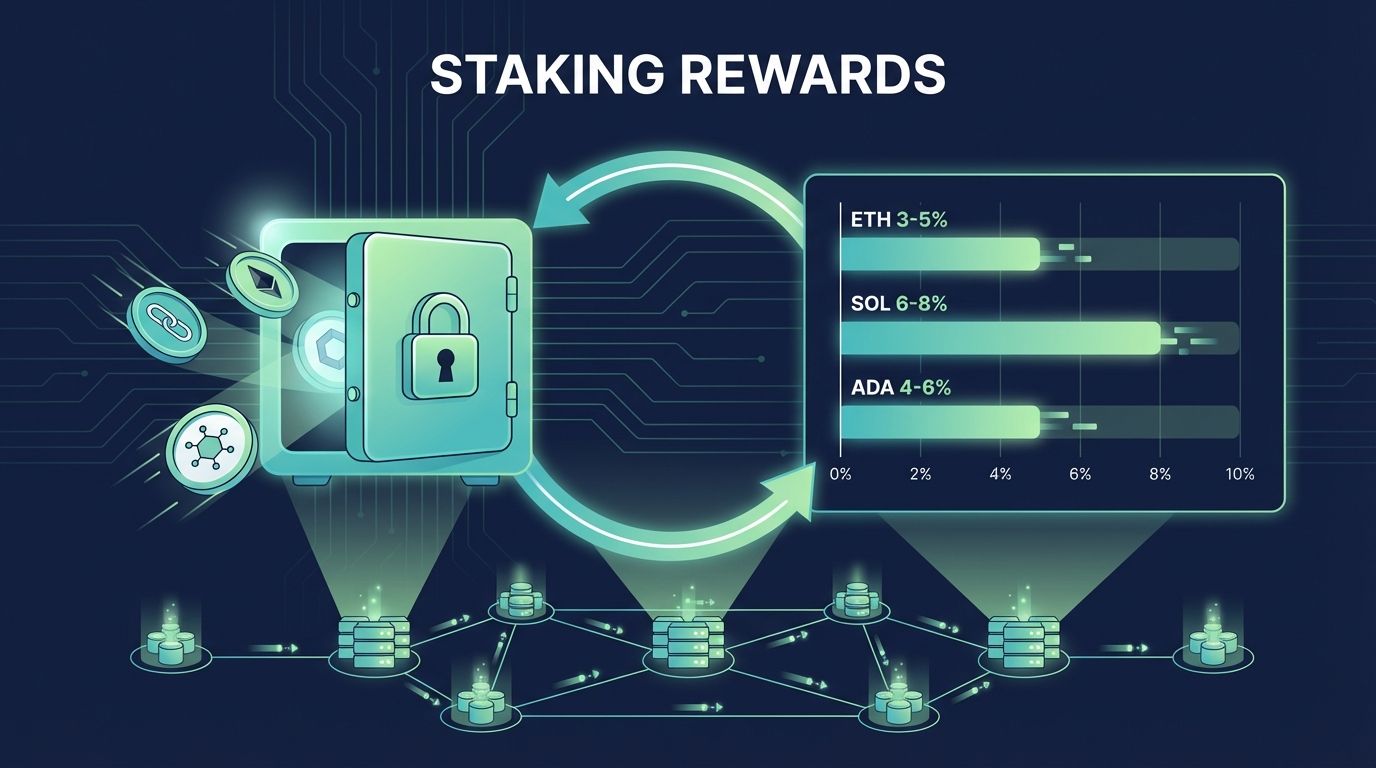
Staking is one of the simplest and most accessible ways to generate income from your crypto holdings without selling them. When you stake your tokens on a Proof-of-Stake (PoS) blockchain, you lock them up to help validate transactions and secure the network. In return, the protocol rewards you with additional tokens, similar to earning interest on a savings account.
Popular staking options include Ethereum (ETH), which offers annual yields typically ranging from 3% to 5%, Solana (SOL) with yields around 6% to 8%, and Cardano (ADA) offering approximately 4% to 6% annually. The exact returns depend on network conditions, the total amount staked across the network, and the validator you choose to delegate your tokens to.
Risk Level: Low to Moderate. Staking on established networks like Ethereum is generally considered low-risk. However, there are some factors to consider. Slashing penalties can occur if your chosen validator behaves maliciously or experiences extended downtime. Liquid staking solutions like Lido (stETH) or Rocket Pool (rETH) can mitigate the lock-up risk by giving you a tradable token that represents your staked position.
Practical Tips:
- Choose validators with a strong track record and high uptime percentage.
- Consider liquid staking derivatives if you want flexibility to use your staked assets in DeFi protocols simultaneously.
- Diversify your staking across multiple validators to reduce slashing risk.
- Factor in the unbonding period, which can range from a few days to several weeks depending on the network.
2. Generate Yield Through DeFi Yield Farming
DeFi yield farming takes passive income generation a step further by allowing you to deploy your crypto assets across decentralized finance protocols to earn rewards. Yield farming involves supplying your tokens to smart contract-based platforms that use your liquidity for lending, borrowing, or trading operations. In exchange, you receive a portion of the fees generated by these protocols, often supplemented with governance token incentives.
Popular yield farming platforms include Aave, Compound, and Yearn Finance on Ethereum, as well as cross-chain options like Beefy Finance that aggregate yield opportunities across multiple blockchains. Annual percentage yields (APYs) can range from modest single digits on stablecoin pairs to triple-digit returns on newer, higher-risk protocols.
Risk Level: Moderate to High. Yield farming carries several unique risks that investors must understand. Smart contract vulnerabilities could lead to loss of funds if a protocol is exploited. Impermanent loss can erode your returns when providing liquidity to volatile trading pairs. Additionally, high-APY farms often involve newer, less audited protocols where the risk of rug pulls is elevated.
Practical Tips:
- Start with established protocols that have undergone multiple security audits.
- Focus on stablecoin farming pairs if you want to minimize impermanent loss exposure.
- Always check the total value locked (TVL) in a protocol as a proxy for community trust and stability.
- Use portfolio tracking tools to monitor your yield farming positions across different chains and protocols.
- Reinvest your farming rewards periodically to benefit from compounding effects.
3. Lend Your Crypto Assets for Interest Income
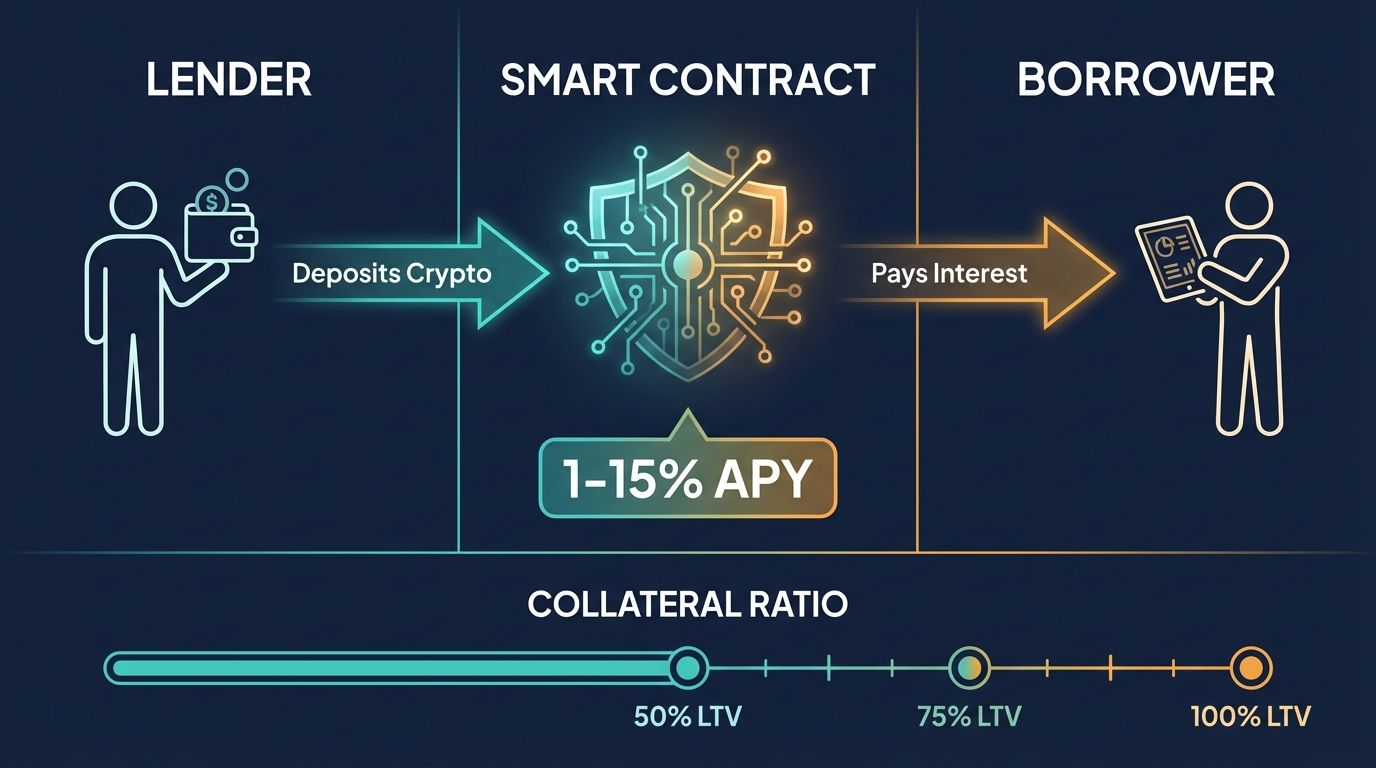
Crypto lending platforms allow you to lend your digital assets to borrowers and earn interest payments, functioning much like a traditional savings account but with significantly higher yields. Borrowers typically put up collateral worth more than their loan amount, which provides lenders with a safety buffer against default risk.
Decentralized lending platforms like Aave and Compound operate through smart contracts that automatically match lenders and borrowers, set interest rates algorithmically based on supply and demand, and liquidate collateral if a borrower's position becomes under-collateralized. Interest rates on major assets like Bitcoin and Ethereum typically range from 1% to 8% annually, while stablecoin lending can offer 5% to 15% or more depending on market conditions.
Risk Level: Low to Moderate. Decentralized lending on established platforms is relatively safe thanks to over-collateralization requirements. However, risks include smart contract bugs, oracle manipulation attacks, and extreme market volatility that could lead to cascading liquidations. The collapse of centralized lending platforms like Celsius and BlockFi in 2022 highlighted the importance of choosing decentralized, transparent protocols over opaque centralized alternatives.
Practical Tips:
- Prefer decentralized lending platforms over centralized ones for greater transparency and self-custody.
- Monitor utilization rates, as extremely high utilization can make it temporarily difficult to withdraw your funds.
- Diversify your lending across multiple protocols and chains to spread risk.
- Consider lending stablecoins if you want to earn yield without additional exposure to crypto price volatility.
4. Provide Liquidity to Decentralized Exchanges
Liquidity provision involves depositing your crypto assets into trading pools on decentralized exchanges (DEXs) like Uniswap, SushiSwap, or PancakeSwap. These pools enable other users to swap tokens, and as a liquidity provider (LP), you earn a share of the trading fees generated by each swap that occurs in your pool.
The mechanics are straightforward: you deposit an equal value of two tokens into a liquidity pool (for example, ETH and USDC), receive LP tokens representing your share of the pool, and earn a proportional cut of the 0.3% fee charged on each trade. On high-volume pairs, this can translate to attractive annual returns. Concentrated liquidity features on platforms like Uniswap V3 allow you to focus your capital within specific price ranges for potentially higher fee income.
Risk Level: Moderate. The primary risk unique to liquidity provision is impermanent loss, which occurs when the price ratio of the two tokens in your pool changes significantly. If one token appreciates substantially relative to the other, you could end up with less total value than if you had simply held both tokens separately. This loss becomes "permanent" only when you withdraw your liquidity at an unfavorable ratio.
Practical Tips:
- Choose high-volume trading pairs to maximize fee income and offset potential impermanent loss.
- Pairs with correlated assets (like ETH/stETH or USDC/USDT) experience minimal impermanent loss.
- Use concentrated liquidity positions carefully, as they amplify both potential returns and impermanent loss.
- Track your LP positions regularly and rebalance when necessary to optimize returns.
- Consider single-sided liquidity options on platforms that support them to reduce complexity.
5. Access Cash Through Crypto-Backed Loans
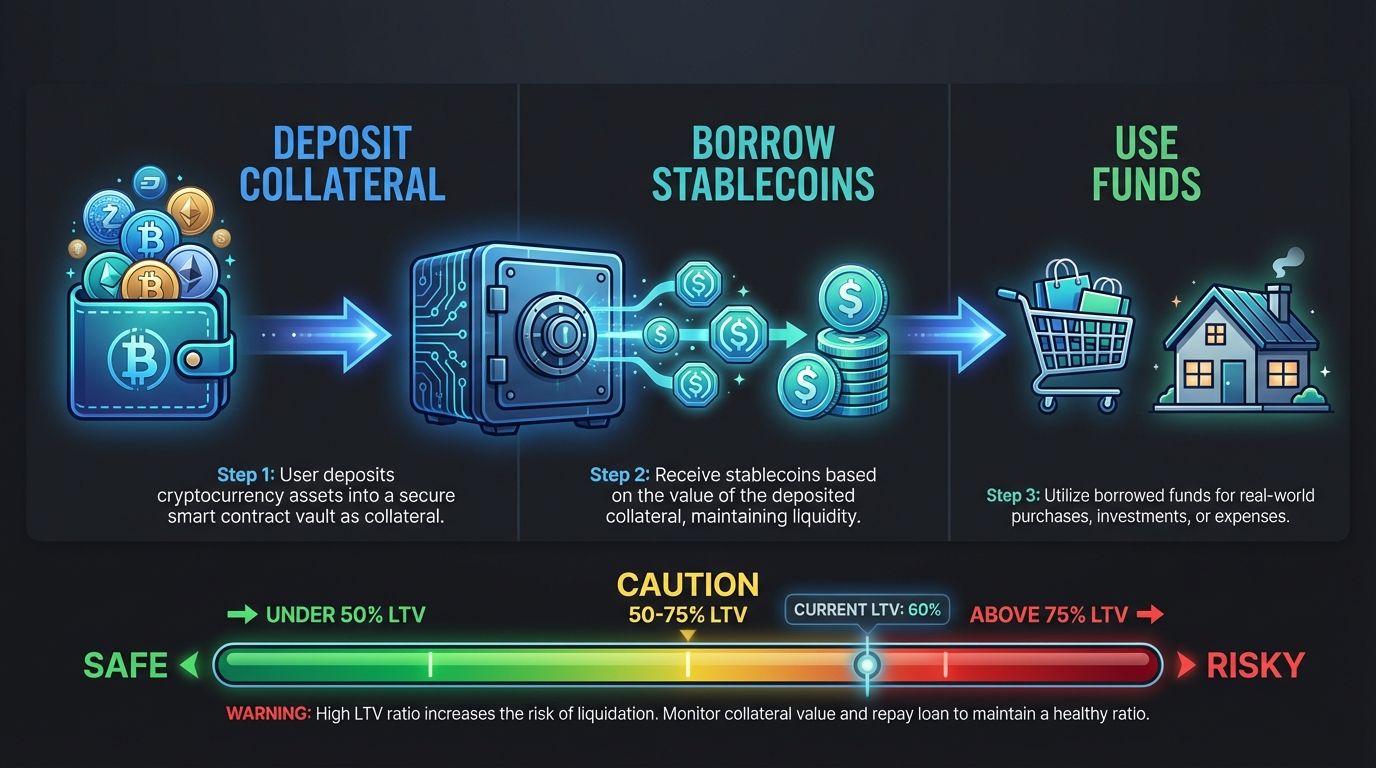
One of the most direct ways to take profits from crypto without selling is to borrow against your holdings. Crypto-backed loans allow you to use your Bitcoin, Ethereum, or other digital assets as collateral to obtain a loan in stablecoins or fiat currency. This strategy lets you access liquidity for real-world expenses or new investment opportunities while maintaining ownership of your underlying crypto assets.
Platforms like Aave, MakerDAO, and Compound offer decentralized borrowing options where you deposit crypto collateral and mint or borrow stablecoins like DAI or USDC. Typical loan-to-value (LTV) ratios range from 50% to 75%, meaning you can borrow $50 to $75 for every $100 worth of crypto you deposit as collateral. Interest rates on these loans vary from 1% to 10% annually depending on the platform and market conditions.
Risk Level: Moderate to High. The biggest risk with crypto-backed loans is liquidation. If the value of your collateral drops below the required threshold due to a market downturn, the protocol will automatically sell your collateral to repay the loan. This can result in permanent loss of your assets during exactly the kind of market conditions where you would most want to hold them.
Practical Tips:
- Maintain a conservative LTV ratio (below 50%) to create a substantial buffer against liquidation during market downturns.
- Set up price alerts so you can add more collateral or repay part of the loan before reaching liquidation thresholds.
- Borrow stablecoins rather than volatile assets to keep your debt value predictable.
- Consider using the borrowed funds for income-generating activities that can help cover interest costs.
- Always have a plan for repaying the loan, especially if market conditions deteriorate.
6. Invest in Dividend-Paying and Revenue-Sharing Tokens
Some crypto projects distribute a portion of their protocol revenue directly to token holders, creating a dividend-like income stream. These revenue-sharing mechanisms reward long-term holders and can provide a steady source of passive income without requiring you to sell any of your positions.
Notable examples include tokens that share trading fee revenue with stakers, governance tokens that direct protocol earnings to holders who participate in voting, and exchange tokens that offer fee discounts along with periodic buyback-and-burn or distribution events. For instance, certain DEX tokens distribute a percentage of all trading fees to holders who stake their tokens in the protocol's governance module.
Risk Level: Moderate. The primary risks involve the sustainability of the revenue model and potential regulatory concerns around tokens that function similarly to securities. Revenue distributions depend entirely on the protocol's ability to generate consistent fees, which can fluctuate significantly with market activity. Additionally, the regulatory landscape around revenue-sharing tokens continues to evolve, and some projects may need to restructure their distribution mechanisms.
Practical Tips:
- Research the protocol's revenue model thoroughly and verify that distributions are backed by real economic activity, not just inflationary token emissions.
- Look at historical distribution data to understand the consistency and reliability of payments.
- Diversify across multiple revenue-sharing protocols rather than concentrating in a single project.
- Pay attention to the vesting or lock-up requirements associated with staking for revenue sharing.
- Monitor protocol governance proposals that could change the distribution structure or percentages.
7. Use Trading Bots to Compound Gains Without Selling Core Holdings
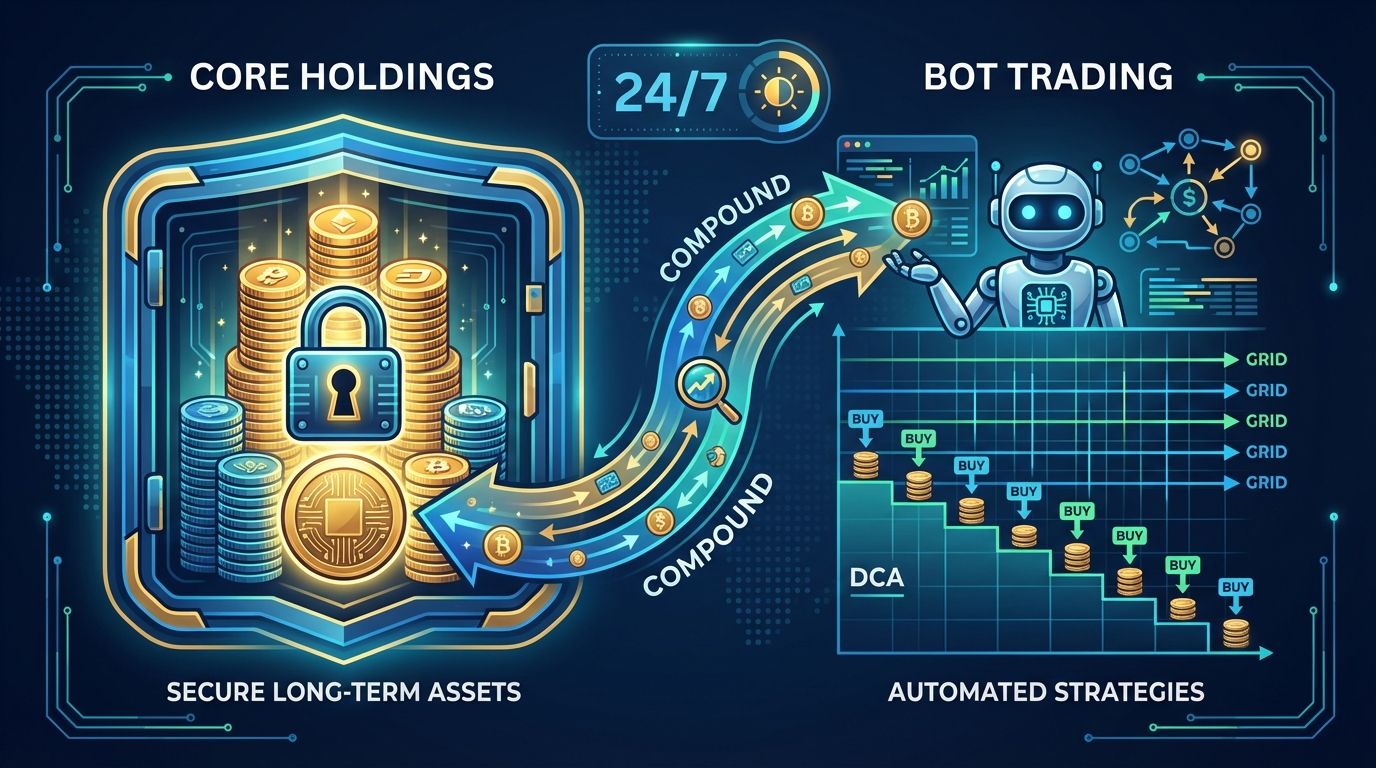
Automated trading bots offer a sophisticated way to generate additional income from your crypto portfolio while keeping your long-term holdings untouched. By allocating a portion of your portfolio to bot-driven strategies, you can capture short-term market movements and compound gains around your core positions without manually selling your primary assets.
Dollar-Cost Averaging (DCA) bots systematically buy into positions during dips and can be configured to take partial profits at predetermined price levels, reinvesting those profits back into your portfolio. Grid trading bots place a series of buy and sell orders within a defined price range, capturing profits from natural market oscillations. These bots work around the clock, capitalizing on the 24/7 nature of crypto markets while you focus on other things.
The key advantage of using trading bots in the context of preserving your holdings is that you can designate specific portions of your portfolio for active trading while keeping your core long-term positions completely separate. The profits generated by your bots can be reinvested, compounded, or withdrawn as income, all without touching your primary holdings.
Risk Level: Low to Moderate (when configured properly). Trading bots operate based on predefined parameters, which means they can help remove emotional decision-making from the equation. However, poorly configured bots can incur losses, especially in strongly trending markets where grid bots may sell too early or DCA bots may buy into a sustained downturn. The risk can be managed significantly through proper configuration and choosing the right strategy for current market conditions.
Practical Tips:
- Start with conservative bot settings and small position sizes until you understand how each strategy performs in different market conditions.
- Use DCA bots for accumulation during bear markets and grid bots for range-bound or sideways markets.
- Set clear parameters including price ranges, order sizes, and stop-loss levels before activating any bot.
- Monitor bot performance regularly and adjust settings as market conditions change.
- Keep your core long-term holdings in separate wallets or accounts from your bot-trading funds to maintain clear boundaries.
Start Earning From Your Crypto With Altrady
Learning how to take profits from crypto without selling is only valuable when you have the right tools to execute these strategies efficiently. Altrady provides a comprehensive trading platform designed to help you maximize returns from your crypto portfolio through intelligent automation and advanced portfolio management.
With Altrady's DCA bot, you can systematically accumulate and compound gains while maintaining your long-term positions. The grid bot helps you capture profits from market fluctuations within your defined price ranges, generating income from natural volatility without requiring you to sell your core holdings. Meanwhile, Altrady's portfolio tracking features give you a unified dashboard to monitor all your positions, staking rewards, and bot performance across multiple exchanges in real time.
Whether you are staking, farming, lending, or running automated strategies, having a powerful platform to manage everything in one place makes all the difference. Sign up for a free trial of Altrady today and discover how smart automation and professional-grade tools can help you generate consistent income from your crypto without ever having to sell.
Frequently Asked Questions
Can you really make money from crypto without selling your tokens?
Yes, there are multiple proven strategies that generate income without requiring you to sell your holdings. Staking rewards, DeFi yield farming, crypto lending, liquidity provision, and crypto-backed loans all allow you to earn returns while maintaining ownership of your assets. The income comes from network rewards, trading fees, interest payments, or borrowed funds against your collateral. These strategies have become increasingly accessible and can provide meaningful passive income depending on your portfolio size and risk tolerance.
What is the safest way to earn passive income from crypto?
Staking on established Proof-of-Stake networks like Ethereum is generally considered one of the safest options. The risks are relatively low, especially when using reputable validators or liquid staking providers. Lending stablecoins on well-audited decentralized platforms like Aave is another lower-risk option since you avoid exposure to crypto price volatility while still earning attractive yields. The safest approach overall involves diversifying across multiple strategies and platforms rather than concentrating all your assets in a single protocol.
What are the tax implications of earning crypto income without selling?
Tax treatment varies significantly by jurisdiction, but in most countries, income earned through staking rewards, lending interest, and yield farming is taxable as ordinary income at the time you receive it. Borrowing against your crypto through collateralized loans is generally not a taxable event since you are taking on debt rather than realizing gains. However, if your collateral is liquidated, that would typically trigger a taxable event. It is strongly recommended to consult with a tax professional who specializes in cryptocurrency to understand the specific rules that apply in your country.
How much capital do I need to start earning passive income from crypto?
You can start with relatively small amounts for most strategies. Staking often has no minimum requirement when using liquid staking providers, and many DeFi protocols accept deposits of any size. However, keep in mind that transaction fees (especially on Ethereum mainnet) can eat into returns on smaller positions. Layer 2 networks and alternative blockchains like Solana, Avalanche, or Polygon offer much lower fees, making them more practical for smaller portfolios. A general guideline is to ensure your expected annual yield exceeds the total cost of transactions required to set up and manage the position.
What risks should I watch out for when earning yield on my crypto?
The main risks include smart contract vulnerabilities (where bugs in protocol code could lead to loss of funds), impermanent loss (when providing liquidity to volatile trading pairs), liquidation risk (when borrowing against your crypto collateral), and protocol-specific risks like governance attacks or unsustainable tokenomics. Always research protocols thoroughly, check for security audits, start with small amounts, and diversify across multiple platforms. Avoid chasing extremely high APY offers, as they often come with proportionally higher risks or are unsustainable over time.