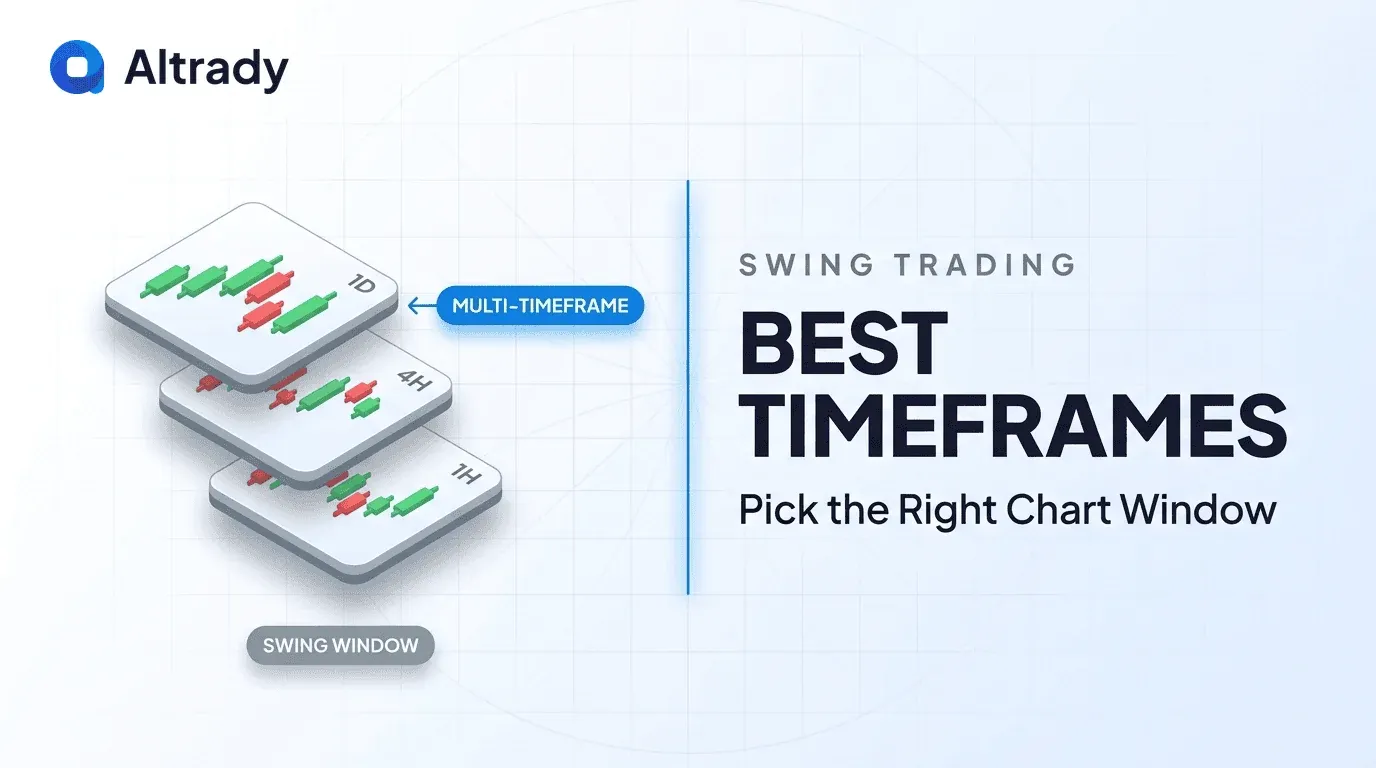

If you’re a swing trader, you’ve probably asked yourself: What’s the best time frame to trade on? It’s a simple question with a nuanced answer. The truth is, your ideal time frame depends on your strategy, lifestyle, and appetite for risk. But if we’re talking swing trading specifically, three time frames consistently stand out: the 4-hour (H4), daily (D1), and weekly (W1) charts.
These time frames strike a sweet spot between capturing meaningful price swings and filtering out the chaotic noise of shorter-term charts. Let’s break down each one, compare their strengths and weaknesses, and help you figure out which fits your trading style best.
Most Common Time Frames for Swing Trading
4-Hour Chart (H4): The Active Trader’s Playground
The 4-hour chart is a favorite among swing traders who want to stay nimble and catch more frequent moves. It offers a detailed view of price action, allowing you to spot short- to medium-term trends and reversals with precision.
Pros:
- More trading opportunities - ideal if you like to stay active.
- Captures intraday and multi-day swings.
- Great for spotting breakout setups and short-term momentum.
Cons:
- Higher volatility means more false signals.
- Requires frequent monitoring-this isn’t a “set it and forget it” chart.
- Can be mentally taxing if you’re juggling other responsibilities.
If you’ve got the time and discipline to check charts multiple times a day, the H4 chart can be a goldmine. Just be ready to deal with whipsaws and fakeouts: tight stop-losses and solid risk management are non-negotiable here.
Daily Chart (D1): The Swing Trader’s Sweet Spot
Ask seasoned swing traders what chart they swear by, and most will point to the daily. It’s the Goldilocks zone: not too fast, not too slow. The D1 chart smooths out intraday noise while still offering enough movement to catch profitable swings.
Pros:
- Reliable signals with less noise.
- Balanced risk-to-reward setups.
- Easier to manage trades without constant screen time.
Cons:
- Fewer trades because patience is key.
- Signals take longer to develop.
- May miss short-term volatility spikes.
The daily chart is perfect for traders who want to analyze the market once or twice a day, place trades, and let them play out over several days or weeks. It’s also ideal for those who want to avoid the stress of constant monitoring.
Weekly Chart (W1): The Macro View for Patient Traders
If you’re the type who prefers big-picture analysis and longer-term plays, the weekly chart is your best friend. It’s not for everyone, but it’s incredibly powerful for identifying major trends and executing trades with multi-week or even multi-month horizons.
Pros:
- Crystal-clear trend direction.
- Minimal noise - great for strategic entries.
- Less emotional trading due to fewer decisions.
Cons:
- Very slow signal development.
- Trades can take weeks or months to play out.
- Not ideal for active traders or those seeking quick returns.
Weekly charts are best suited for traders who combine technical analysis with fundamental insights, or those who simply want to minimize screen time. If you’re building a portfolio of swing trades and don’t mind holding positions longer, W1 charts offer unmatched clarity.
Timeframe Comparison: Quick Overview
Here’s a handy table to compare the three main swing trading time frames:
| Timeframe | Time duration | Pros | Cons |
| 4-hour | Few hours - few days | Frequent opportunities, detailed movements | High volatility, requires active monitoring |
| Daily | Several days-weeks | Reliable signals, balanced risk/trend analysis | Slower signal development, fewer trades |
| Weekly | Weeks-months | Clear trend spotting, minimal noise | Slow trades, less responsive to fast moves |
Choosing Your Optimal Timeframe
So, which one should you use? Let’s be real: there’s no one-size-fits-all answer. But here’s a framework to help you decide:
Your Schedule
Got a full-time job or other commitments? Daily or weekly charts are your best bet. You can analyze the market once a day or even once a week and still make solid trades.
Trading full-time or part-time with flexibility? The 4-hour chart gives you more action and tighter entries.
Your Risk Tolerance
Comfortable with volatility and quick decisions? H4 charts will keep you engaged.
Prefer slower, more calculated moves? D1 and W1 charts reduce emotional trading and offer more stable setups.
Your Strategy
Trend-following or breakout strategies? All three time frames work, but D1 and W1 offer cleaner setups.
Mean reversion or short-term momentum? H4 gives you more frequent opportunities to capitalize.
What About Shorter Timeframes?
You might be wondering: Why not use 15-minute or 1-hour charts?
Good question. While those time frames have their place, they’re better suited for day trading or scalping, not swing trading. Here’s why:
- They’re packed with noise and false signals.
- Require constant monitoring and lightning-fast decision-making.
- Often lead to overtrading and emotional burnout.
- Swing trading is all about catching meaningful moves over time-not chasing every tick.
Short-term charts can tempt you into impulsive trades that don’t align with your broader strategy.
Pro Tips for Timeframe Mastery
Here are a few tips to help you make the most of your chosen time frame:
1. Use Multiple Time Frame Analysis
Even if you trade on the daily chart, it’s smart to check the weekly for trend direction and the 4-hour for entry timing. This gives you a layered view and helps avoid blind spots.
2. Stick to Your Plan
Don’t jump between time frames just because you’re bored or impatient. Each time frame has its rhythm; respect it. Switching mid-trade can lead to confusion and poor decisions.
3. Backtest Your Strategy
Before committing to a time frame, backtest your strategy on historical data. See how it performs on H4 vs. D1 vs. W1. This gives you confidence and clarity.
4. Keep an Eye on Volatility
Crypto markets are famously volatile. Even on higher time frames, sudden news or whale moves can shake things up. Use stop-losses and position sizing to protect your capital.
Bottom Line
Your time frame is more than just a number; it’s a reflection of your trading personality. Are you a fast-paced tactician who thrives on action? Or a strategic thinker who prefers the long game?
Whatever your style, the key is consistency. Pick a time frame that matches your lifestyle and mindset, and master it. The best swing traders aren’t the ones who chase every move; they’re the ones who know their lane and stay in it.
So whether you’re zooming in on the 4-hour chart for quick swings, riding the daily for balanced trades, or scanning the weekly for macro trends, remember: timing is everything, but discipline is what makes it profitable.
Frequently Asked Questions
What is the best timeframe for crypto swing trading?
The daily (1D) chart is widely considered the best timeframe for crypto swing trading. It offers a balanced view of price action, filters out short-term noise, and provides reliable signals for trades lasting several days to weeks.
Can I swing trade crypto on the 4-hour chart?
Yes. The 4-hour chart is popular among active swing traders who want quicker entries and exits. It provides more trading opportunities than the daily chart but requires more frequent monitoring and discipline to avoid false signals.
How long do crypto swing trades typically last?
Crypto swing trades typically last from 2 days to several weeks, depending on the timeframe and market conditions. Trades based on the daily chart tend to last longer, while those on the 4-hour chart may resolve in a few days.
Should beginners use shorter or longer timeframes?
Beginners should start with longer timeframes like the daily or weekly chart. These produce fewer but more reliable signals, require less screen time, and help new traders develop patience and discipline before moving to shorter timeframes.
Can I use multiple timeframes for swing trading?
Yes. Multi-timeframe analysis is a proven approach. Many traders use a higher timeframe (like the weekly) to identify the overall trend and a lower timeframe (like the 4-hour or daily) to find precise entry and exit points.
Put Your Strategy into Action
Altrady provides TradingView-powered charts across multiple timeframes, smart trading features, and multi-exchange support to help you execute swing trades with precision. Sign up for a free trial today and find the timeframe that works best for your trading style.