
If you're diving into swing trading, one of the first questions you’ll hit is: how many trades should I actually be making? Should you be stacking trades every day like a day trader, or chilling for the perfect setup?
The answer depends on your experience, your strategy, and how much time you can realistically commit to tracking the market. But as a rule of thumb, the typical number of trades for a crypto swing trader usually falls somewhere between 2 and 10 trades per week.
First, you need to understand where you fit and how to find that sweet spot between overtrading and missing opportunities.
Beginner Swing Traders: 1–3 Trades Per Week
If you’re new to swing trading, slow down. Seriously. It’s tempting to jump into every “promising” chart you see, but your main goal early on isn’t profit; it’s learning the rhythm of the market.
Starting with 1 to 3 trades per week gives you room to:
- Focus on quality setups instead of chasing volatility.
- Analyze each trade’s entry and exit with patience.
- Understand how crypto reacts to different market conditions.
When you’re trading too often as a beginner, you’ll likely make emotional decisions, ignore stop losses, or misread trends. Fewer trades mean more time to review, reflect, and refine your process.
Remember: swing trading is a strategy, not a sprint.
Intermediate Traders: 3–7 Trades Per Week
Once you’ve got some wins (and losses) under your belt, it’s time to open things up a bit. Intermediate swing traders can handle 3 to 7 trades per week, depending on the market’s volatility and the number of reliable setups they identify.
At this stage, you’re balancing two things:
- Opportunity – catching solid short- to medium-term swings across multiple coins.
- Focus – keeping enough mental bandwidth to manage open trades without losing track.
You’ve probably developed your own checklist for entries and exits, maybe even automated alerts or partial position management. Just make sure you’re not trading out of boredom. Swing trading success still hinges on discipline and selectivity, not frequency.
Advanced Swing Traders: 5–10 Trades Per Week
For advanced swing traders who’ve built consistent strategies, taking 5 to 10 trades per week can make sense. These traders are usually running multiple watchlists, scanning multiple time frames, and managing risk like pros.
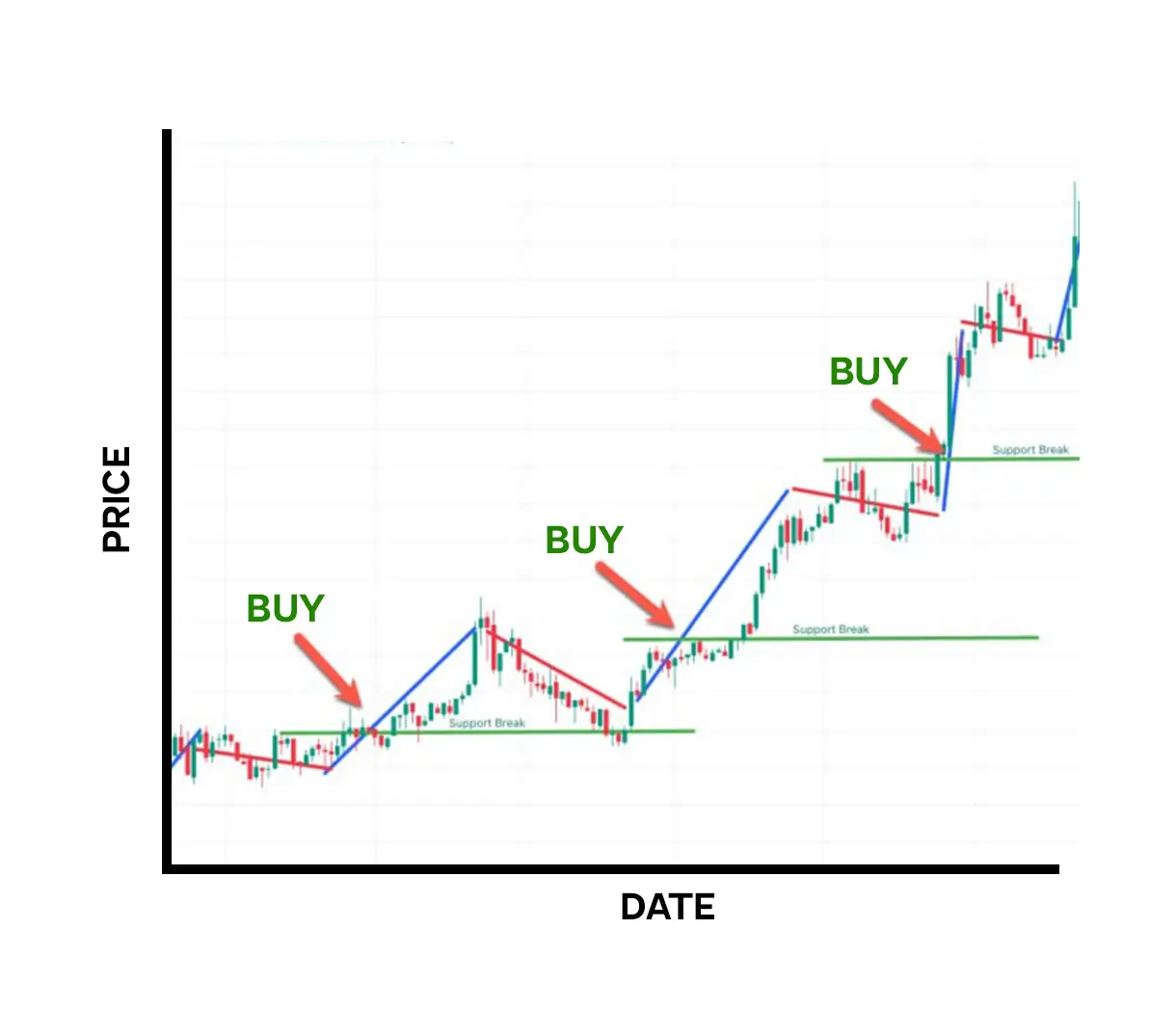
But even for advanced traders, more trades don’t automatically mean more profit. The best still cherry-pick setups with strong confluence: support/resistance confirmation, volume spikes, or clear breakouts that align with their game plan.
Think of it like fishing: the goal isn’t to cast more lines, it’s to hook the right fish.
Quality Over Quantity (Always)
No matter your experience level, this never changes: the quality and profitability of your trades matter more than the number of trades.
A single high-conviction trade can outperform a dozen mediocre ones. Swing trading isn’t as much about being constantly “in the market”, but rather about being in when it counts.
For example, imagine you execute just three well-timed trades over three months. If each trade captures a solid move, say, a 20% gain while managing risk smartly, you could easily outperform a trader making dozens of random entries each week.
That’s the essence of swing trading: timing, precision, and patience.
How Long Do Swing Trades Last?
Swing trades usually run from a few days to a few weeks, depending on market conditions. You’re not reacting to every intraday move; you’re riding short- to medium-term price swings.
The beauty of this time frame is flexibility: you don’t have to monitor charts 24/7 like a day trader, but you still get more action and opportunity than a long-term holder (HODLer).
If you catch a trend early and it keeps building momentum, you might hold longer. If momentum fades or the setup weakens, you exit early and protect your gains.
That’s the balance swing traders live for.
The Optimal Number of Trades for a Crypto Swing Trader
Let’s wrap it up with a quick summary you can keep in your trading notebook:
| Trader Level | Recommended Trades/Week | Focus |
| Beginner | 1 - 3 | Learn setups, manage emotions, refine entries/exits |
| Intermediate | 3 - 7 | Balance opportunity and focus, improve consistency |
| Advanced | 5 - 10 | Maximize strong setups, manage multiple positions efficiently |
Whatever your level, the optimal number of trades for a crypto swing trader isn’t about hitting a target; it’s about hitting quality. Trade less, think more, and always protect your capital.
Key Takeaways
Swing trading crypto is as much about mindset as it is about charts. The right number of trades per week depends on how confident and consistent you are in executing your edge. Start slow, stay patient, and let the market come to you.
In the end, the traders who last aren’t the ones taking the most trades, but the traders who are taking the right ones.