

A crypto trading bot usually fails before it launches. The problem is rarely automation by itself. The problem is a weak setup that gives the bot the wrong market, wrong size, wrong range, or wrong review routine.
The goal is not to make automation sound fragile. The goal is to treat a bot like an execution system. A Signal bot, Grid bot, or DCA bot can only follow the rules you give it, so the setup checklist matters as much as the strategy idea.
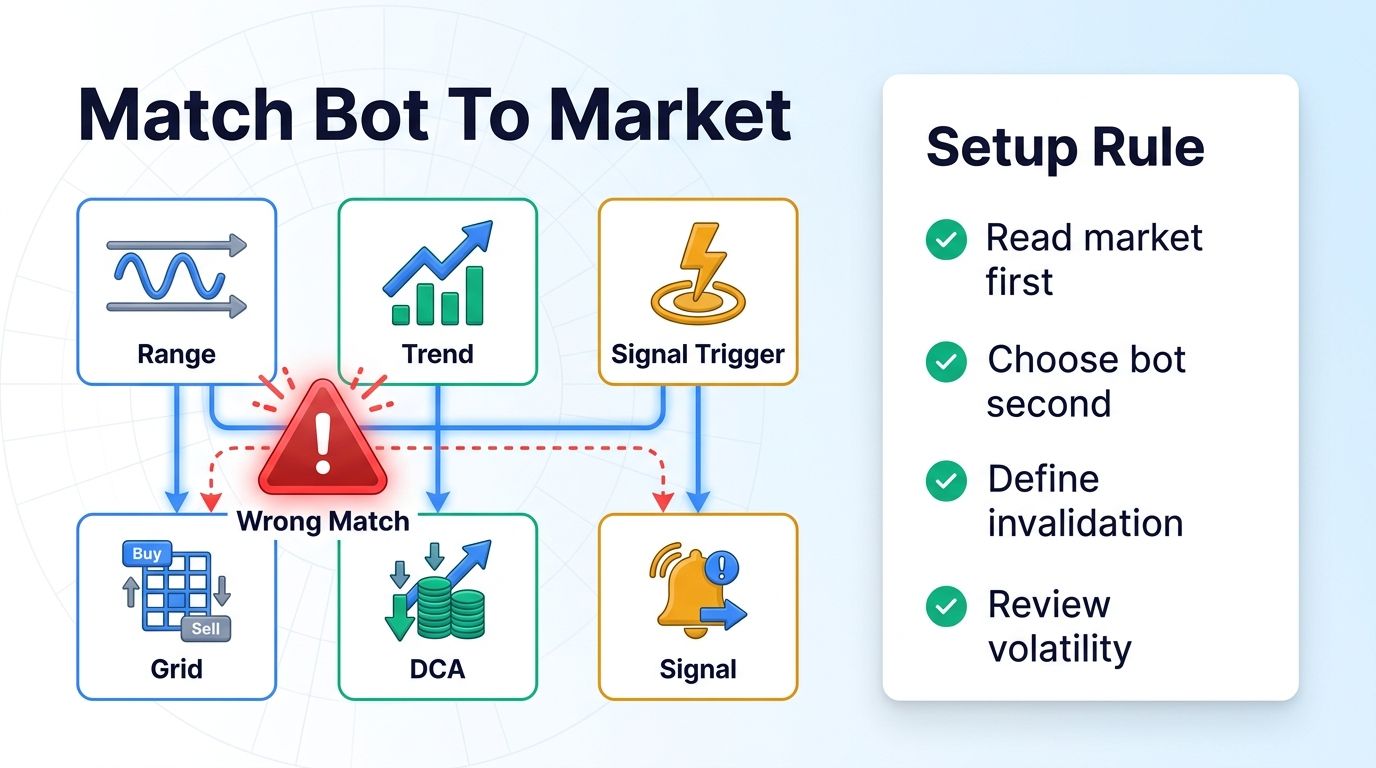
Mistake 1: Starting With the Bot Instead of the Market
A bot type should match the market state. A Grid bot needs a defined range where repeated buys and sells make sense. A DCA bot works better when accumulation rules fit the trend and the trader can tolerate drawdown. A Signal bot depends on the quality of the trigger logic.
Many traders choose the tool first because the dashboard is exciting. A cleaner process starts with the asset, volatility, trend, liquidity, and invalidation level. Only then should the trader decide which automation mode fits the job.
- Use Grid bot logic when the range is clear.
- Use DCA bot logic when accumulation rules are planned.
- Use Signal bot logic only when triggers are tested.
- Avoid using one bot type for every market state.
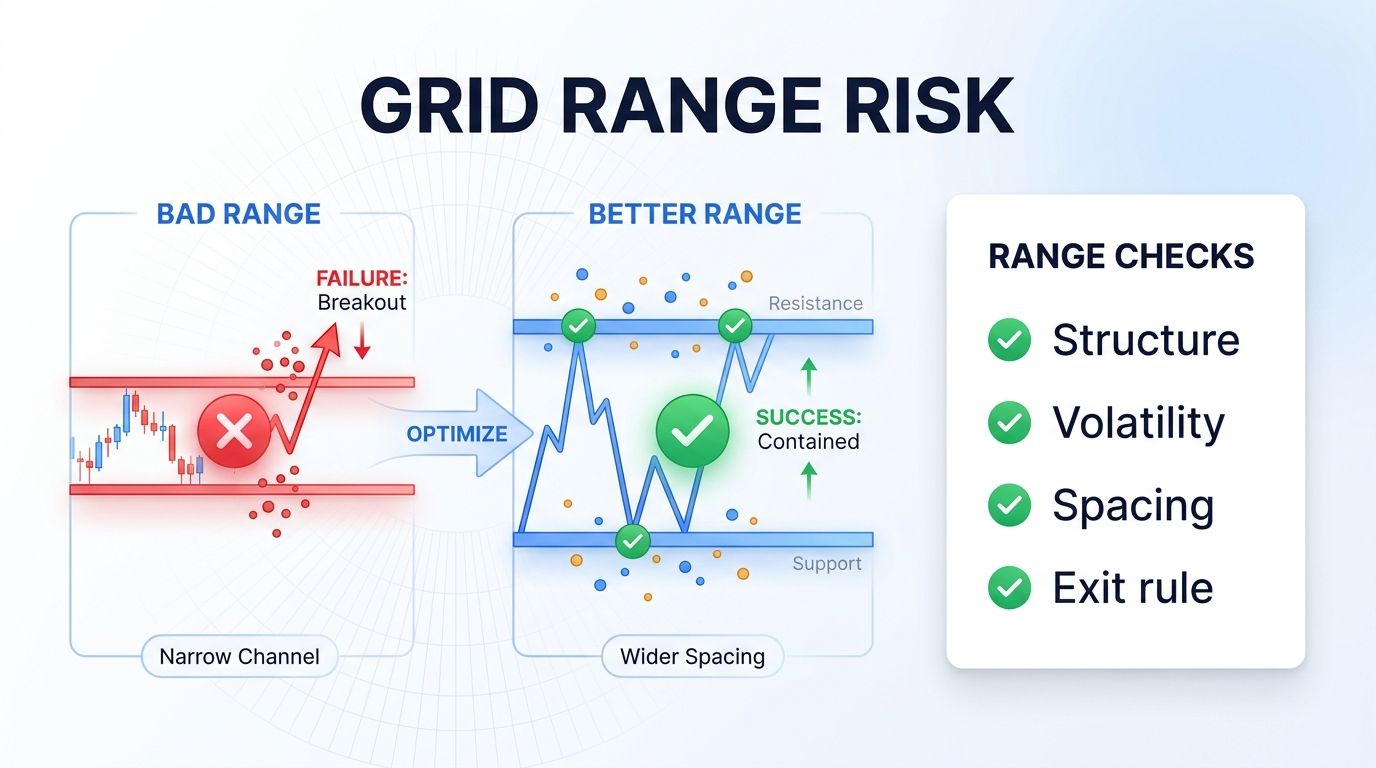
Mistake 2: Using a Range That Price Can Break Too Easily
Grid settings often fail because the range is too narrow, too stale, or placed directly inside a level that price is likely to break. If the market leaves the range quickly, the bot can stop behaving like a balanced range tool and start acting like a one-sided position.
A better grid setup uses recent structure, volume zones, volatility, and support or resistance levels. The range should explain why price may rotate there, not only where the chart looked convenient when the bot was launched.
- Do not set ranges from random recent highs and lows.
- Check volatility before choosing grid spacing.
- Avoid ranges placed inside obvious breakout zones.
- Plan what happens if price leaves the range.
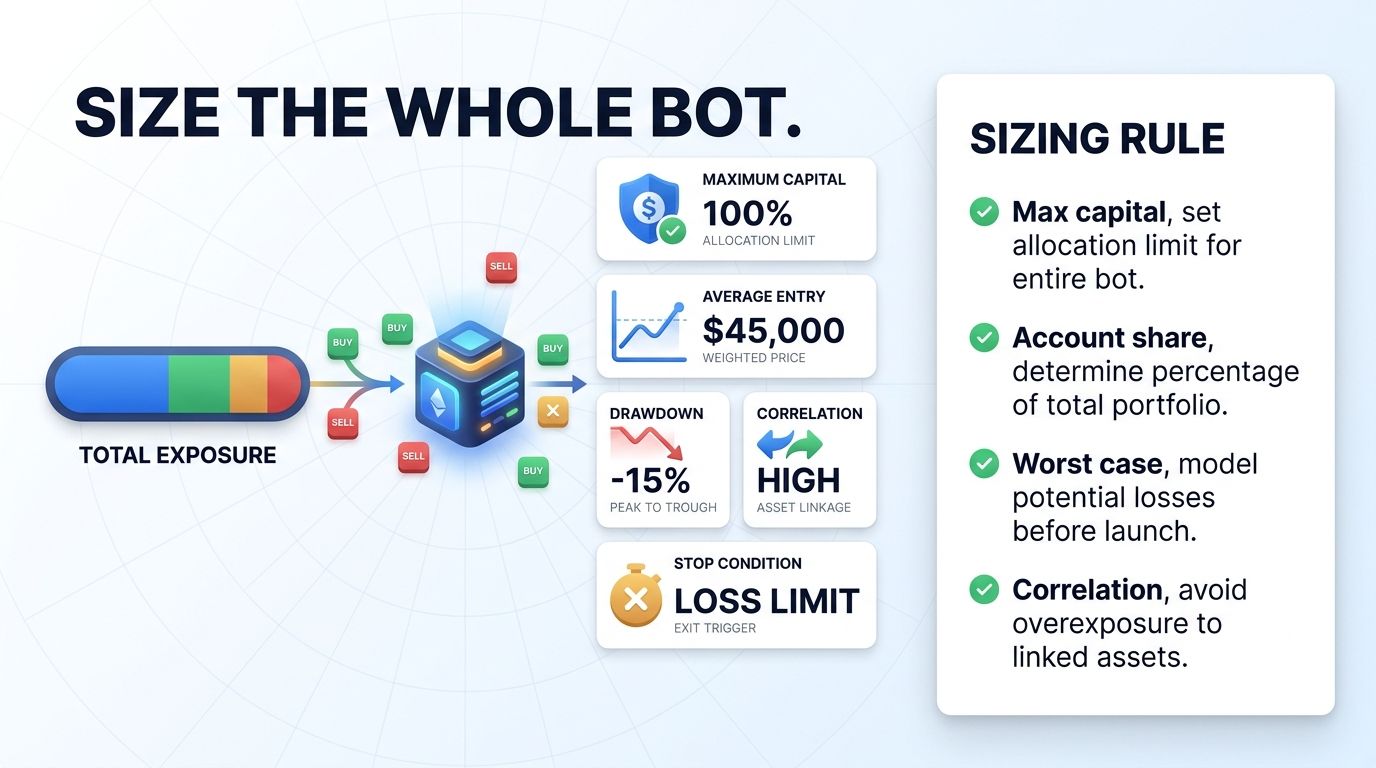
Mistake 3: Sizing the Bot Like a Manual Trade
Automation can create many entries over time, so bot sizing needs a different lens from one manual order. A small order can become a large exposure if the bot keeps adding during a move against the setup. This is especially important for DCA and grid systems.
Before launch, traders should calculate maximum capital usage, worst-case average entry, stop conditions, and how much account equity the bot can consume. The Risk Reward Calculator is useful only after the trader has decided what amount of capital is actually allowed to be at risk.
- Calculate maximum capital use before launch.
- Set exposure limits per asset and per bot.
- Avoid stacking similar bots on correlated assets.
- Review worst-case drawdown, not only expected return.
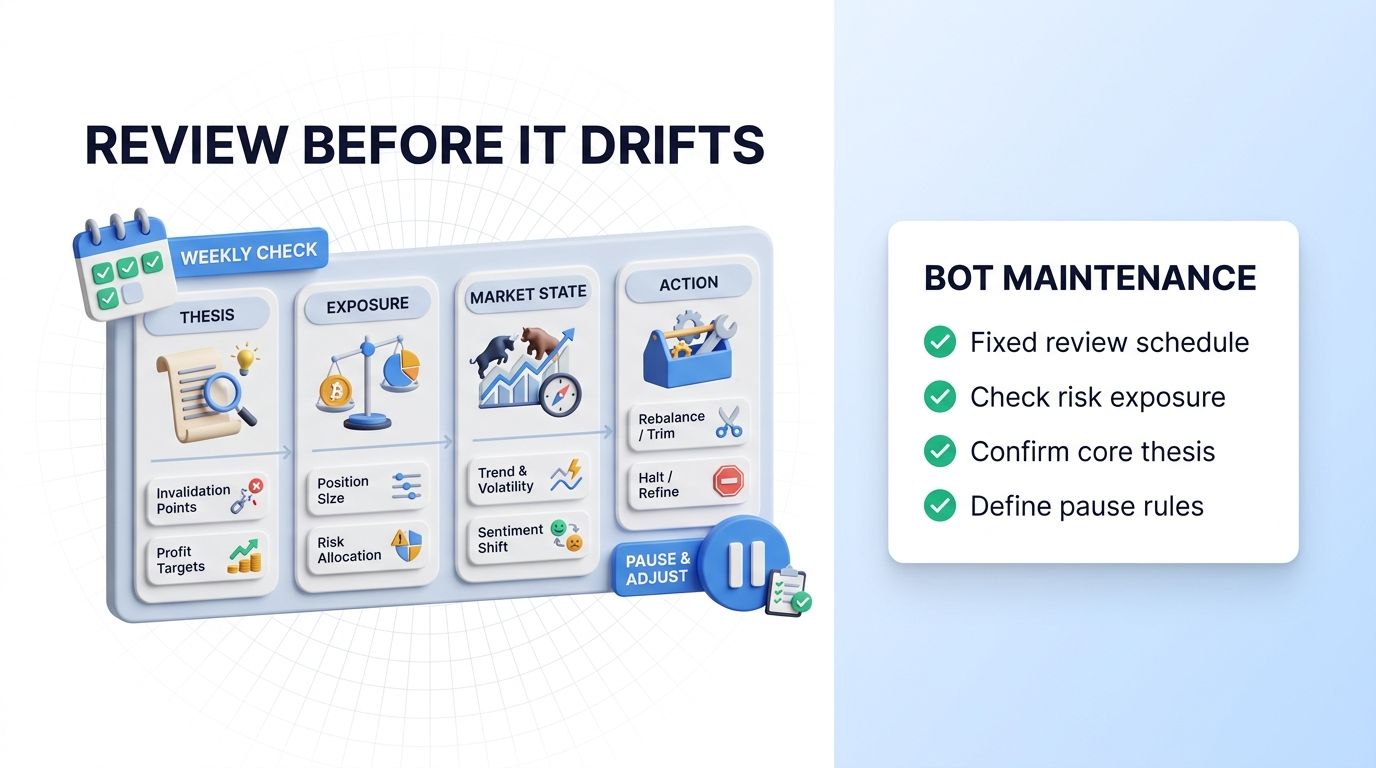
Mistake 4: Launching Without a Review Routine
A bot is not a set-and-forget machine. It needs review because volatility, volume, funding, and trend conditions change. A setup that made sense on Monday can become poor by Friday if the asset breaks structure or liquidity disappears.
A simple review routine is enough. Check whether the original market state still exists, whether exposure is within limits, whether the bot is behaving as intended, and whether any news or liquidity change has altered the risk profile.
- Review bot behavior on a fixed schedule.
- Compare current market state with the launch thesis.
- Pause or adjust when the thesis is invalidated.
- Write down what worked before launching the next bot.
A Cleaner Bot Launch Checklist
A clean launch checklist should be boring. Define the market state, pick the automation type, set range or trigger rules, calculate maximum exposure, write the invalidation level, and schedule the first review before turning the bot on.
The best checklist also includes a no-action rule. If the market state is unclear, if the range is messy, or if the trader cannot explain what would make the bot wrong, the launch should wait. Waiting is often the most useful risk control.
- Market state first, bot type second.
- Range or trigger logic before capital allocation.
- Maximum exposure before launch.
- Review schedule before activation.
How to Review the Result After One Week
A one-week review should not ask only whether the bot made money. It should ask whether the setup behaved as expected. Start with the market state that existed at launch, then compare it with the market state at review time. If the market moved from range to trend, or from calm to volatile, the original setup may no longer be valid.
Next, review the actual exposure. Count open positions, capital used, unrealized profit or loss, realized profit, and fees. A bot that looks productive on completed actions may still be using more capital than planned. A bot that looks quiet may be doing exactly what it was designed to do if the market never triggered the setup.
Finally, write down the decision before changing settings. The decision can be continue, reduce size, pause, close, or rebuild. Changing several settings at once makes the next review harder because the trader will not know which change helped. The goal is not constant adjustment. The goal is measured improvement.
- Compare launch thesis with current market state.
- Review open exposure, not only closed actions.
- Write the next decision before editing settings.
- Change one major variable at a time.
How This Fits an Altrady Workflow
Inside a practical Altrady workflow, automation starts after the plan is written. Smart Trading can help define the manual structure of the idea, including entry, stop, and take-profit planning. The Risk Reward Calculator can then help check whether the idea makes sense before any automated execution begins.
After that, the trader can choose the automation type. A Grid bot fits a defined range. A DCA bot fits a planned accumulation path. A Signal bot fits a trigger-based setup where the signal source has already been reviewed. The order matters because the tool should serve the plan, not replace the plan.
This workflow also helps prevent over-automation. If two bots depend on the same asset direction, the account may have more concentration than it appears. If several bots depend on the same market regime, the trader may need a smaller size per bot. The dashboard should make exposure clearer, not create a false feeling of diversification.
- Plan first with Smart Trading logic.
- Check risk before choosing automation.
- Match bot type to market state.
- Watch total exposure across all active bots.
Bottom Line
Crypto trading bots fail most often when traders treat automation as a shortcut around planning. A bot can execute consistently, but it cannot fix a bad market read, oversized exposure, or missing review process.
The practical answer is to slow down before launch. Match the bot to the market, size the full system, define invalidation, and review the result. That turns automation into a controlled workflow instead of a reaction to a busy chart.
- Automation follows rules, it does not create judgment.
- Bad setup quality becomes automated bad execution.
- Risk limits must be defined before launch.
- Review turns bot trading into a process.
FAQ
Why do crypto trading bots fail after launch?
Most failures come from poor market fit, bad ranges, oversized exposure, weak trigger logic, or no review routine.
Should every market use the same bot type?
No. Grid bots, DCA bots, and Signal bots fit different market conditions and need different setup rules.
How often should a trader review a running bot?
Review frequency depends on volatility, but every live bot should have a fixed review schedule before launch.
What is the safest first step before launching a bot?
Define the market state and maximum allowed exposure before choosing the automation settings.