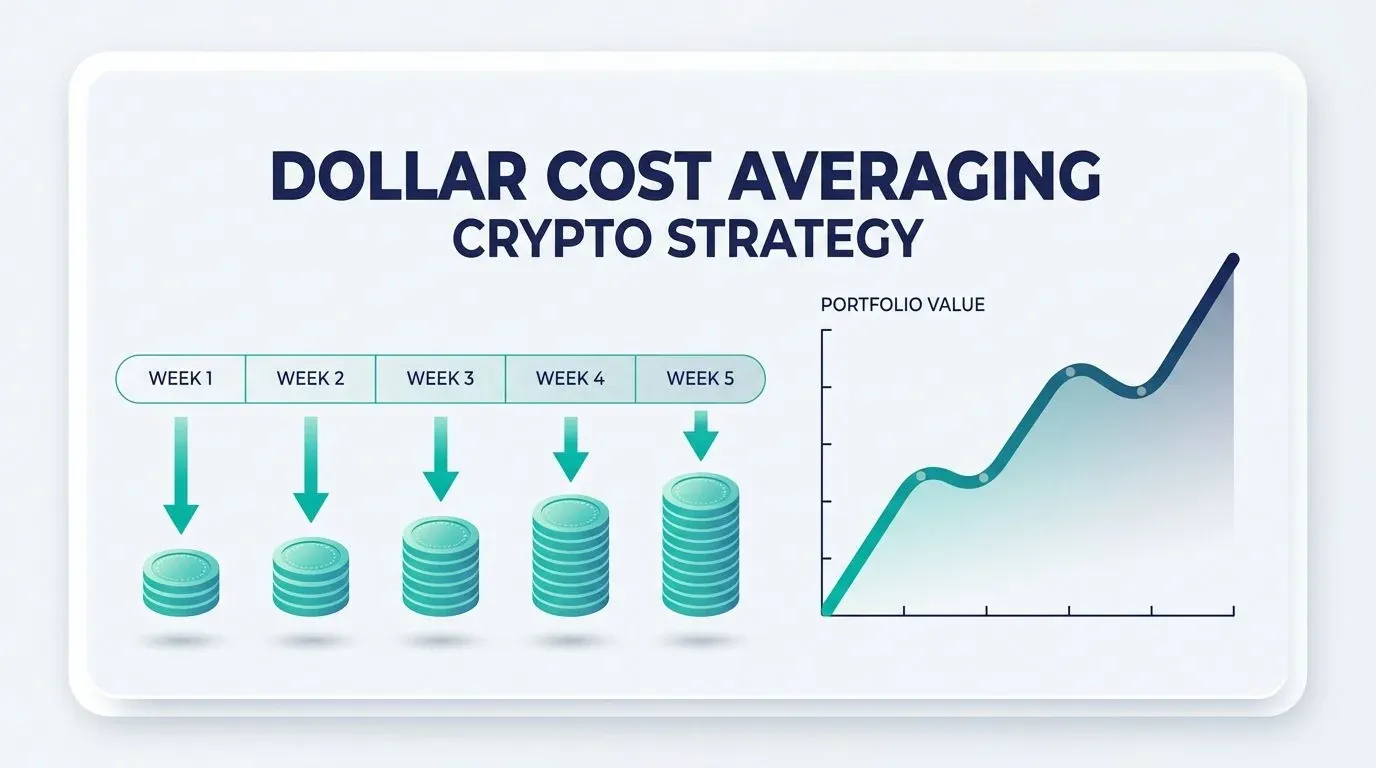

What Is Dollar Cost Averaging in Crypto?
Dollar cost averaging (DCA) is an investment strategy where you buy a fixed dollar amount of cryptocurrency at regular intervals, regardless of the price. Instead of trying to time the market, you spread your purchases over weeks, months, or even years.
The core idea: when prices are high, your fixed amount buys fewer coins. When prices are low, it buys more. Over time, this averages out your cost per coin, reducing the impact of volatility on your portfolio.
For crypto investors, DCA is one of the most practical strategies available because it removes emotion from the equation entirely.
The strategy originated in traditional finance but has become increasingly popular in crypto because of how violent price swings can be. An investor who bought Bitcoin at $69,000 in November 2021 saw their position drop 77% by June 2022. DCA investors who kept buying throughout that period dramatically lowered their average entry price and were profitable long before a lump-sum buyer at the top recovered their investment.
How Dollar Cost Averaging Works in Crypto: A Practical Example
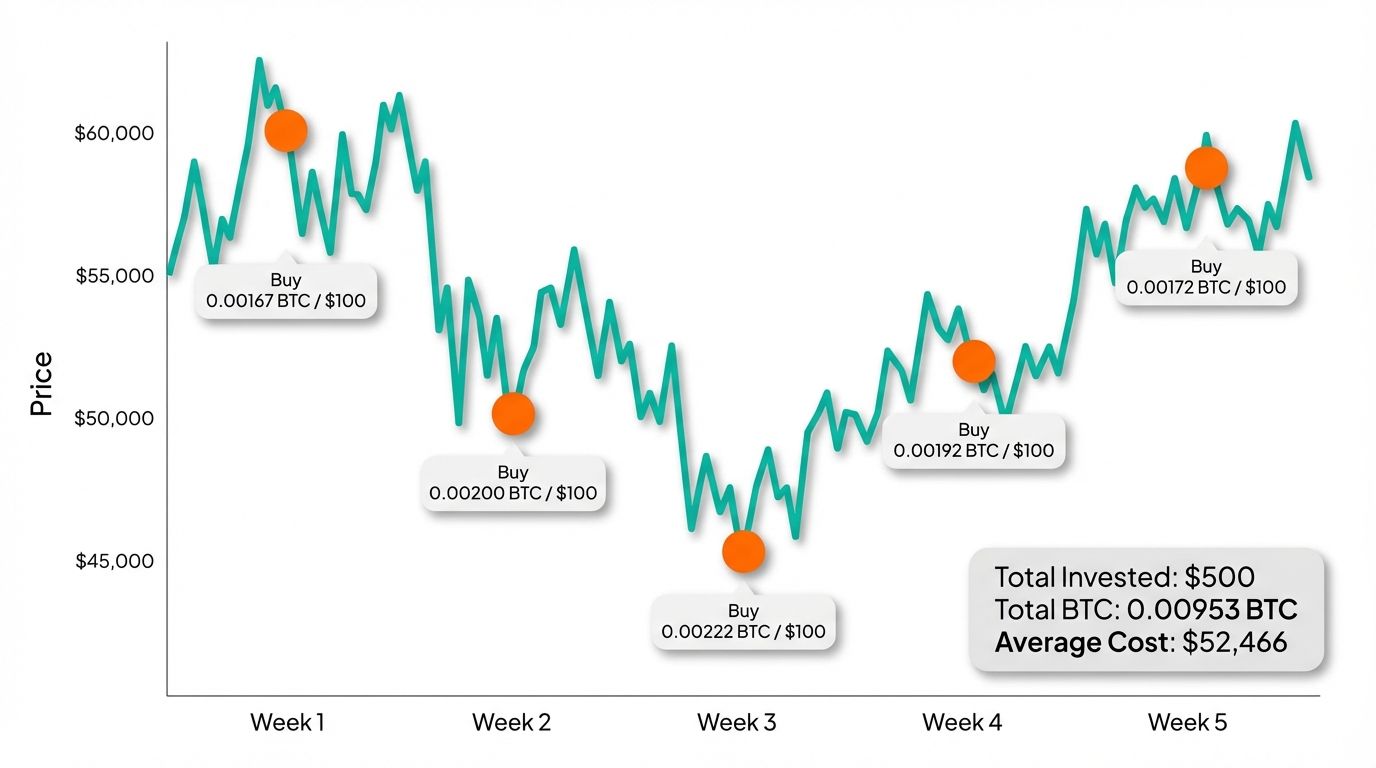
Say you decide to invest $100 in Bitcoin every week for 5 weeks. Here is how the math plays out:
- Week 1: BTC price = $60,000. You buy 0.00167 BTC.
- Week 2: BTC price = $55,000. You buy 0.00182 BTC.
- Week 3: BTC price = $45,000. You buy 0.00222 BTC.
- Week 4: BTC price = $50,000. You buy 0.00200 BTC.
- Week 5: BTC price = $58,000. You buy 0.00172 BTC.
Total spent: $500. Total BTC accumulated: ~0.00943 BTC. Average cost per BTC: ~$53,021.
If you had invested all $500 at Week 1 ($60,000), your average cost would be $60,000. DCA saved you roughly $6,979 in average cost basis.
DCA vs. Lump Sum Investing: Which Works Better for Crypto?
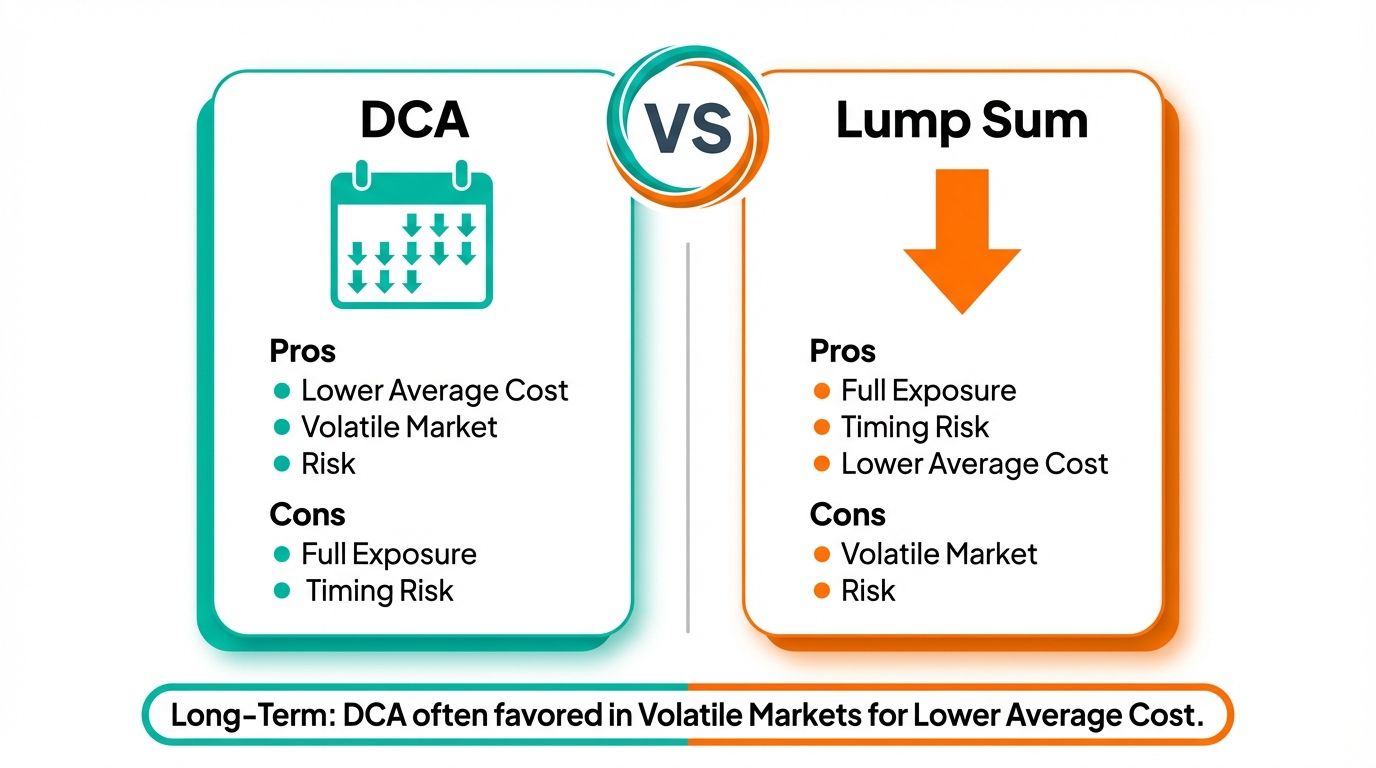
Both strategies have trade-offs, and the "best" approach depends on your situation.
Lump Sum Investing
- Pros: Maximizes exposure to upside if you buy at the right time. Studies show it outperforms DCA in bull markets roughly 67% of the time.
- Cons: Requires perfect timing. Buying before a major correction wipes out months of gains instantly. Psychological pressure is high.
Dollar Cost Averaging
- Pros: Removes timing pressure. Works automatically. Reduces the emotional impact of volatility. Ideal for long-term holders.
- Cons: In a sustained bull market, you miss out on gains you could have captured with a lump sum. Requires discipline to stick to the schedule.
For most retail crypto investors, DCA wins by default. The crypto market is volatile enough that mistiming a lump sum can take years to recover. DCA hedges that risk consistently.
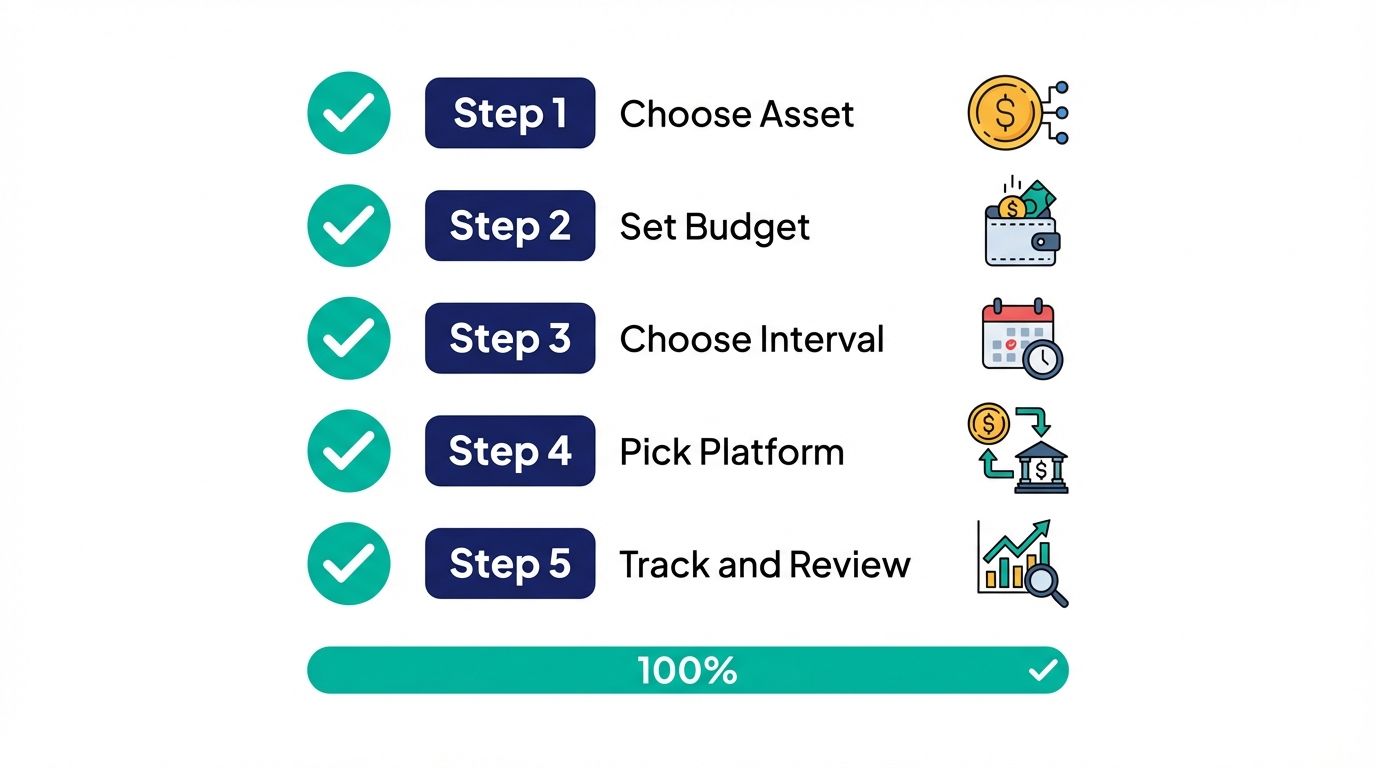
5 Steps to Set Up a Dollar Cost Averaging Strategy for Crypto
Setting up DCA for crypto is straightforward. Follow these steps to build a plan that runs on autopilot.
Step 1: Choose Your Asset
Start with assets you believe in for the long term. Bitcoin (BTC) and Ethereum (ETH) are the most common DCA targets because of their market dominance and liquidity. If you want exposure to altcoins, keep them a smaller portion of your DCA allocation.
Step 2: Set Your Budget
Only invest what you can afford to lose and do not need in the short term. A common approach is to allocate 5-20% of your monthly income to DCA. The exact amount matters less than the consistency.
Step 3: Choose Your Interval
Common DCA intervals include daily, weekly, bi-weekly, and monthly. Weekly or bi-weekly DCA tends to balance frequency with transaction fees. Daily DCA offers the smoothest averaging but can accumulate fees on platforms that charge per transaction.
Step 4: Pick a Platform with Auto-DCA
Many centralized exchanges offer recurring buy features. Set it once and the platform handles execution automatically. This removes the need to manually execute trades and eliminates the temptation to skip purchases during downturns.
Step 5: Track and Review Quarterly
DCA does not mean set-and-forget entirely. Review your allocation every quarter. Check if your chosen asset still aligns with your investment thesis. Adjust the budget if your financial situation changes. Do not change the strategy based on short-term price swings.
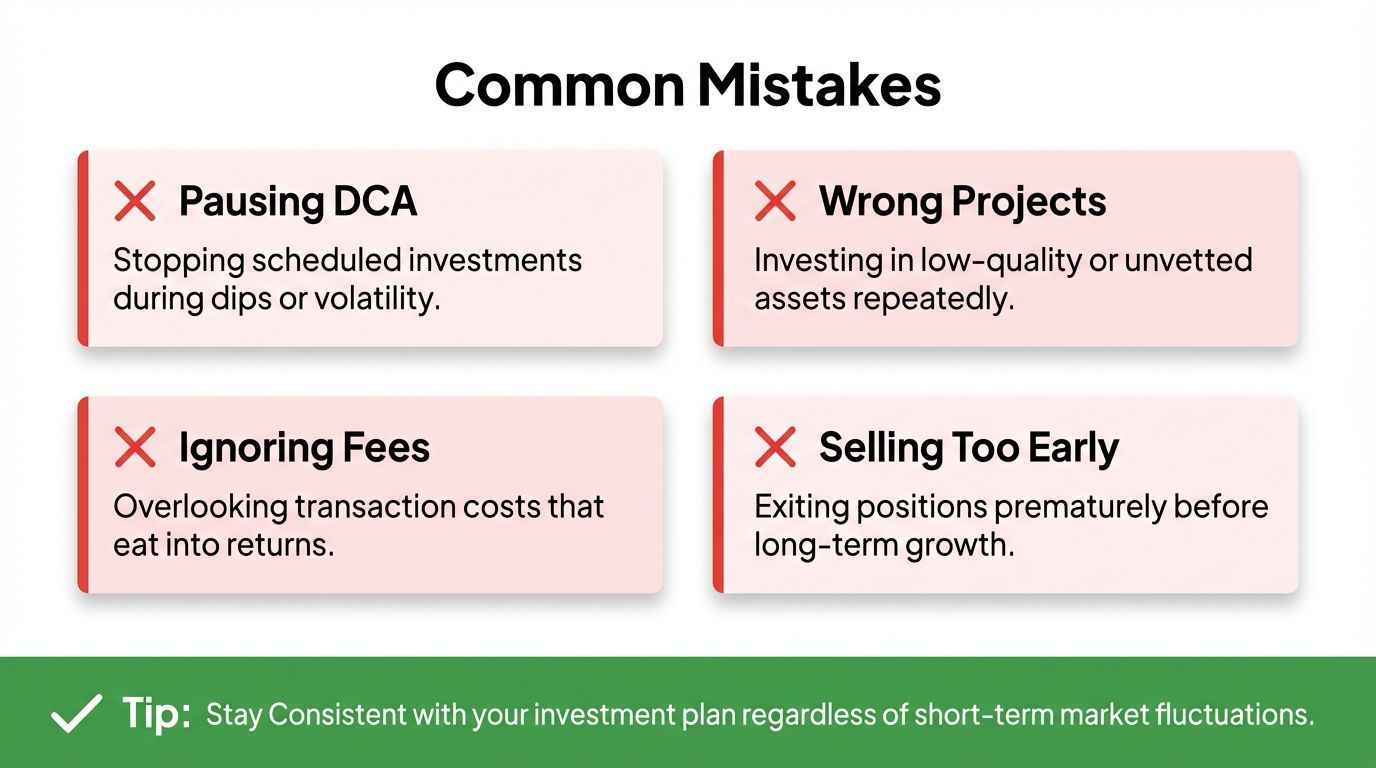
4 Common DCA Mistakes Crypto Investors Make
DCA is simple, but these mistakes can undermine its effectiveness.
Mistake 1: Pausing DCA During Bear Markets
Bear markets are exactly when DCA is most powerful. Pausing purchases when prices are low means missing your cheapest accumulation window. If you stop DCA when sentiment is worst, you eliminate the primary benefit of the strategy.
Mistake 2: DCA-ing Into Weak Projects
DCA cannot fix a fundamentally flawed investment. Consistently buying into a project with no product, declining adoption, or poor tokenomics just means you accumulate more of a bad asset. The strategy works best with high-conviction, long-term assets.
Mistake 3: Ignoring Transaction Fees
If you are DCA-ing small amounts on a platform with flat fees, fees can eat a significant percentage of each purchase. For example, a $2 fee on a $20 purchase is 10%. Optimize by using platforms with low or no trading fees for recurring buys, or by increasing your purchase size and reducing frequency.
Mistake 4: Selling at the First Sign of Profit
DCA is a long-term strategy. Selling immediately after a 20-30% gain defeats the purpose. Set clear exit targets or a time horizon before you start. Holding through multiple market cycles is where DCA compounds its advantages. A good rule of thumb: define your exit criteria before your first purchase and write it down. If you cannot articulate why you would sell before you start buying, you have not thought through the strategy enough.
Advanced DCA Strategies: Beyond Basic Recurring Buys
Once you have a basic DCA plan running, you can layer in refinements to improve performance.
Value Averaging
Instead of investing a fixed dollar amount, you adjust your purchase to hit a target portfolio value. If your portfolio grows faster than expected, you invest less (or sell some). If it grows slower, you invest more. This requires more active management but can outperform standard DCA.
DCA with Rebalancing
Combine DCA with quarterly rebalancing. When Bitcoin dominance shifts, rebalance your portfolio back to target allocations as part of your regular DCA contribution. This systematically buys more of underperformers and trims winners.
Bot-Assisted DCA
Crypto trading bots can automate DCA with greater precision. You can set triggers based on price levels, RSI, or percentage drops to enhance your DCA entries. For example, invest double your usual amount every time an asset drops 20% from its recent high. This keeps the systematic nature of DCA while adding opportunistic entries during dips.
Multi-Asset DCA
Instead of concentrating your DCA into a single asset, spread it across two or three high-conviction positions. A common allocation is 60% BTC, 30% ETH, and 10% in a selected altcoin. Each interval, you buy all three proportionally. This approach diversifies your accumulation risk while still benefiting from systematic buying. Review and adjust allocations quarterly based on market conditions and your conviction in each asset.
Dollar Cost Averaging Crypto on Altrady: Free Trial Available
Altrady gives you the tools to manage your DCA strategy across multiple exchanges from a single dashboard. Track your portfolio performance, monitor average cost basis, and set up automated bots that execute DCA entries based on your parameters. Whether you are running basic recurring buys or advanced value averaging, Altrady centralizes your entire workflow.
Start your free trial today and see how Altrady can automate and optimize your crypto DCA strategy.
FAQ: Dollar Cost Averaging Crypto
Is dollar cost averaging good for crypto?
Yes, DCA is particularly effective in crypto because of the market's extreme volatility. It removes the pressure to time entries perfectly, reduces emotional decision-making, and systematically builds positions over time. For long-term investors, it is one of the most reliable strategies available.
How often should I DCA into crypto?
Weekly or bi-weekly is the most common interval. Weekly DCA provides frequent averaging without excessive fees. Daily DCA offers the smoothest cost averaging but may accumulate more fees. Monthly DCA is simpler to manage but less granular. Choose a frequency you can commit to consistently.
What is the best crypto to DCA into?
Bitcoin (BTC) and Ethereum (ETH) are the most common DCA targets due to their liquidity, market dominance, and long track records. They are less likely to go to zero compared to smaller altcoins. If you want altcoin exposure, keep it a small portion of your total DCA allocation and only choose projects with strong fundamentals.
Does DCA work in a bear market?
Bear markets are where DCA generates its most powerful results. Buying consistently during price declines means you accumulate more coins at lower prices. When the market recovers, your average cost basis is much lower than someone who bought only at the top. Staying disciplined through bear markets is the hardest part of DCA but also the most rewarding.