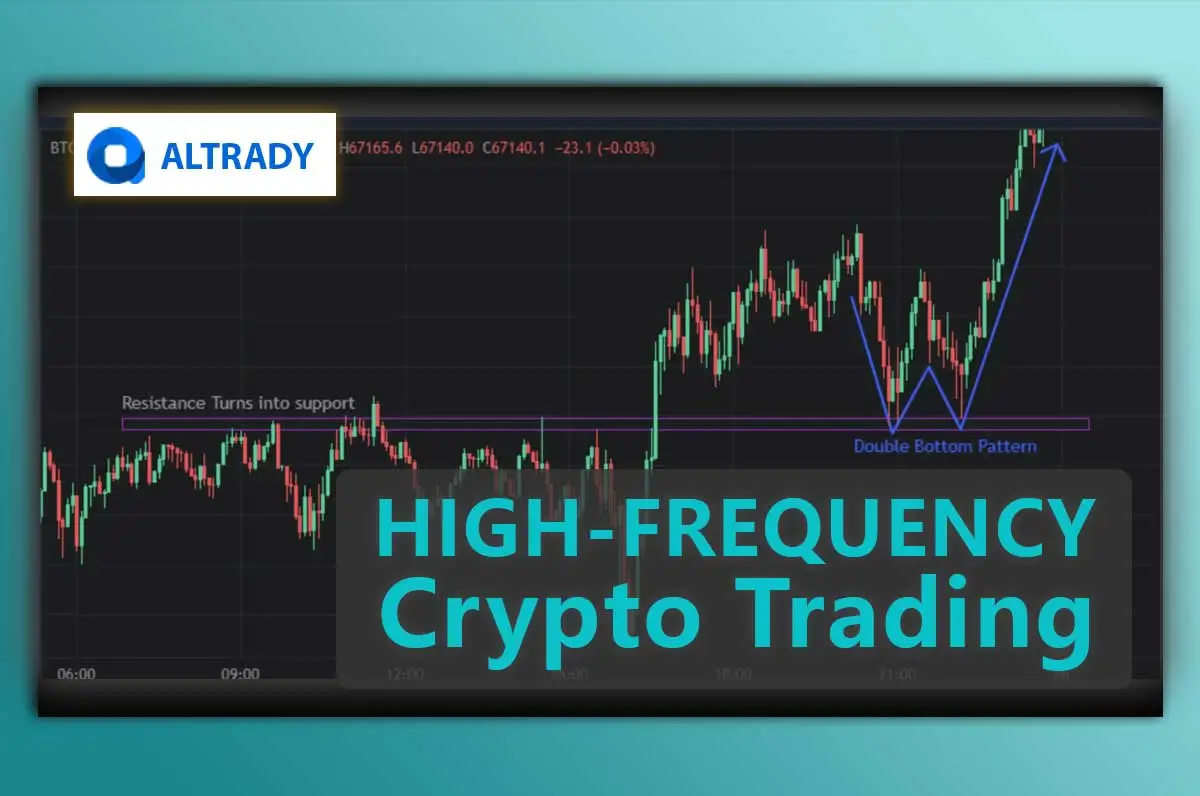

High-frequency trading (HFT) is a type of algorithmic trading that gives developers, traders, and specialized firms the ability to capitalize on small price fluctuations and correlated market inefficiencies.
In the context of cryptocurrency trading, HFT has gained recognition as a valuable method to exploit multiple market conditions amid the intrinsic volatility of this market. This article delves into the world of high-speed algorithms and precise execution, serving as a brief guide to disclose and understand how crypto high-frequency trading platforms work.

https://img.freepik.com/free-photo/representation-user-experience-interface-design_23-2150165975.jpg
Understanding High-Frequency Trading (HFT) in Crypto Markets
As previously explained in this article, HFT systems are widely related to algorithms and automated trading. However, not all forms of algorithmic trading are necessarily high-frequency methods. What makes HFT systems different is their execution speed and the capability to distribute large order volumes across the order book. For a fast-paced market such as cryptocurrency, the last affirmation makes high-frequency an on-demand technique. Since HFT systems can perform a broad range of determinations at higher speeds than typical algo trading methods, successfully implementing strategies based on such a procedure implies gaining an edge amid diverse market conditions. When implementing high-frequency trading, traders seek improved performance in the following terms:
- Optimal execution: HFT systems aim to execute trades at the most favorable prices available in the market, minimizing slippage and maximizing profitability on each trade. The speed of execution is paramount in achieving this.
- Systematic trading: HFT relies on strictly defined and automated trading strategies that are executed consistently without human intervention. This systematic approach eliminates emotional biases and ensures commitment to the trading plan.
- Portfolio management: While often focused on short-term trading, HFT can also play a role in broader portfolio management by enabling rapid adjustments to asset allocations based on market signals.
- Pre-trade and post-trade analytics: Sophisticated analytics are crucial in HFT for identifying trading opportunities before they arise and for evaluating the performance of executed trades to refine strategies.
- Risk management: Given the high volume and speed of trading, robust risk management protocols are essential in HFT to control exposure and prevent significant losses.
- Data processing: HFT systems require processing vast amounts of market data in real time to identify and act upon momentum opportunities.
- Market forecasting: Some HFT strategies comprise advanced analytical techniques, including machine learning, to forecast short-term market movements and capitalize on them.
HFT Systems: 4 Key Strategies to Grasp How Platforms Work
Typically, high-frequency traders/platforms aim to achieve such terms in short-term time frames. In this sense, HFT systems comprise four principal methods of short-term trading:
Order Book Arbitrage:
This method focuses on exploiting price discrepancies that can arise within the order book of a single cryptocurrency exchange. HFT systems rapidly place and cancel orders at different price levels to profit from the bid-ask spread or temporary imbalances in supply and demand. This procedure can also be helpful for triangular arbitrage.
Inter-Exchange Arbitrage:
This strategy aims to capitalize on price differences across various cryptocurrency exchanges. By having ultra-fast connections to multiple exchanges, HFT systems can detect a price movement on one exchange and execute a trade on another exchange before the price difference disappears. This is the most typical form of arbitrage.
Statistical Arbitrage:
Statistical arbitrage strategies in HFT involve identifying short-term statistical disparities in value between correlated cryptocurrency assets. These mispricings might be temporary deviations from historical correlations or expected price relationships. HFT systems use sophisticated statistical models to identify these opportunities and execute high-volume trades.
Market Making:
Market making is a strategy where HFT firms provide liquidity to the order book of a crypto exchange by simultaneously placing both buy (bid) and sell (ask) orders for various assets. They profit from the spread between the bid and ask prices, earning a small amount on each transaction.
Learn how the order book correlates with ICT - Order Flow Techniques to Trade Supply and Demand
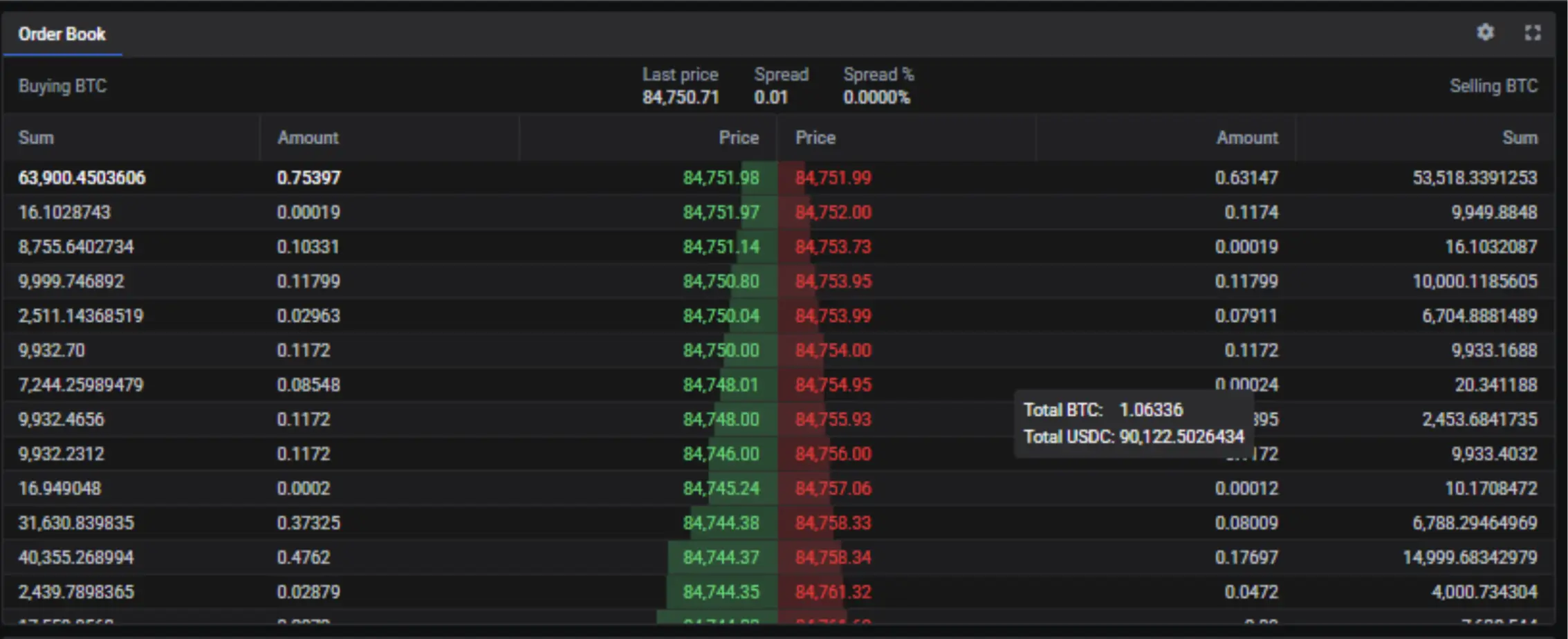
Altrady’s Order Book
Key Aspects To Consider
- Liquidity risk
- Execution costs
- Execution speed
- Trading size
- Market impact
How Crypto High-Frequency Trading Platforms Work
The infrastructure required for successful high-frequency trading in cryptocurrency markets is complex and involves the coordinated efforts of various specialized platforms and service providers. Let's briefly overview the roles of some platforms.
Execution-Monitoring (Altrady)
Altrady's primary function is as a multi-exchange trading terminal for a broader range of trading styles. Its robust API connectivity and advanced order management tools can still offer particular advantages for monitoring and potentially executing aspects of high-frequency strategies.
Traders could use Altrady's unified interface to observe real-time order book data across multiple exchanges and manage their connected accounts involved in HFT activities.
Market Maker (Binance)
Binance, as one of the world's largest cryptocurrency exchanges by trading volume and liquidity, serves as a crucial platform for high-frequency market makers. Its deep order books and high trading activity provide the proper environment for HFT firms to deploy their market-making algorithms and profit from the bid-ask spread. Binance offers sophisticated API access that allows HFT firms to integrate their trading systems directly with the exchange's systems, enabling ultra-fast order placement and cancellation. Moreover, Binance often has specific fee structures and incentives designed to attract and support high-frequency market makers who contribute significantly to the exchange's liquidity.
Data Provider (Bitquery)
Access to high-quality, real-time, and historical market data is absolutely essential for developing, backtesting, and implementing high-frequency trading strategies. Data providers like Bitquery play a vital role in this ecosystem by offering comprehensive and granular blockchain data.
This data can include not only price and volume information but also detailed order book data, trade history, and even blockchain transaction data. HFT developers employ this data to analyze market microstructure, identify patterns, and build predictive models that inform their high-frequency trading algorithms.
Understanding API is crucial for high-frequency trading, learn more about Crypto Trading Platforms with API Access.
Conclusion
High-frequency trading in cryptocurrency markets represents a highly specialized form of algorithmic trading. Characterized by its extreme execution speed and focus on exploiting momentum market opportunities, HFT aims to achieve optimal execution, systematic trading, and enhanced risk management within short time frames. The successful implementation of HFT strategies can provide a competitive edge in the fast-paced crypto market. Platforms like Binance, Bitquery, and Altrady (where you can start a free trial account) play distinct but crucial roles in supporting the HFT ecosystem.