
Digital assets represent a new age of investment that has been steadily rising over the past few years.
With tokens like Bitcoin and Ethereum pioneering the growth of the cryptocurrency space, there are a lot of eyes on this category of assets, which has influenced their impact on the broader financial space.
Revolutionary as crypto is in helping individuals gain wealth, it has inherent security flaws that display faults in its underlying system. Phishing attempts, scams, and unauthorised breaches in crypto-based platforms throughout the years have contributed to the denting of crypto's reputation as an investment as a whole, alienating a potentially higher user ceiling.
However, the good news is that many of the security flaws in the past have now been acknowledged and rectified by authorities in this space. Nowadays, crypto exchange security solutions exist to help protect its users from bad actors trying to get ahold of their data or tokens.
If you're keen to learn more about the state of security in crypto exchange platforms, then you're in the right place. This article will give you some insights into what you should know about crypto exchange security.
Let's jump right into it.
Common Security Threats When Using Crypto Exchanges
While most established platforms for crypto exchange like Independent Reserve are trustworthy and reliable, there's a slim but plausible chance for bad actors to expose vulnerabilities and use these platforms to retrieve sensitive user data, or worse.
Moreover, user actions can also be exploitable, and there's always a risk for unsuspecting victims to give off their account details or send money to the wrong wallet, parting them with their crypto wealth for good.
Crypto platforms are aware of this, and they're proactive in implementing security measures to avoid these security threats from manifesting and affecting their entire user base.
Regardless, users must be cognizant of their own as well, as they could be inadvertently heightening their own risk of being a victim of such scams.
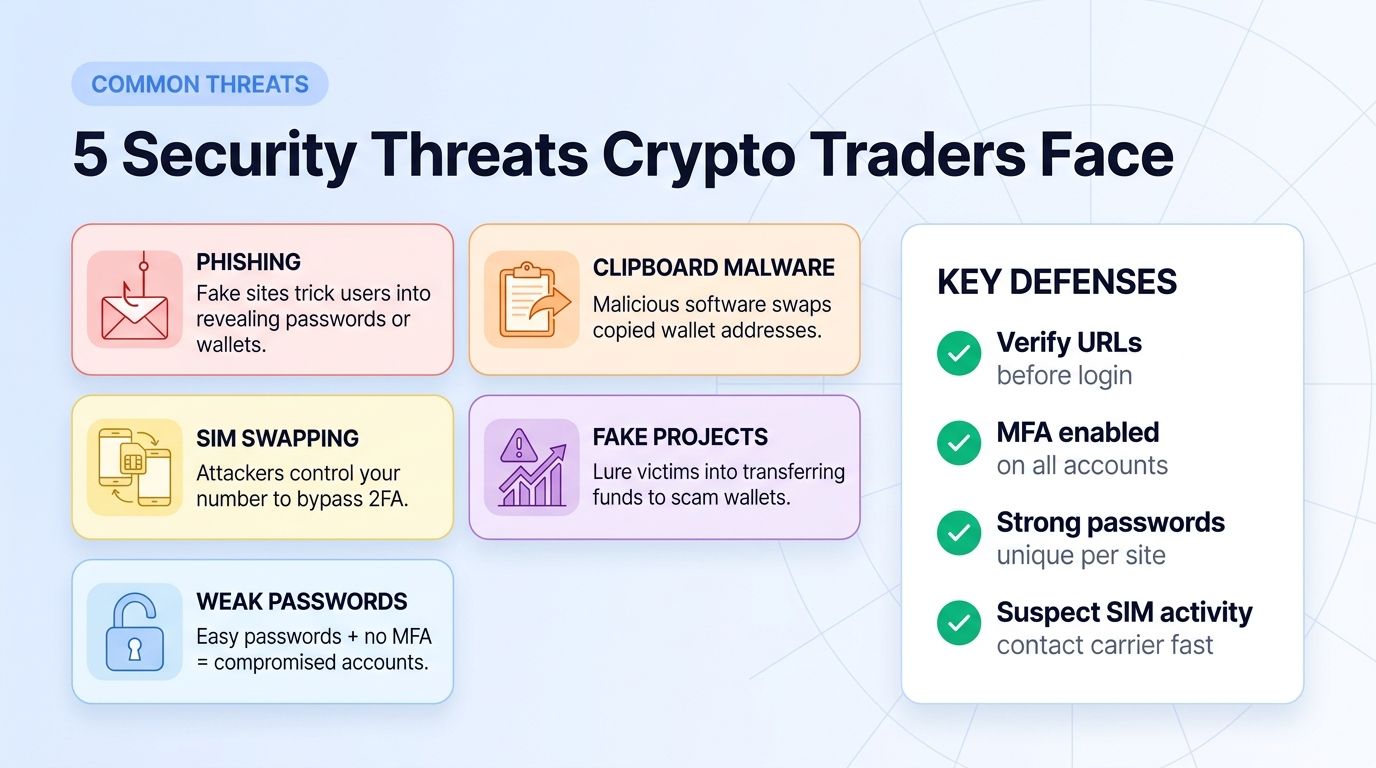
Here are some notable security threats that could affect users in crypto exchanges:
- Phishing attacks: Some websites posing as a legitimate crypto trading website could trick users into revealing their password or wallet information.
- Clipboard malware: Malicious software could be installed in one's device, causing copied wallet addresses to be sent to the scammer's account instead.
- SIM swapping: A scam where attackers gain control of a user's mobile number to intercept OTPs and bypass security verification processes.
- Fake investment projects: Fake projects could lure unsuspecting users to transfer funds to wallets of people whose intentions aren't genuine.
- Weak passwords: Some scammers can get hold of your password and use it to log in to your crypto platform account. If there's no multi-factor authentication, this could lead to your account getting compromised.
It's important to be aware of these security threats, as this knowledge limits your chances of falling victim to them.
4 Security for Crypto Exchange Platforms
Security is a major priority for licensed crypto exchanges because user trust and platform credibility depend on it.
To reduce security risks like hacking, fraud, and unauthorised access, modern exchanges implement multiple layers of security to protect both their internal resources and sensitive user data and tokens.
Here are some security protocols that crypto exchange platforms often utilise:
Account Login Protection
One security protocol that crypto exchange platforms implement extensively is account login protection.
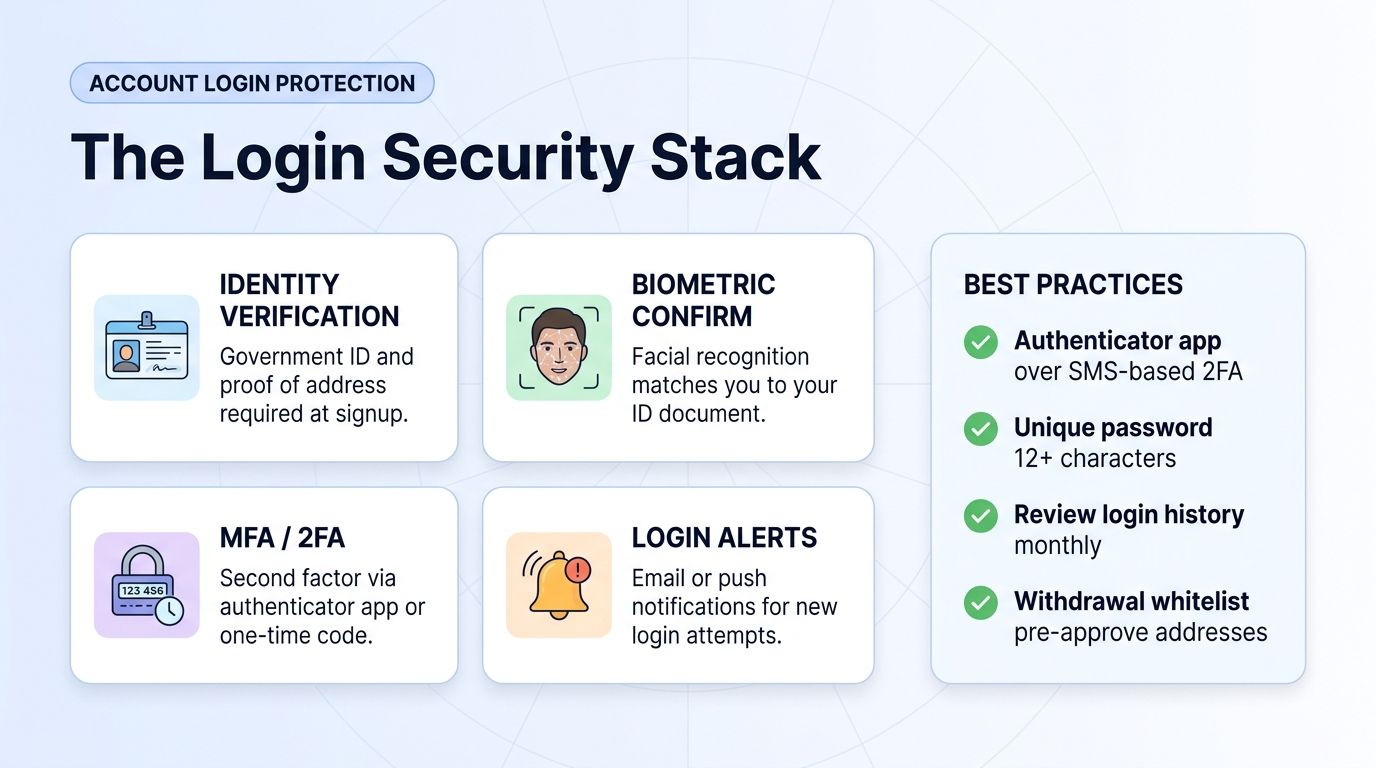
This can be first seen upon sign-up of the platform. Crypto platform users have to verify their identity before opening an account across platforms, submitting requirements such as a government ID and proof of address.
Facial recognition systems may also be used to confirm a user's identity and ensure that you're not claiming to be someone you're not. And of course, users will be prompted to submit a password that has upper case, lower case, numbers, and special characters more often than not to guarantee a higher level of protection.
Beyond the security protocols in the account creation process, crypto exchanges also implement robust security features during the login process. To name a few, two-factor authentication is a security feature that requires users to verify their identity through a second step, such as a one-time code submitted to their registered email or an authenticator app. Multi-factor authentication also exists and is even better at securing funds.
Log-in alerts are also commonplace, allowing users to get notifications whenever a log-in attempt has been made. Some platforms provide a history of logins across devices and IP addresses to detect unusual activity. Lastly, withdrawal confirmations and session timeouts add another layer of protection against unauthorised access.
In essence, there are many layers of security in place in platforms dedicated to crypto exchange that help users safeguard their accounts and protect their digital assets. By using these platforms and setting up these security protocols to their maximum limit, users can secure their crypto tokens with greater confidence.
Wallet & Asset Storage Security
Apart from securing user accounts, crypto exchange platforms also channel resources into creating an impervious wallet storage solution for their users' tokens.
Since crypto tokens are digital, exchanges have to ensure that the crypto tokens are safe from any attempts at cyber break-ins and breaches. The method of security that these crypto exchange platforms employ upholds this in a variety of ways.
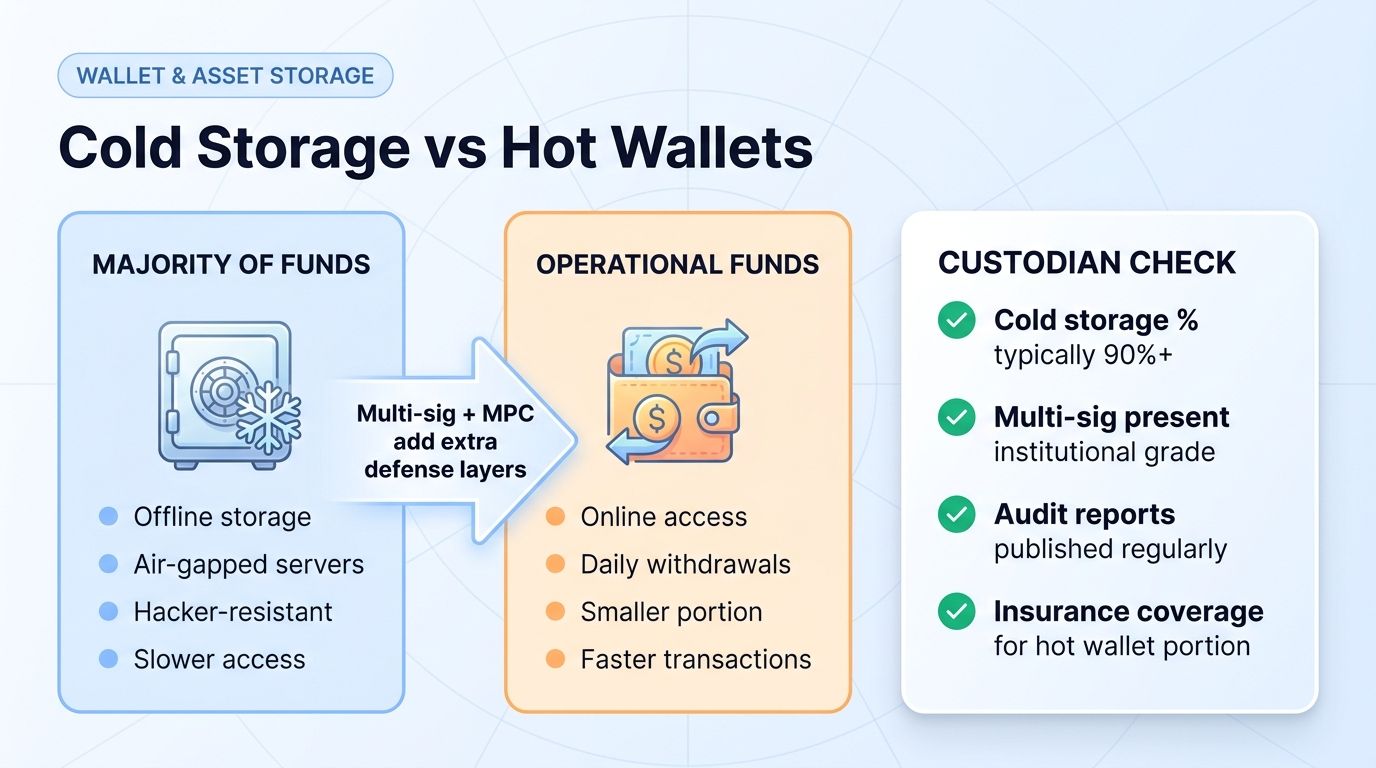
For one, many of these platforms secure their users' tokens through cold wallet storage. This type of wallet is one that's predominantly offline and disconnected from the internet. This reduces the chances of hackers siphoning funds as the crypto is not stored digitally.
Only a smaller portion of funds is usually stored in online hot wallets to support daily transactions and withdrawals.
Moreover, some crypto platforms also implement institutional-grade multi-signature (multisig) technology to secure digital holdings. This method eliminates the risk of one point of failure causing a fall for all tokens coming from theft attempts. It does this by requiring multiple approvals before transactions can be processed.
Some platforms are also adopting multi-party computation, which is an off-chain network that splits private keys into shares. This enhances privacy even further and reduces transaction fees, making it more optimal for users looking to frequently exchange crypto.
Transaction & Withdrawal Security
Crypto exchange platforms also implement safeguards to ensure that withdrawals and transfers go to the wallets that they're supposed to go to.
Digital assets can be transferred to the wrong address through phishing attacks, malware, or clipboard scams. Unlike traditional bank transactions, crypto transfers are generally irreversible once completed. This makes transaction and withdrawal security especially important for crypto exchange platforms.
Moreover, it's not impossible for users to copy and paste the wrong address or send funds to an invalid network. Exchanges are, fortunately, one step ahead in this department.
Crypto exchange platforms combat this by providing features where users can pre-approve withdrawal addresses to ensure that they're the actual ones the user is intending to send funds to. Some exchanges may also apply temporary holding periods for transactions initiated from unfamiliar devices.
Platform Security
Crypto exchange platforms are accessed through the Internet first and foremost, so it's no surprise that the platform itself is built to ensure users a smooth experience that's not subject to cyberattacks and service disruptions from the web.
Many exchanges use end-to-end encryption or point-to-point encryption like HTTPS to protect user information from being intercepted by malicious actors. DDoS protection systems are also commonly implemented to defend crypto platforms against attacks that attempt to overload servers and shut down operations.
Thanks to the regulatory requirements made by local regulators in Australia and many of the world's crypto-friendly countries, there's a strict adherence to security and compliance that these licensed crypto exchange platforms must abide by.
To prove the point, many exchanges are required to implement KYC and AML procedures to verify users and stop suspicious activity from happening anonymously.
These regulations not only help reduce fraudulent activity within the crypto space but also provide users with greater confidence that the platform they are using operates within recognised legal and security frameworks.
We hope that we've helped you understand the scope of security issues that these crypto platforms may face, and what they do to actively prevent unauthorised access.
All the best in leveraging these trading platforms for crypto trading endeavours!