
What Is a Crypto ETF?
Note: A new sub-category emerged in March 2026 with the launch of the ETH staking ETF (BlackRock ETHB), which combines ETH price exposure with native staking yield through a regulated ETF wrapper.
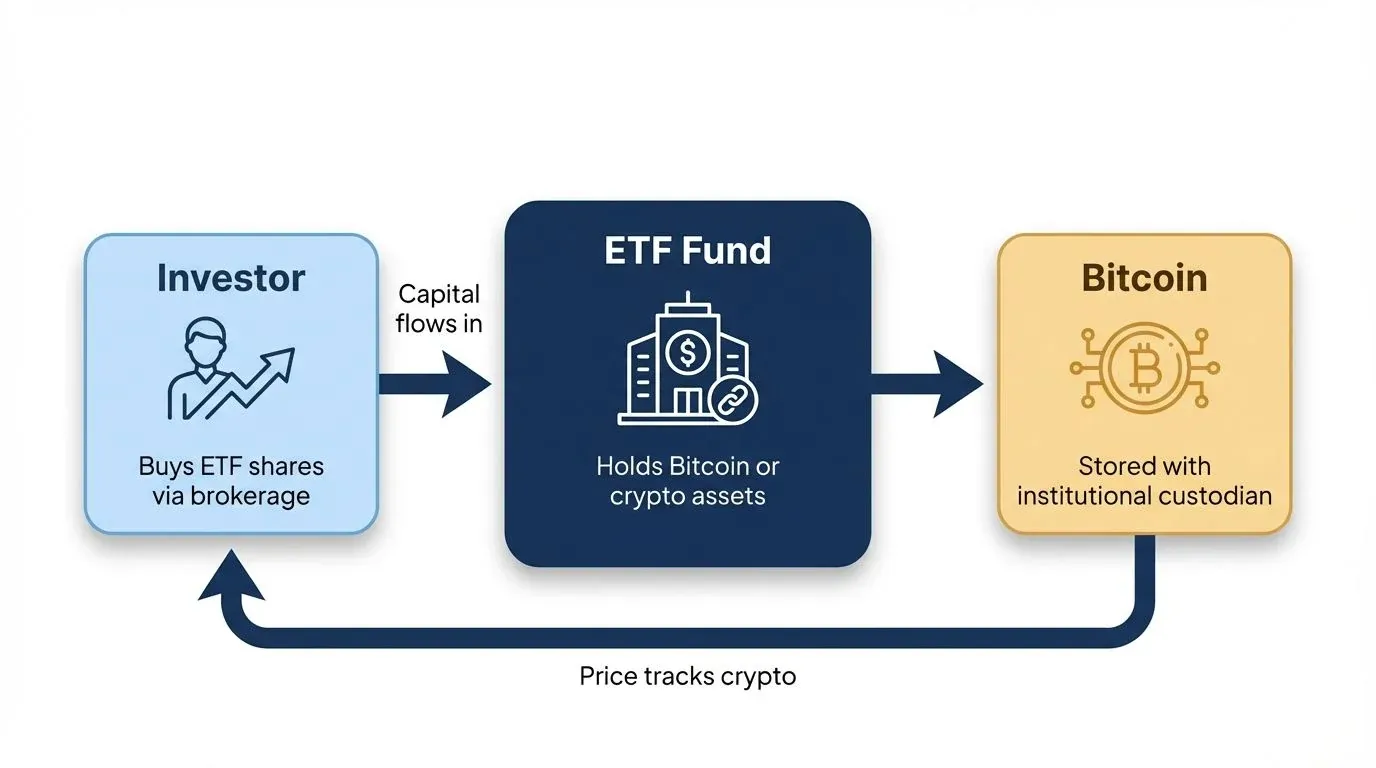
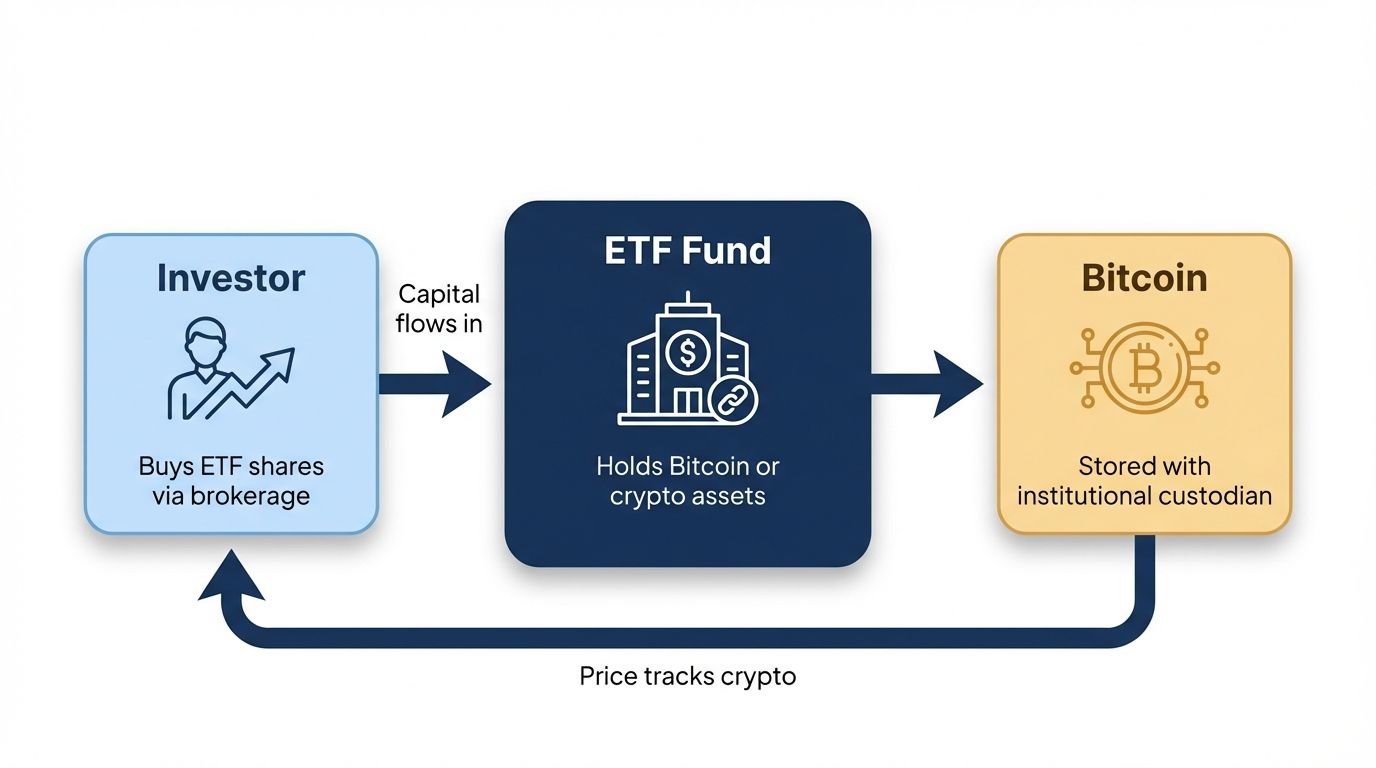
A crypto ETF, or cryptocurrency exchange-traded fund, is a financial product that tracks the price of one or more digital assets and trades on a traditional stock exchange. Like any ETF, it lets investors gain exposure to an asset class without directly purchasing or holding that asset themselves. For crypto, this means no wallets, no private keys, and no dealing with cryptocurrency exchanges.
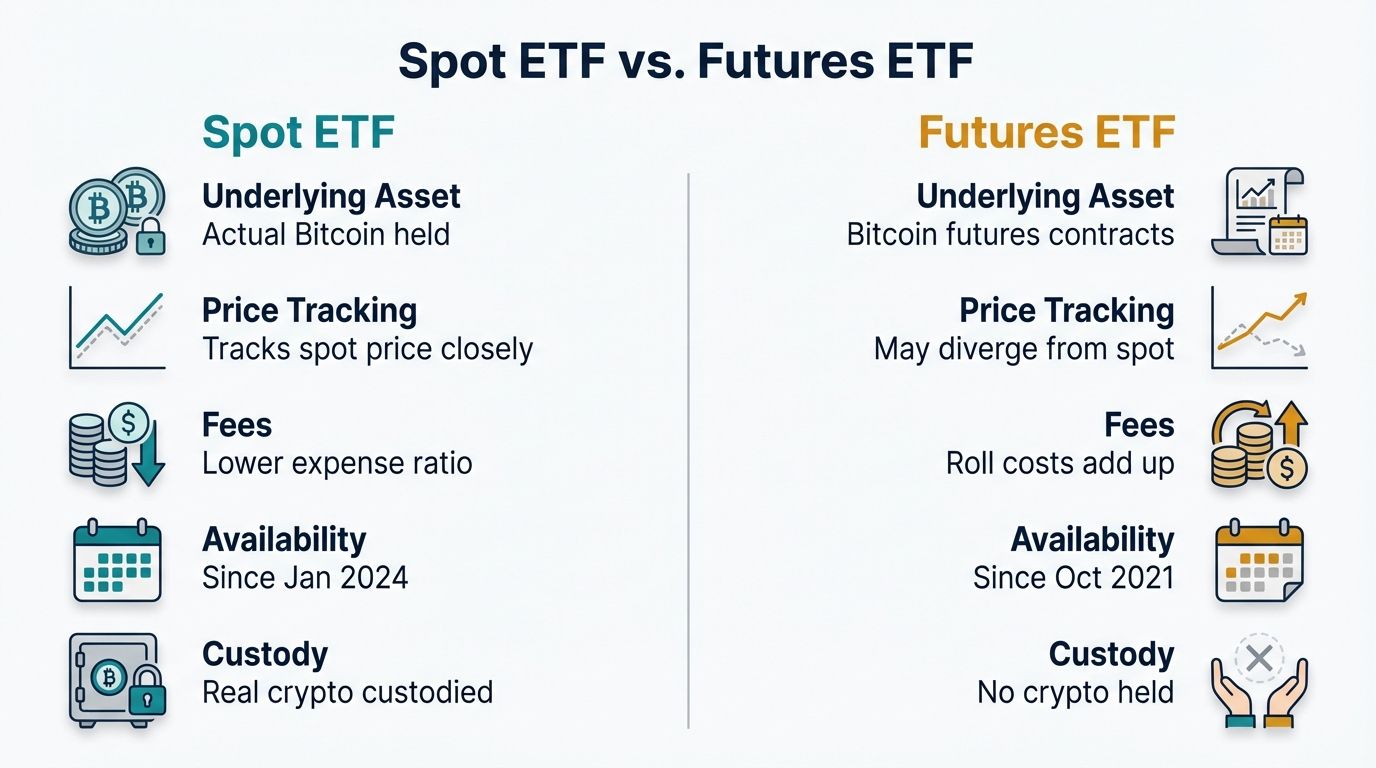
The concept attracted mainstream attention in October 2021 when the ProShares Bitcoin Strategy ETF became the first Bitcoin-linked ETF approved by the U.S. Securities and Exchange Commission. That product, however, was a futures-based ETF, meaning it tracked Bitcoin futures contracts rather than Bitcoin itself. The landmark moment for spot products came in January 2024, when the SEC approved the first batch of spot Bitcoin ETFs, allowing funds to hold actual Bitcoin on behalf of shareholders. Ethereum followed a few months later, with spot Ethereum ETFs receiving SEC approval in May 2024.
The significance of these approvals cannot be overstated. Spot crypto ETFs opened the door for pension funds, retirement accounts, and everyday brokerage users to add Bitcoin and Ethereum exposure with the same ease as buying a tech stock. They represent a structural bridge between the traditional financial system and the digital asset economy, and their rapid adoption has reshaped how institutional and retail investors approach crypto in 2026.
Types of Crypto ETFs
Spot Crypto ETFs
Spot crypto ETFs hold the underlying digital asset directly. When you buy a share of a spot Bitcoin ETF, the fund custodian holds an equivalent amount of actual Bitcoin in a secured vault, typically with an institutional-grade custodian like Coinbase Custody. The ETF share price moves in near-lockstep with the spot price of Bitcoin or Ethereum. This structure eliminates the tracking error problem that plagued futures-based products and gives investors cleaner exposure to crypto price movements. Spot ETFs are currently the most popular form of crypto ETF in the United States by both assets under management and daily trading volume.
Futures-Based Crypto ETFs
Futures-based crypto ETFs do not hold any actual cryptocurrency. Instead, they invest in futures contracts on regulated exchanges like the CME Group. These contracts represent agreements to buy or sell a specific asset at a predetermined price on a future date. The ProShares Bitcoin Strategy ETF (BITO) is the most well-known example. Because futures contracts expire and must be continuously rolled over to maintain exposure, these funds often experience "roll costs" that cause performance to diverge from the spot price over time. This tracking error makes futures-based ETFs less efficient for long-term holders, though they remain useful tools for certain hedging and short-term trading strategies.
Crypto Index ETFs and Thematic ETFs
Beyond single-asset products, the market also offers index-style ETFs that provide exposure to a basket of cryptocurrencies. These funds aim to replicate the performance of a broad crypto market index, similar to how the S&P 500 ETF tracks the 500 largest U.S. companies. Thematic ETFs take a slightly different approach, targeting specific segments of the crypto and blockchain ecosystem, such as companies involved in blockchain infrastructure, crypto mining, or digital asset services. Both categories give investors a diversified entry point rather than concentrated exposure to a single coin.
Top Crypto ETFs in 2026
Bitcoin Spot ETFs
The January 2024 launch unleashed a wave of competing Bitcoin spot ETFs, but a handful have emerged as the clear market leaders by early 2026.
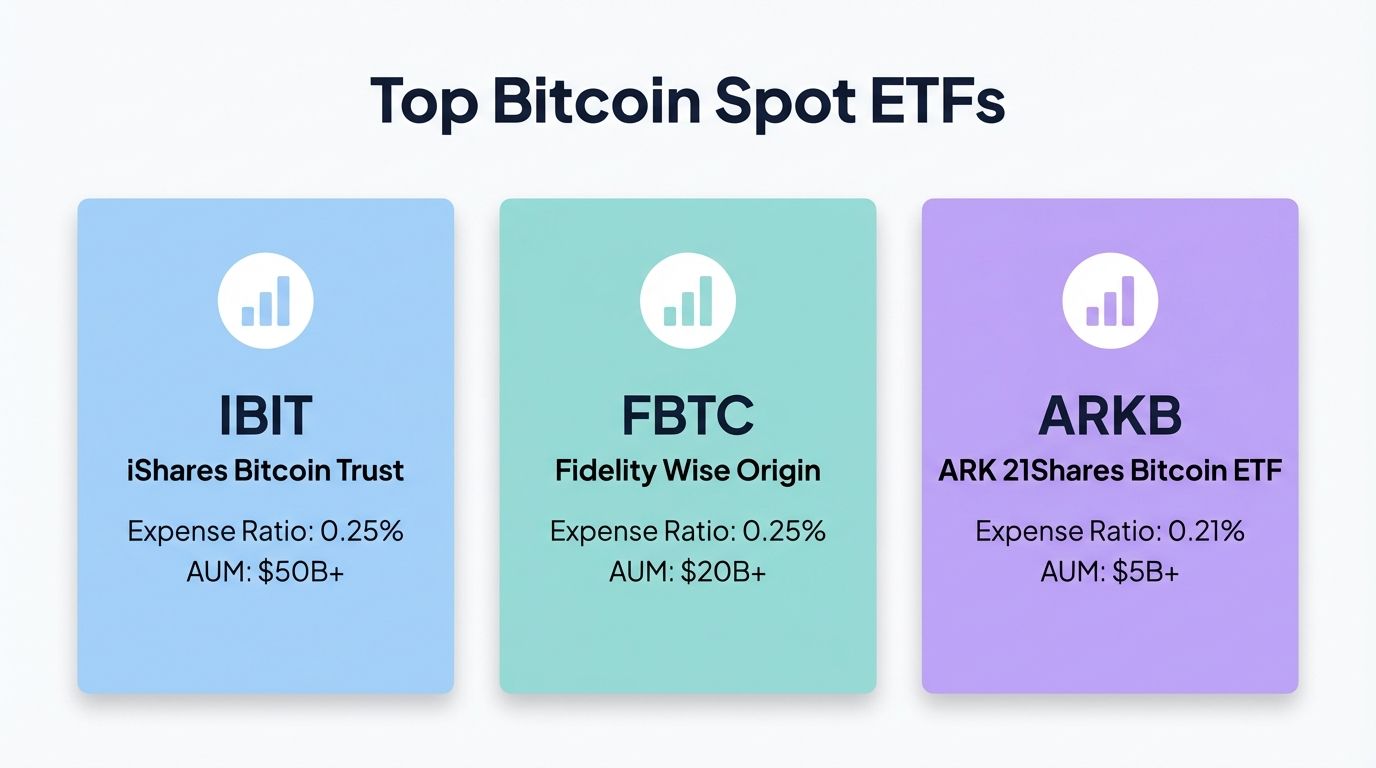
The iShares Bitcoin Trust (IBIT), managed by BlackRock, surpassed $50 billion in assets under management faster than almost any ETF in history. With an expense ratio of 0.25%, it benefits from BlackRock's massive distribution network and brand recognition among institutional investors. It quickly became the default Bitcoin ETF for many wealth advisors and large funds.
The Fidelity Wise Origin Bitcoin Fund (FBTC) also carries a 0.25% expense ratio and has attracted strong inflows thanks to Fidelity's existing customer base and its reputation for digital asset custody, as Fidelity custodies its own Bitcoin rather than outsourcing to a third party. This appeals to investors who prefer a vertically integrated approach.
The ARK 21Shares Bitcoin ETF (ARKB) stands out with a slightly lower expense ratio of 0.21%, reflecting ARK Invest's aggressive positioning to compete with larger issuers. ARKB is a collaboration between ARK Invest and 21Shares, one of Europe's most established crypto ETP providers.
Ethereum Spot ETFs
Following the May 2024 approval, several Ethereum spot ETFs launched alongside their Bitcoin counterparts. The iShares Ethereum Trust (ETHA) and the Fidelity Ethereum Fund (FETH) are the two dominant products, mirroring the issuer competition seen in the Bitcoin space. Both hold actual Ether and offer investors straightforward ETH price exposure. One key consideration: as of early 2026, U.S. Ethereum ETFs do not participate in staking, meaning they forgo the yield that on-chain ETH stakers earn. Regulators have been cautious about allowing staking within ETF structures, though this remains an active area of discussion.
Crypto Index ETFs
For investors who want broader exposure, the Bitwise 10 Crypto Index Fund tracks the ten largest cryptocurrencies by market capitalization. It provides diversification across Bitcoin, Ethereum, and a selection of large-cap altcoins within a single product. While it does not yet trade as a fully exchange-listed ETF on major U.S. exchanges in the same manner as spot Bitcoin products, it remains one of the most established multi-asset crypto investment vehicles available to accredited and retail investors through certain brokerage platforms.
Crypto ETF vs Buying Crypto Directly
Choosing between a crypto ETF and purchasing cryptocurrency directly involves real trade-offs on both sides, and the right answer depends on your goals, technical comfort level, and account structure.
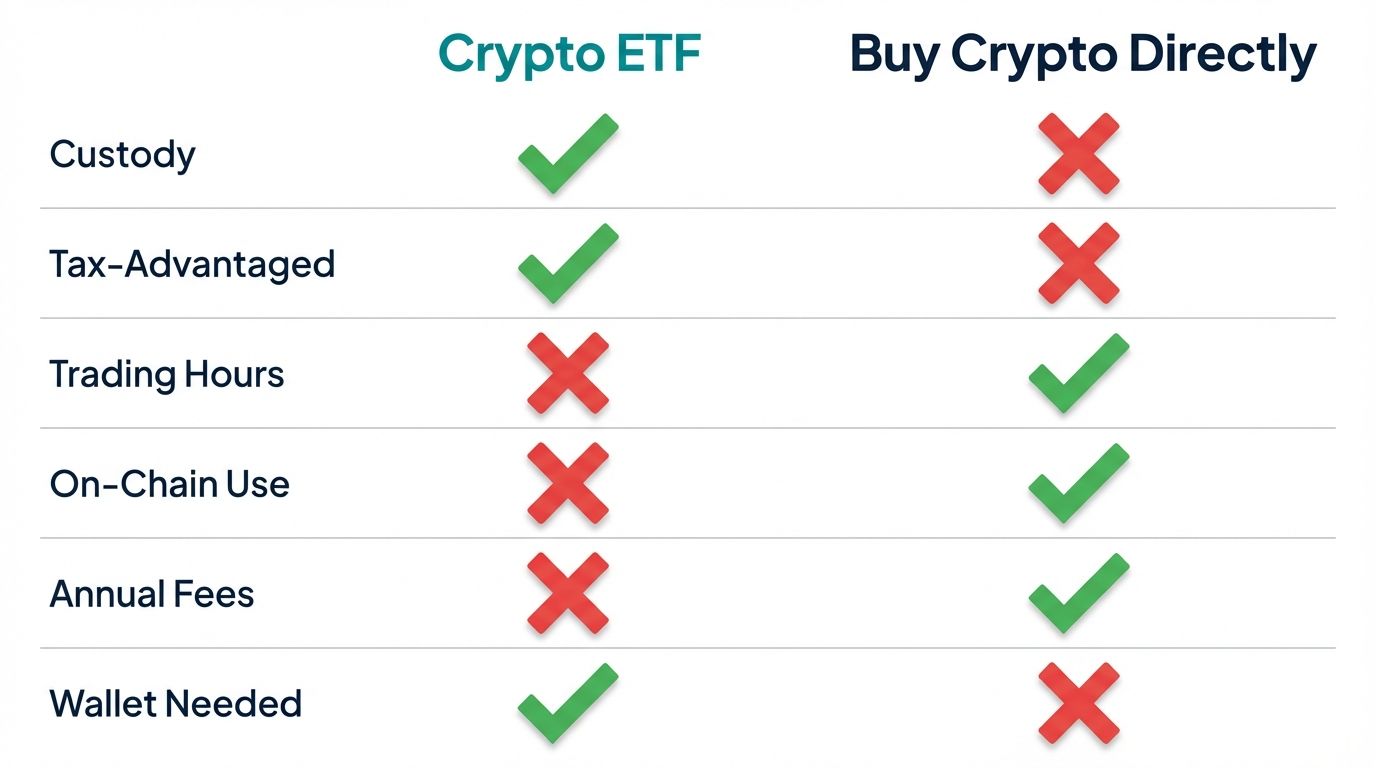
Custody and security work very differently in each model. When you hold crypto directly, you are responsible for securing your private keys. Losing access to a wallet means losing funds permanently. With a crypto ETF, custody is handled by an institutional provider under regulatory oversight. For many investors, particularly those unfamiliar with self-custody practices, this is a meaningful reduction in risk.
Cost structures also differ. Spot ETFs charge annual expense ratios, typically between 0.21% and 0.25% for the leading Bitcoin funds. Buying crypto directly involves transaction fees on exchanges, which vary widely but can be lower for high-volume traders. Over a long holding period, an annual expense ratio compounds into a real cost.
On the access side, crypto ETFs can be held inside tax-advantaged accounts such as IRAs and 401(k)s, which is not possible with directly held cryptocurrency. This is a significant advantage for U.S. retirement savers. Trading hours differ as well: ETFs trade during standard market hours (9:30 a.m. to 4:00 p.m. Eastern), while crypto spot markets operate around the clock, every day of the year.
Direct crypto ownership also unlocks on-chain benefits: staking yields, participation in DeFi protocols, and use in decentralized applications. ETF holders have none of these options. Ultimately, both approaches serve legitimate purposes and many sophisticated investors use them in combination.
Benefits of Crypto ETFs
Crypto ETFs bring several concrete advantages that have driven their rapid adoption since 2024.
Regulatory oversight is one of the most important factors. These products are registered with the SEC, must meet strict disclosure requirements, and are subject to ongoing compliance obligations. For institutional investors operating under fiduciary mandates, this regulatory clarity is often a prerequisite for investment.
Accessibility is another major benefit. Anyone with a standard brokerage account, including accounts at Fidelity, Charles Schwab, Merrill Lynch, or similar platforms, can buy and sell crypto ETF shares just as they would any stock or traditional ETF. There is no need to open a crypto exchange account, complete a separate KYC process, or learn how to use a digital wallet.
Tax-advantaged account eligibility is a point that deserves emphasis. Holding a Bitcoin or Ethereum ETF inside a Roth IRA, for example, allows gains to grow tax-free, a benefit that is unavailable to direct crypto holders. This alone makes crypto ETFs compelling for long-term, retirement-oriented investors.
Institutional-grade custody, simplified portfolio integration, and the ability to include crypto alongside stocks and bonds in a single account statement round out the advantages for both individual and professional investors.
Risks and Limitations of Crypto ETFs
Expense Ratios and Tracking Error
Every ETF charges an annual expense ratio that slowly erodes returns over time. While 0.21% to 0.25% is low by historical standards for niche asset classes, it represents a real cost over multi-year holding periods. Futures-based ETFs carry additional drag from the continuous rolling of contracts, which can cause significant underperformance relative to spot prices during periods of market contango. Even spot ETFs may diverge slightly from the real-time crypto price due to arbitrage timing, though well-managed products keep this gap minimal.
No Direct Ownership or On-Chain Benefits
Crypto ETF investors do not actually own any cryptocurrency. They own shares in a fund that holds crypto. This distinction matters for several reasons. ETF holders cannot use their Bitcoin or Ethereum for on-chain transactions, participate in staking to earn yield, interact with decentralized finance protocols, or vote in governance systems. As the crypto ecosystem grows more sophisticated, the opportunity cost of forgoing these on-chain activities may increase. Investors who want to participate in the broader decentralized economy will need to hold crypto directly.
Market Hours and Liquidity Differences
Crypto markets trade 24 hours a day, seven days a week, including weekends and holidays. ETFs, by contrast, only trade during exchange hours on weekdays. A major price move in Bitcoin over a weekend cannot be acted on through an ETF until Monday morning. This structural lag can lead to significant gaps between an ETF's closing price on Friday and its opening price the following Monday after a volatile weekend in crypto markets. For traders who want real-time access to crypto price action at all hours, direct ownership remains the only option.
How to Buy a Crypto ETF
Buying a crypto ETF is straightforward for anyone who already uses a brokerage account. In the United States, spot Bitcoin and Ethereum ETFs are available through most major retail and institutional brokerage platforms, including Fidelity, Charles Schwab, TD Ameritrade, and Robinhood. The process is identical to buying any stock or ETF: search for the ticker symbol (IBIT, FBTC, ARKB, ETHA, FETH), enter the number of shares or dollar amount you want to purchase, and place the order.
For retirement accounts, U.S. investors can hold crypto ETFs inside Traditional IRAs, Roth IRAs, and certain 401(k) plans that offer brokerage windows. This makes them one of the few ways to add crypto exposure to a tax-advantaged retirement portfolio without self-directed IRA structures or specialized custodians.
Outside the United States, the landscape differs. The European Union does not use the term ETF for these products in the same regulatory sense. Instead, European investors access crypto through exchange-traded products (ETPs) and exchange-traded notes (ETNs) issued by providers such as ETC Group and 21Shares. These products are listed on exchanges like Xetra and the SIX Swiss Exchange and have been available to European investors since 2019, well before the U.S. market opened up. Availability and regulatory treatment vary by country, so non-U.S. investors should consult local regulations and platform availability.
Trading Alongside Crypto ETFs with Altrady
Many investors today are using a hybrid approach: holding crypto ETFs for long-term, passive exposure while actively trading spot crypto to capture shorter-term opportunities. The ETF portion sits in a brokerage or IRA account and grows with the broader market. The active trading portion lives on crypto exchanges and requires a more hands-on strategy.
This is where a platform like Altrady becomes valuable. Altrady is a professional crypto trading platform built for traders who want real-time market data, advanced charting, portfolio tracking, and multi-exchange management in one place. While your ETF holdings stay on autopilot, Altrady helps you manage the active side of your crypto strategy with precision, from setting alerts and managing risk to executing trades across multiple exchanges simultaneously.
If you are new to active crypto trading or want to see how Altrady fits into your workflow alongside your ETF positions, you can get started with a free trial. No commitment required, and no long onboarding process. Explore the platform and see firsthand why thousands of traders use Altrady to manage their crypto portfolios in 2026.
Frequently Asked Questions
Are crypto ETFs safe?
Crypto ETFs are regulated investment products subject to SEC oversight and strict disclosure requirements, making them structurally safer than unregulated crypto platforms. However, the underlying assets (Bitcoin, Ethereum) remain volatile, and the value of your investment can fall sharply. Regulatory protection does not eliminate market risk.
What is the best Bitcoin ETF?
The iShares Bitcoin Trust (IBIT) is the largest by AUM, having exceeded $50 billion by early 2026, while the ARK 21Shares Bitcoin ETF (ARKB) offers the lowest expense ratio at 0.21%. The best choice depends on your priorities: scale and liquidity favor IBIT, while cost-conscious investors may prefer ARKB or FBTC.
Can I hold a crypto ETF in an IRA?
Yes. U.S. investors can hold spot Bitcoin and Ethereum ETFs in Traditional IRAs, Roth IRAs, and brokerage windows within certain 401(k) plans. This is one of the most tax-efficient ways to gain crypto exposure for long-term retirement savers, as gains can grow tax-deferred or tax-free depending on the account type.
Do crypto ETFs pay dividends?
No. Bitcoin and Ethereum do not generate income in the traditional sense, so spot crypto ETFs do not pay dividends. Some Ethereum holders on-chain earn staking rewards, but current U.S. Ethereum ETF structures do not pass staking yields on to shareholders. Total return comes entirely from price appreciation of the underlying asset.
What is the difference between a crypto ETF and a crypto ETP?
The terms are often used interchangeably but have a technical distinction. "ETF" (exchange-traded fund) is a specific U.S. regulatory structure governed by the Investment Company Act of 1940. "ETP" (exchange-traded product) is a broader category that includes ETFs as well as exchange-traded notes (ETNs) and exchange-traded commodities (ETCs), which are common in European markets. European crypto products from providers like ETC Group and 21Shares are typically classified as ETPs or ETNs rather than ETFs.