

When Google Trends US starts surfacing questions like why is Ethereum crashing and will Ethereum recover, the market is usually doing more than moving a few percentage points. Search demand tells us that casual holders, active traders, and sidelined observers are trying to explain a move that feels bigger than normal.
In June 2026, Ethereum weakness came from several forces at once. Risk appetite cooled, Bitcoin remained under pressure, ETF flow concerns stayed in the headlines, and the AI stock trade began to affect crypto sentiment. ETH was not falling in isolation. It was part of a broader reset across risk assets.
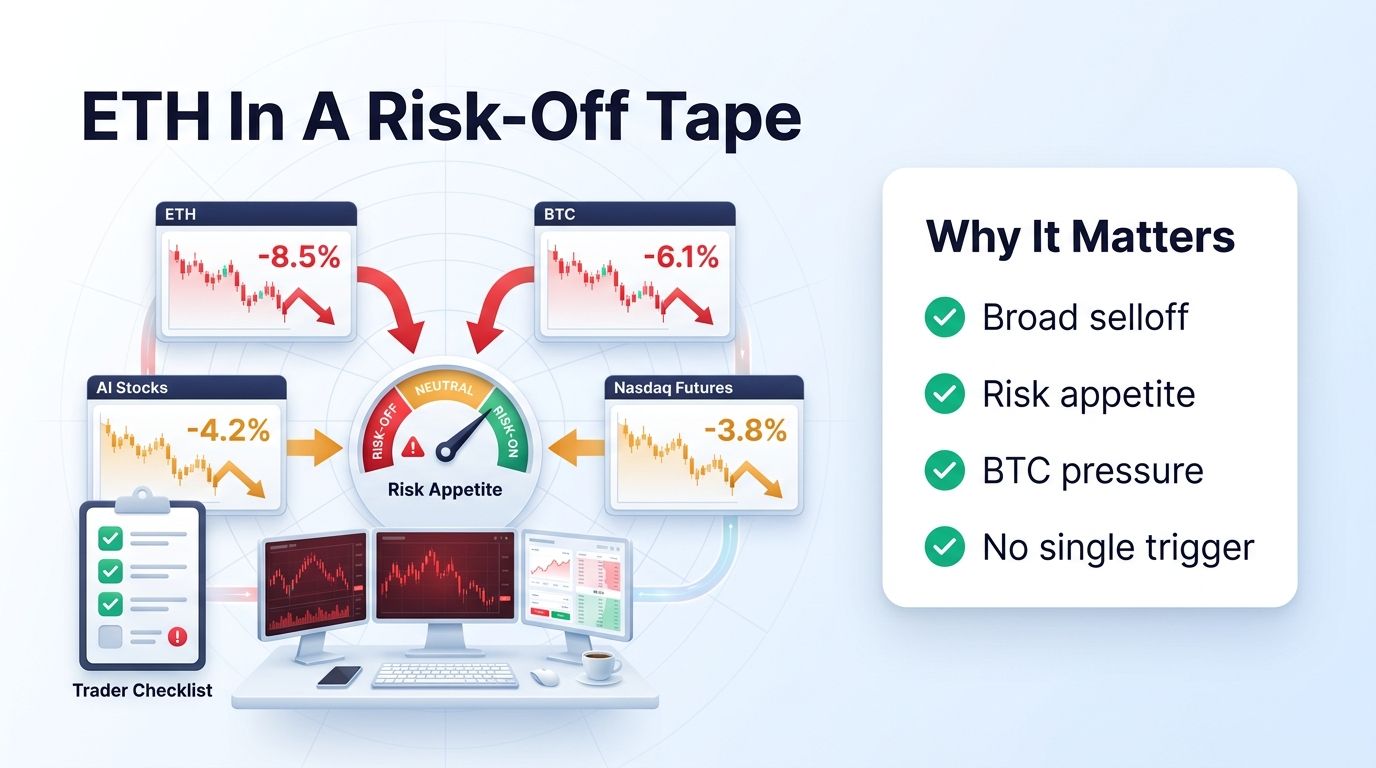
The Immediate Trigger Was Risk-Off Sentiment
The June selloff did not have one clean catalyst. Barron's reported on June 10 that Bitcoin, Ethereum, Solana, and XRP were all lower as an AI-related stock selloff weighed on risk assets. The same report noted that ETH slipped over the prior 24 hours while Nasdaq 100 futures were also lower.
That link matters because Ethereum often trades as a high-beta risk asset during stressful weeks. When traders reduce exposure to growth stocks, AI names, crypto equities, and speculative assets at the same time, ETH can fall even if there is no Ethereum-specific failure.
- ETH weakness was part of a broader crypto drawdown.
- AI stock pressure reduced appetite for risk assets.
- Bitcoin weakness kept pressure on the rest of the market.
- No single headline explained the full move.

Ethereum Also Faced Its Own Narrative Problem
Ethereum entered 2026 with several competing narratives. It is still the largest smart contract settlement layer by mindshare, but lower layer-2 fees after Dencun changed the old fee-burn story. At the same time, Solana, Base, and other networks kept competing for user activity and attention.
That does not make Ethereum broken. It does mean traders have to be more specific. ETH can be valuable as settlement infrastructure, staking collateral, stablecoin rail, and institutional asset, but those narratives do not always produce short-term price support when the market is de-risking.
- Layer-2 activity changed the fee-burn story.
- Competing chains pulled some attention away from ETH.
- Staking and ETF narratives are supportive but not instant.
- A good thesis still needs timing and risk control.
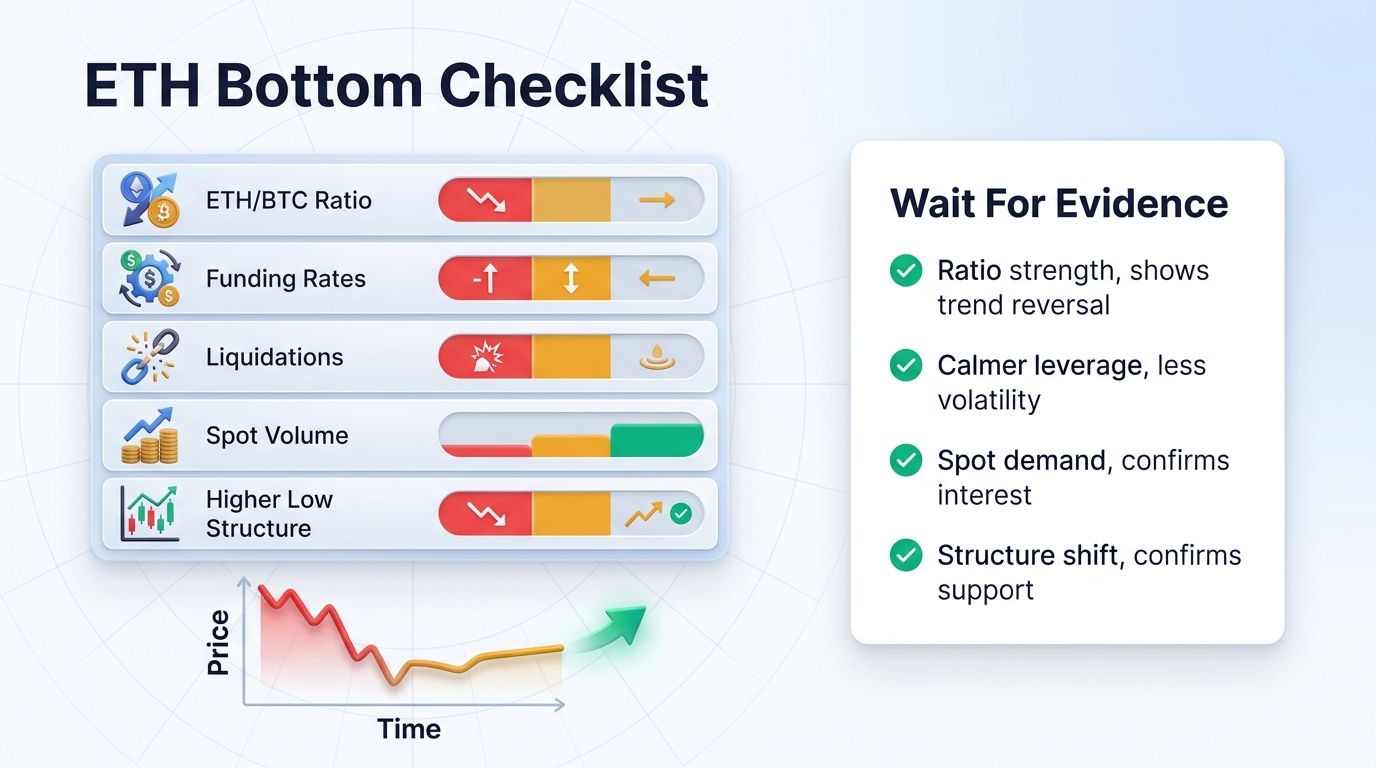
What Traders Should Check Before Calling a Bottom
A sharp Google Trends spike can mark fear, but fear alone is not an entry signal. Traders should look for a slower and more repeatable checklist: ETH/BTC stabilization, reduced forced selling, improving spot volume, calmer funding rates, and a price structure that stops making lower lows.
The ETH/BTC ratio is especially useful because it shows whether ETH is only bouncing with the market or actually regaining leadership against Bitcoin. If ETH cannot outperform BTC during a relief rally, the recovery may be weaker than it looks on the USD chart.
- Check ETH/BTC, not only ETH/USD.
- Watch liquidation pressure and funding rates.
- Compare ETF flow headlines with price reaction.
- Require a structure change before adding size.
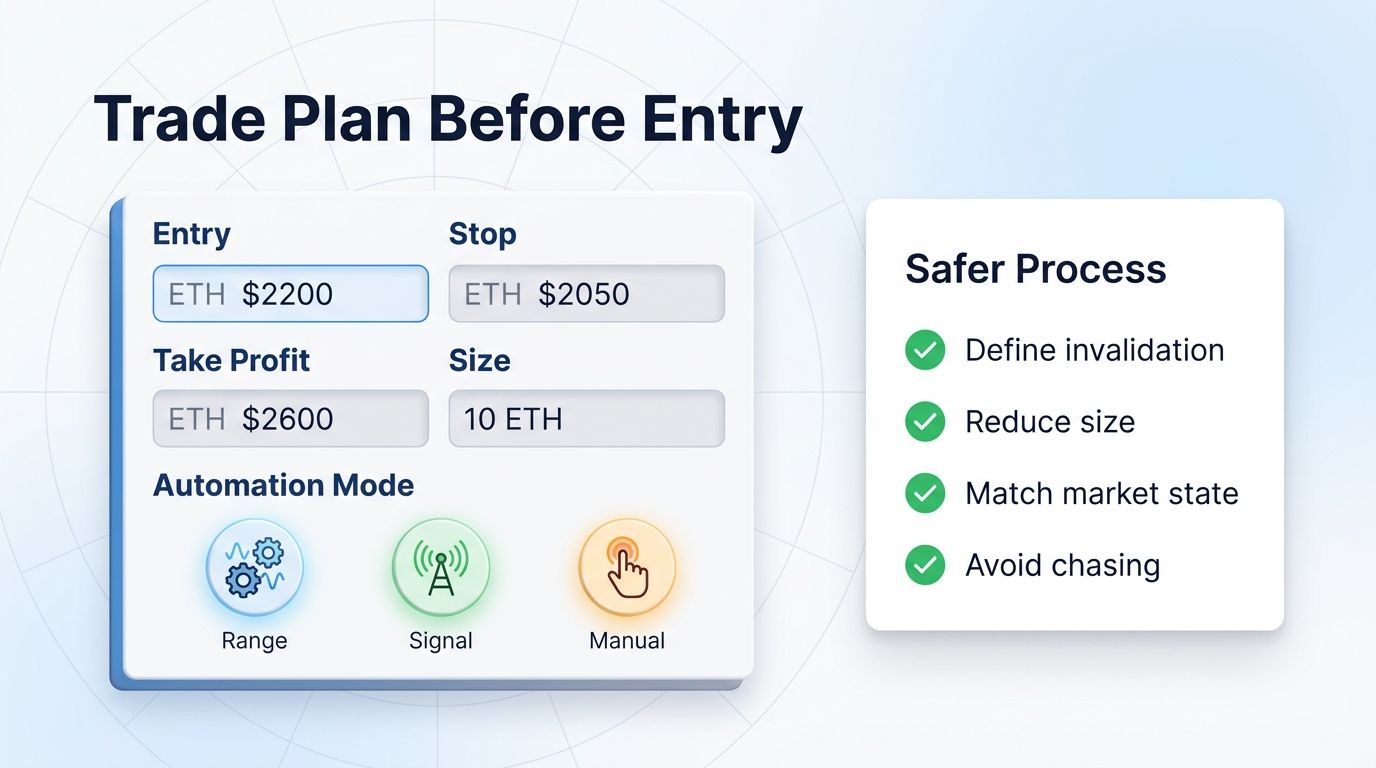
How to Trade the Setup Without Chasing
The worst response to a popular search trend is to rush into the exact trade everyone is emotionally debating. If ETH is falling and searches are rising, the first job is to define invalidation. A trader should know where the idea is wrong before deciding where it might be right.
Automation can help only after the plan exists. A Grid bot can be useful in a defined range, a Signal bot can help react to confirmed setups, and Smart Trading can define entry, stop, and take-profit structure. None of those tools replace the need to size the position correctly.
- Build the plan before the bounce starts.
- Use smaller size when volatility is elevated.
- Choose the right automation for the market state.
- Let invalidation define the trade, not emotion.
What Would Make the ETH Picture Healthier
The healthier setup would start with Bitcoin stabilizing and ETH refusing to make fresh lows on negative headlines. That would show selling pressure is being absorbed. The second sign would be ETH/BTC turning up for more than a one-day bounce, because leadership matters during recovery phases.
The third sign would be cleaner participation. Spot volume should support the move, funding should avoid overheating immediately, and ETF or staking headlines should be confirmed by price rather than ignored by the market. A good recovery is not only about one green candle. It is about better behavior across several indicators.
Traders should also be realistic about time. A market can stop crashing before it starts trending. Ranges are common after sharp selloffs because both buyers and sellers need time to rebuild confidence.
- Watch for lower selling impact on bad news.
- Track ETH/BTC leadership.
- Confirm with spot volume and leverage data.
- Expect ranges before clean trends.
Bottom Line
Ethereum's June 2026 weakness is not explained by one broken feature or one dramatic headline. It is a mix of broad risk-off pressure, Bitcoin weakness, shifting Ethereum narratives, and traders reassessing how much risk they want while AI and crypto both wobble.
Google Trends interest is useful because it shows when the public is paying attention, but it should not be treated as a trading signal by itself. Rising searches can mark fear, curiosity, or capitulation. The chart has to confirm which one is happening.
For traders, the practical answer is patience and structure. Watch ETH/BTC, funding, liquidations, volume, and price structure. Then use execution tools only after the setup is defined.
- Search interest shows attention, not direction.
- ETH weakness is part market-wide and part Ethereum-specific.
- The recovery case needs confirmation.
- Risk control matters more than speed.
A Practical ETH Watchlist for the Next Week
The next-week watchlist should be boring on purpose. Start with the daily close, because intraday ETH moves can look dramatic while still failing to change structure. Then mark the most recent lower high, the most recent lower low, and the level where a bounce would prove sellers are losing control.
Next, add market context. If Bitcoin is still falling, ETH strength needs to be judged against BTC rather than against dollars only. If tech stocks are still selling off, ETH may need stronger confirmation before a trader assumes the worst is over.
Finally, write down the action plan before the session begins. A plan might say: no entry until ETH reclaims a level, smaller size until volatility falls, and no automation unless the range is clear. That keeps the Google Trends story from turning into emotional execution.
- Track daily closes and structure levels.
- Compare ETH with BTC and tech risk.
- Predefine entry, invalidation, and size.
- Use automation only when the market state is clear.
FAQ
Why is Ethereum crashing in June 2026?
Ethereum is under pressure from broad risk-off sentiment, Bitcoin weakness, AI stock selloff spillover, and shifting ETH narratives.
Does rising Google Trends interest mean ETH has bottomed?
No. Search interest shows attention and concern. Price structure, volume, leverage, and ETH/BTC must confirm a turn.
What should traders watch for an ETH recovery?
Watch ETH/BTC strength, lower liquidation pressure, healthier spot volume, and a confirmed higher-low structure.
Can trading bots help during ETH volatility?
They can help execute a defined plan, but traders still need clear invalidation, position size, and risk controls.