
Bitcoin has evolved from an obscure digital experiment into one of the most compelling financial assets of the modern era. Whether you are a complete beginner or an experienced investor, understanding how to make money with Bitcoin is essential for anyone looking to participate in the cryptocurrency revolution. With a market cap that regularly exceeds $1 trillion and growing institutional adoption, Bitcoin offers multiple avenues for generating income and building wealth.
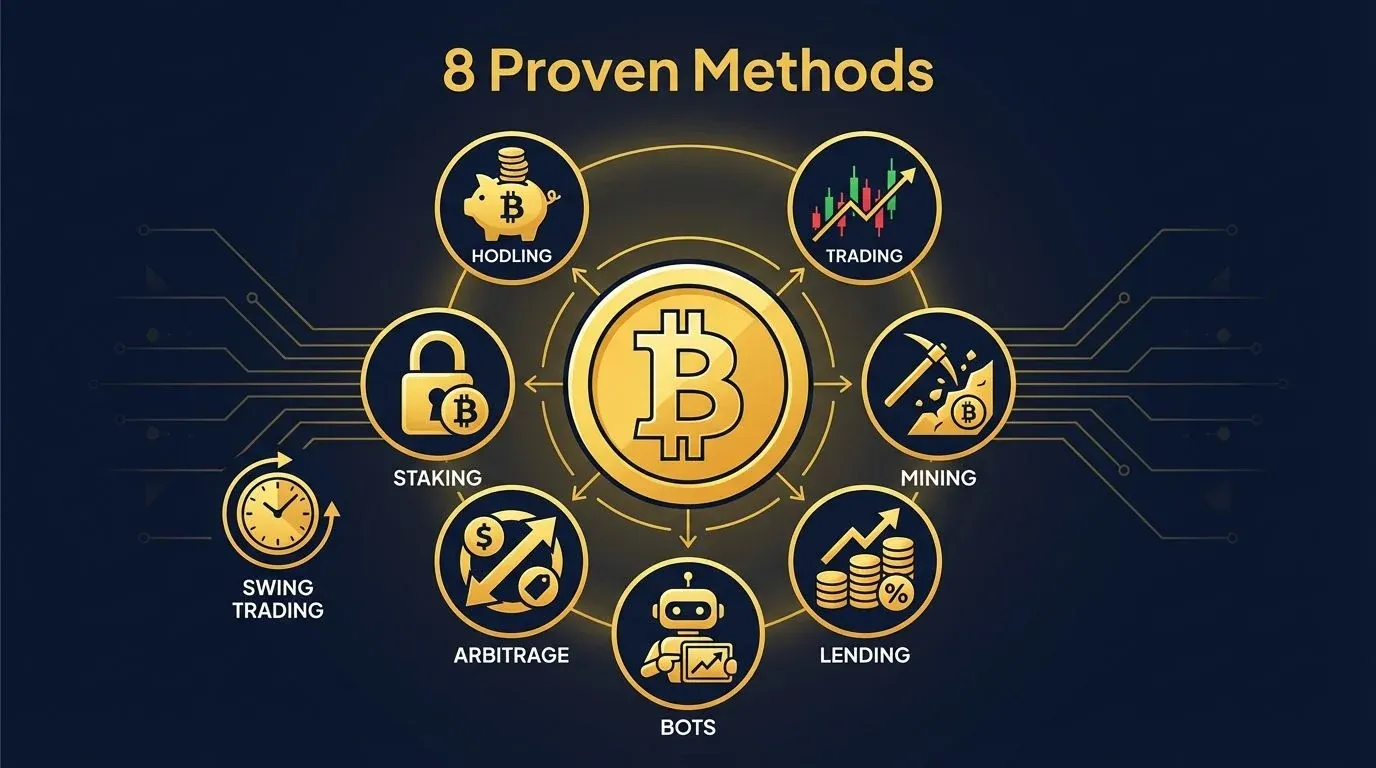
The good news is that earning money with Bitcoin is not limited to simply buying and hoping the price goes up. From active trading strategies to passive income methods, there are numerous approaches that suit different risk tolerances, capital levels, and time commitments. In this guide, we will explore eight proven methods for making money with Bitcoin, breaking down how each one works, its advantages and drawbacks, and who it is best suited for.
1. Buy and Hold (HODLing)
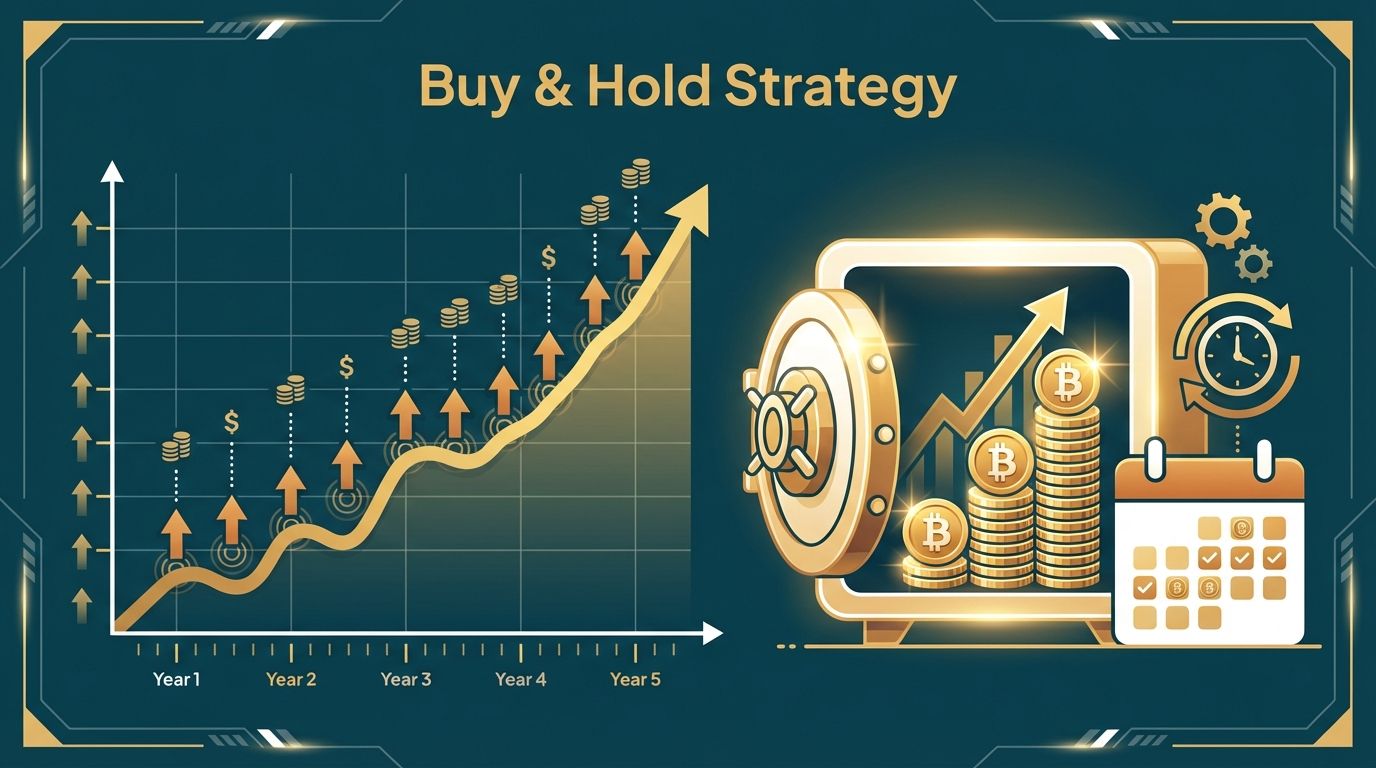
HODLing is the most straightforward strategy for making money with Bitcoin. The term originated from a misspelled forum post in 2013 and has since become a rallying cry for long-term Bitcoin believers. The concept is simple: purchase Bitcoin and hold it for an extended period, regardless of short-term price fluctuations, with the expectation that its value will increase significantly over time.
Historically, this approach has rewarded patient investors handsomely. Bitcoin has delivered extraordinary returns over multi-year periods, outperforming nearly every traditional asset class. Investors who bought and held through multiple market cycles have seen their initial investments grow by orders of magnitude.
How it works: You buy Bitcoin through a cryptocurrency exchange, transfer it to a secure wallet (preferably a hardware wallet for large amounts), and simply wait. Many HODLers use dollar-cost averaging (DCA), investing a fixed amount at regular intervals to reduce the impact of volatility.
Pros:
- Minimal time commitment and technical knowledge required
- No need to monitor charts or time the market
- Historically strong long-term returns
- Lower transaction fees compared to frequent trading
Cons:
- Capital is locked up for extended periods
- Requires emotional discipline during major price drops
- No guarantee that past performance will repeat
- Opportunity cost of not using more active strategies
Best for: Beginners, long-term investors, and anyone who believes in Bitcoin's fundamental value proposition but lacks time for active trading.
2. Day Trading
Day trading involves buying and selling Bitcoin within a single trading day to profit from short-term price movements. Unlike HODLing, this method requires active market participation, technical analysis skills, and the ability to make quick decisions under pressure. Day traders aim to capitalize on the volatility that makes Bitcoin both exciting and risky.
How it works: Day traders analyze price charts, identify patterns, and use technical indicators such as moving averages, RSI, and MACD to predict short-term price direction. They open and close positions within hours or even minutes, aiming to capture small but consistent profits. Most day traders use leverage to amplify their returns, though this also magnifies losses.
Pros:
- Potential for daily profits regardless of overall market direction
- No overnight risk since positions are closed each day
- Bitcoin's 24/7 market means trading opportunities exist around the clock
- Develops valuable skills in technical analysis and risk management
Cons:
- Extremely time-intensive and mentally demanding
- Most beginners lose money, with studies suggesting over 70% of day traders are unprofitable
- Transaction fees can eat into profits quickly
- High stress and emotional pressure can lead to poor decision-making
Best for: Experienced traders with strong technical analysis skills, emotional discipline, and the ability to dedicate full working hours to monitoring the market.
3. Swing Trading
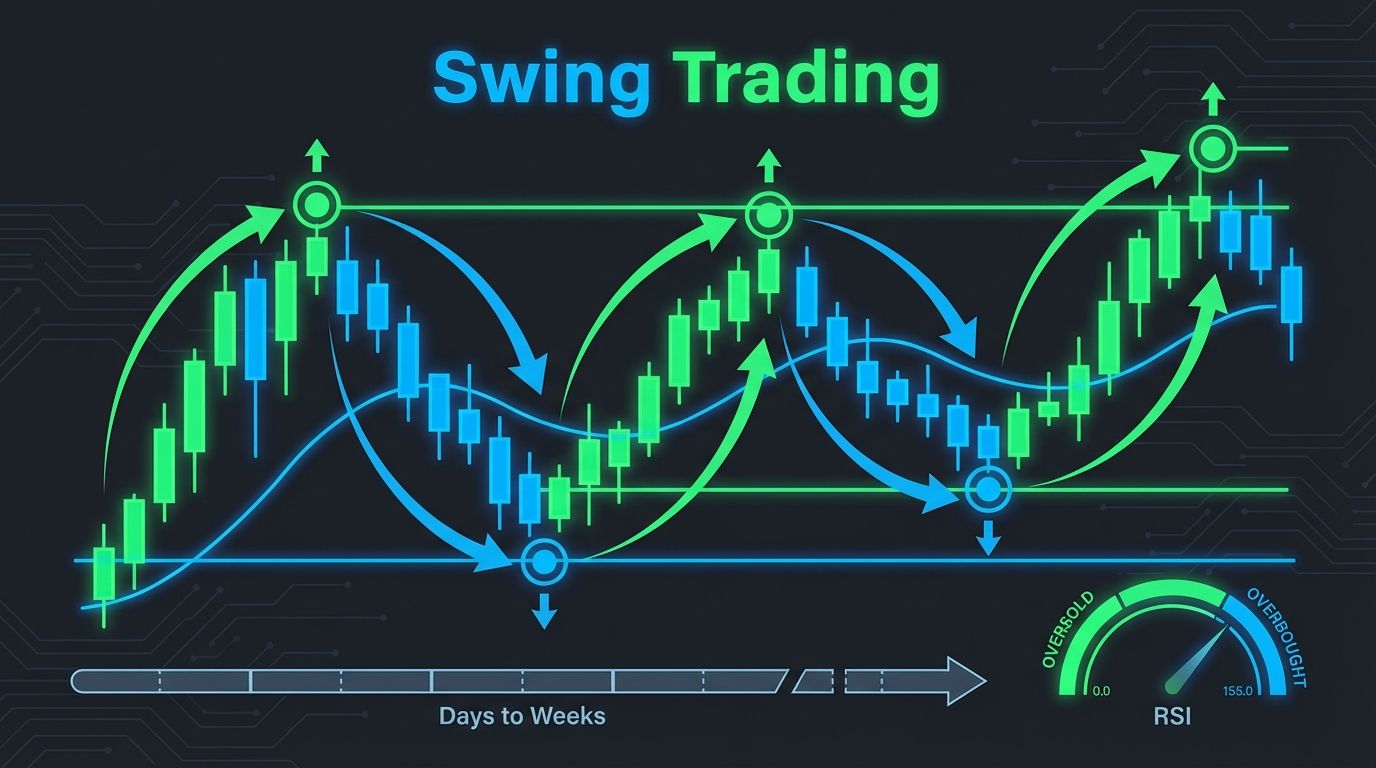
Swing trading sits between day trading and HODLing, involving positions that last from several days to several weeks. Swing traders aim to capture larger price movements, or "swings," by identifying trends and timing their entries and exits accordingly. This approach is one of the most popular methods for those learning how to make money with Bitcoin without the intensity of day trading.
How it works: Swing traders use a combination of technical and fundamental analysis to identify potential price trends. They look for support and resistance levels, chart patterns, and momentum indicators to time their trades. Positions are typically held for days to weeks, allowing traders to capture more significant price moves than day traders while requiring less screen time.
Pros:
- Less time-intensive than day trading
- Can capture larger price movements for bigger individual profits
- Works well with Bitcoin's natural volatility cycles
- Allows for more thorough analysis before making trade decisions
Cons:
- Overnight and weekend risk since positions remain open
- Requires patience to wait for the right setups
- Can miss opportunities during flat market periods
- Still requires solid technical analysis knowledge
Best for: Traders who want active market participation without the full-time commitment of day trading, and those comfortable holding positions through short-term volatility.
4. Bitcoin Lending and Yield Earning
Bitcoin lending allows you to earn passive income by lending your Bitcoin to borrowers through centralized or decentralized platforms. This method generates returns similar to earning interest on a savings account, but typically at much higher rates. It is an attractive option for those who already hold Bitcoin and want their assets to work for them.
How it works: You deposit your Bitcoin on a lending platform, which then lends it to borrowers who pay interest. The platform takes a cut of the interest and passes the rest to you. Rates vary depending on the platform, market conditions, and loan terms. Some platforms offer fixed rates while others have variable rates that fluctuate with demand.
Pros:
- Passive income with minimal effort after initial setup
- Can earn yields ranging from 2% to 8% annually
- Keeps your Bitcoin working instead of sitting idle
- Multiple platform options with varying risk profiles
Cons:
- Counterparty risk if the lending platform fails or is hacked
- Your Bitcoin is locked up during the lending period
- Smart contract risks on decentralized platforms
- Regulatory uncertainty in many jurisdictions
Best for: Long-term Bitcoin holders who want to generate passive income from their existing holdings without selling their position.
5. Bitcoin Mining
Note: Beyond mining, 2026 introduced new Bitcoin yield strategies including Babylon Bitcoin staking, which allows BTC holders to earn yield by securing proof-of-stake networks without wrapping or bridging.
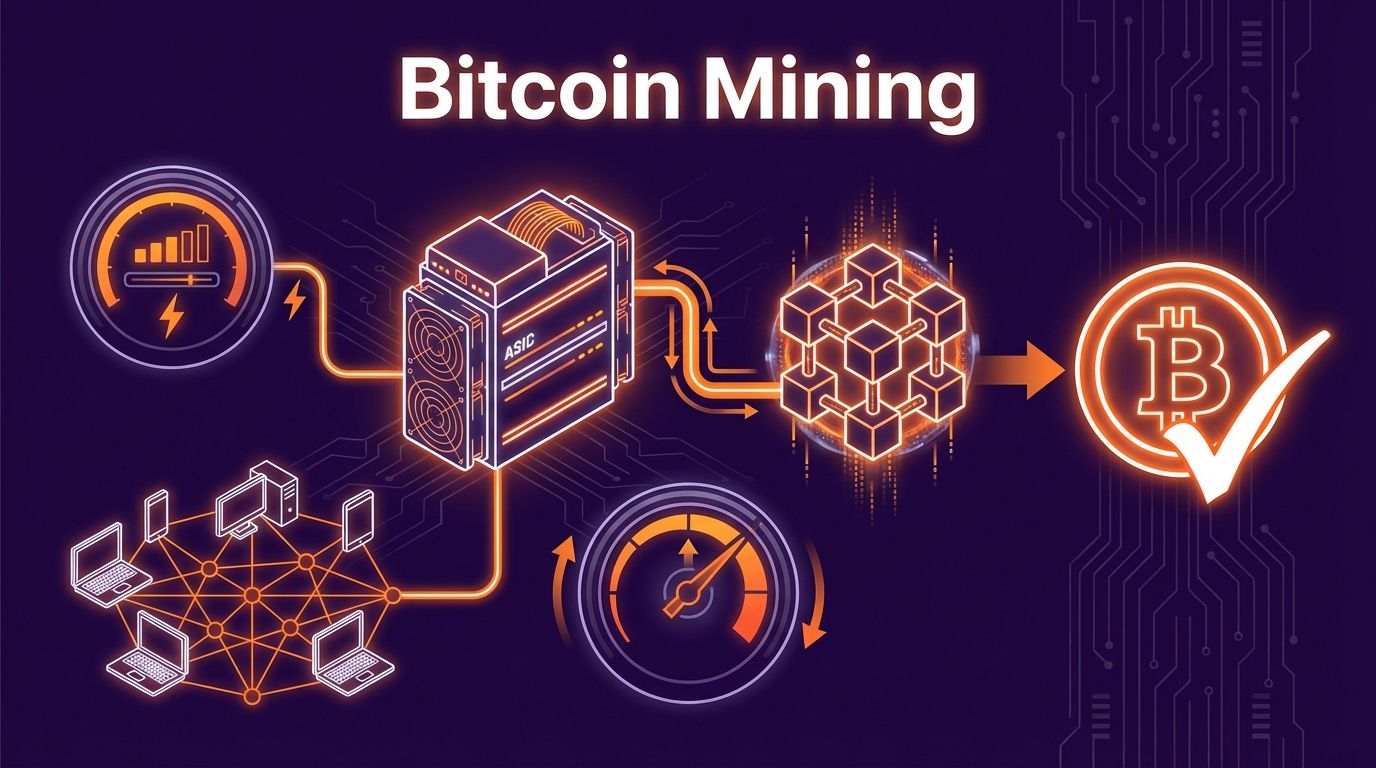
Bitcoin mining is the process of using specialized computer hardware to validate transactions on the Bitcoin network and earn newly minted Bitcoin as a reward. In 2026, several public miners have also begun running bitcoin miner AI infrastructure side businesses to monetize their datacenter capacity beyond block rewards. While it was once possible to mine Bitcoin with a regular computer, the network's difficulty has increased dramatically, making specialized ASIC (Application-Specific Integrated Circuit) hardware a necessity.
How it works: Miners run powerful computers that solve complex mathematical puzzles to validate blocks of transactions. The first miner to solve the puzzle earns the block reward (currently 3.125 BTC after the 2024 halving) plus transaction fees. Most individual miners join mining pools, where they combine computing power and split rewards proportionally.
Pros:
- Earn Bitcoin directly without buying it on an exchange
- Contributes to the security and decentralization of the Bitcoin network
- Can be profitable in regions with cheap electricity
- Mining hardware has residual value if you decide to stop
Cons:
- High upfront investment in ASIC hardware (often $2,000 to $10,000+ per unit)
- Significant ongoing electricity costs
- Hardware becomes obsolete as newer, more efficient models are released
- Profitability is heavily dependent on Bitcoin's price and network difficulty
Best for: Those with access to cheap electricity, technical knowledge of hardware setup, and capital for the initial investment in mining equipment.
6. Staking and Wrapped Bitcoin
While Bitcoin itself uses a proof-of-work consensus mechanism and cannot be staked natively, there are ways to earn staking-like rewards using wrapped Bitcoin (WBTC) or Bitcoin-pegged tokens on proof-of-stake networks. This method bridges the gap between Bitcoin ownership and the staking rewards available in the broader DeFi ecosystem.
How it works: You convert your Bitcoin into a wrapped version (such as WBTC on Ethereum or similar tokens on other chains) and then use it in DeFi protocols to earn yields. This can include providing liquidity on decentralized exchanges, participating in yield farming, or depositing into staking-based lending protocols. Some newer protocols also offer "liquid staking" solutions specifically designed for Bitcoin holders.
Pros:
- Earn passive rewards from Bitcoin holdings
- Access to the broader DeFi ecosystem and its yield opportunities
- Multiple protocols and strategies to choose from
- Can be combined with other DeFi strategies for compounded returns
Cons:
- Smart contract risk when using wrapped tokens and DeFi protocols
- Bridge risk when converting BTC to wrapped versions
- Impermanent loss when providing liquidity
- Complexity may overwhelm beginners
Best for: DeFi-savvy investors who are comfortable navigating cross-chain bridges and decentralized protocols, and who want to maximize yield on their Bitcoin.
7. Arbitrage Trading
Arbitrage trading exploits price differences for Bitcoin across different exchanges or markets. Since Bitcoin trades on hundreds of platforms worldwide, prices can vary slightly between them due to differences in liquidity, regional demand, and processing speeds. Arbitrage traders profit by buying Bitcoin where it is cheaper and selling it where it is more expensive.
How it works: There are several types of crypto arbitrage. Spatial arbitrage involves buying on one exchange and selling on another. Triangular arbitrage exploits price differences between three different trading pairs on the same exchange. Statistical arbitrage uses algorithms to identify and exploit pricing inefficiencies. Speed is critical, as price differences often exist for only seconds or minutes.
Pros:
- Relatively low risk compared to directional trading since you are not betting on price direction
- Profits are possible regardless of whether Bitcoin is in a bull or bear market
- Can be automated using trading bots for consistent execution
- Multiple types of arbitrage opportunities exist across the crypto ecosystem
Cons:
- Profit margins are typically very small per trade
- Requires significant capital to generate meaningful returns
- Transfer times between exchanges can eliminate opportunities
- Competition from institutional and algorithmic traders is intense
Best for: Traders with accounts on multiple exchanges, access to automated trading tools, and sufficient capital to make small percentage gains worthwhile.
8. Using Automated Trading Bots
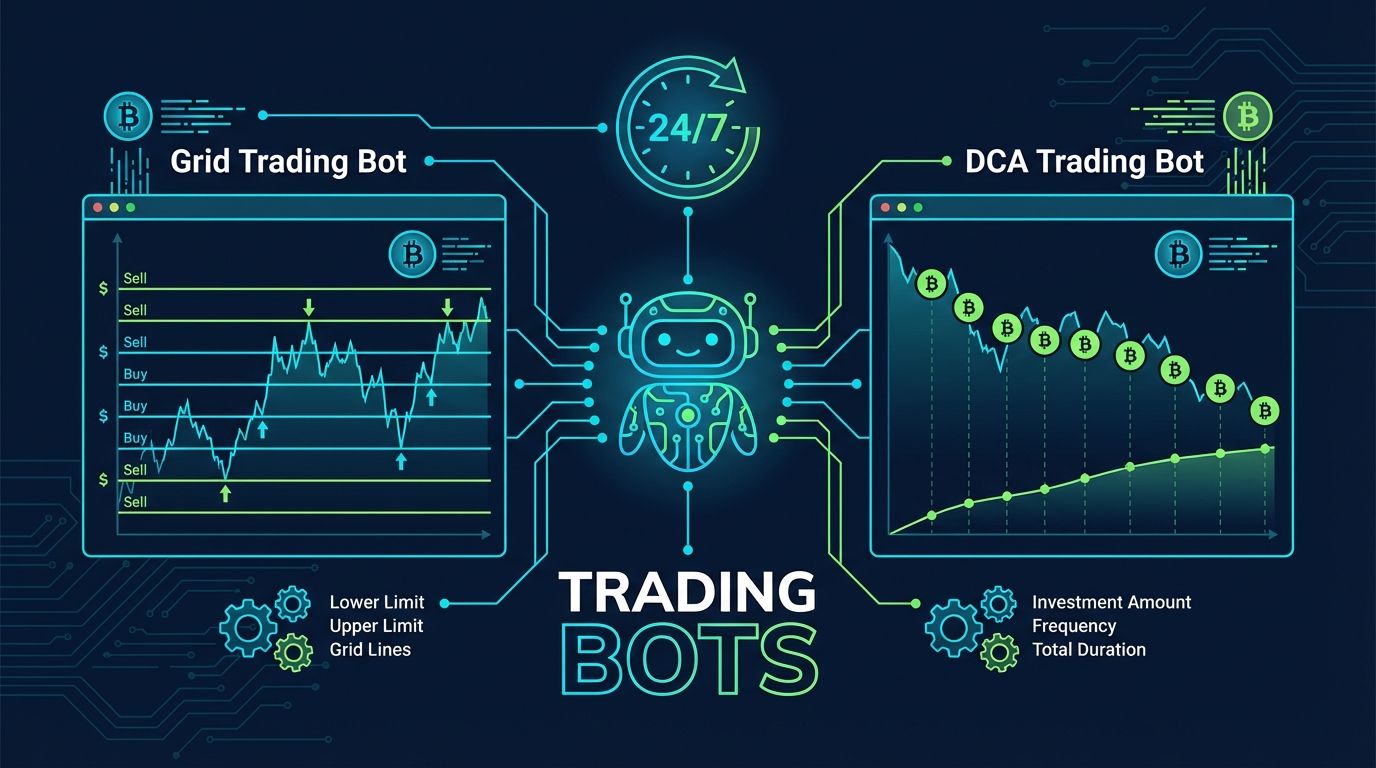
Automated trading bots execute trades on your behalf based on predefined strategies and parameters. They remove the emotional component from trading and can operate 24/7 in the never-sleeping crypto market. For many traders, bots represent the most practical way to learn how to make money with Bitcoin consistently without staring at charts all day.
How it works: Trading bots connect to your exchange account via API and execute trades based on rules you define or strategies you select. Common bot strategies include grid trading (placing buy and sell orders at preset intervals), DCA bots (automatically buying at regular intervals), and signal-based bots that trade based on technical indicators. More advanced bots use machine learning to adapt to changing market conditions.
Pros:
- Trade 24/7 without manual monitoring
- Remove emotional decision-making from the trading process
- Execute trades faster and more consistently than humans
- Can run multiple strategies simultaneously across different markets
Cons:
- Bots are only as good as their underlying strategy and configuration
- Technical setup and API management can be challenging for beginners
- Market conditions can change faster than bot parameters
- Requires ongoing monitoring and adjustment to remain effective
Best for: Traders who want to participate in the market without constant manual oversight, and those who prefer systematic, rules-based approaches to trading.
Take Your Bitcoin Trading to the Next Level
Now that you understand the various methods for how to make money with Bitcoin, the next step is choosing the right tools to execute your strategy effectively. Whether you prefer swing trading, arbitrage, or automated bot strategies, having a reliable platform that supports your approach is essential for success.
Altrady is an all-in-one crypto trading platform designed to give you a competitive edge. With support for multiple exchanges from a single dashboard, advanced charting tools, portfolio tracking, and powerful automated trading bots, Altrady provides everything you need to implement the strategies covered in this guide. Grid bots, DCA bots, and signal-based automation help you trade around the clock without being glued to your screen.
Ready to start making money with Bitcoin? Try Altrady with a free trial and experience how professional-grade trading tools can transform your crypto trading results. Sign up today and see why thousands of traders trust Altrady to manage their Bitcoin trading across multiple exchanges.
Frequently Asked Questions
Can you really make money with Bitcoin?
Yes, many people generate income and build wealth through Bitcoin using strategies like long-term holding, active trading, lending, and mining. However, it is important to understand that all methods carry risk, and there are no guaranteed returns. Success depends on your chosen strategy, market conditions, risk management practices, and the time and effort you invest in learning. Starting with small amounts and gradually increasing your exposure as you gain experience is a prudent approach.
How much money do I need to start making money with Bitcoin?
You can start with as little as $10 to $50 on most cryptocurrency exchanges, making Bitcoin accessible to almost anyone. For HODLing and dollar-cost averaging, small regular investments can add up over time. Active trading strategies typically require more capital to generate meaningful returns, with most experienced traders recommending at least $500 to $1,000. Mining requires the largest initial investment, often $2,000 or more for hardware alone.
What is the safest way to make money with Bitcoin?
Dollar-cost averaging into Bitcoin over the long term is widely considered the lowest-risk strategy, as it reduces the impact of short-term volatility and removes the need to time the market. This approach has historically produced strong returns over multi-year periods. For additional safety, store your Bitcoin in a hardware wallet, use reputable exchanges, enable two-factor authentication on all accounts, and never invest more than you can afford to lose.
Is Bitcoin trading better than holding?
Neither approach is universally better. They serve different goals and suit different personality types. HODLing is simpler, less stressful, and has historically rewarded patient investors over long time frames. Active trading can potentially generate faster returns, but it requires more skill, time, and emotional discipline. Many successful Bitcoin investors combine both approaches, holding a core long-term position while actively trading with a smaller portion of their portfolio.
Do I need to pay taxes on Bitcoin profits?
In most countries, yes. Bitcoin profits are typically subject to capital gains tax, income tax, or both, depending on your jurisdiction and how you earned them. Trading profits, mining income, and lending yields may all have different tax treatments. It is essential to keep detailed records of all your Bitcoin transactions and consult with a tax professional familiar with cryptocurrency regulations in your country to ensure compliance.