
Mastercard's June 3, 2026 stablecoin settlement announcement is a signal that digital assets are moving deeper into payment plumbing. The company said it plans to expand settlement capabilities with intraday, weekend, holiday, and onchain card settlement options using regulated stablecoins.
For crypto traders, this matters because stablecoin adoption is no longer only about exchange balances or DeFi yields. It is becoming a settlement option for issuers, acquirers, banks, fintechs, and payment service providers that already move large transaction volume.
What Mastercard Announced
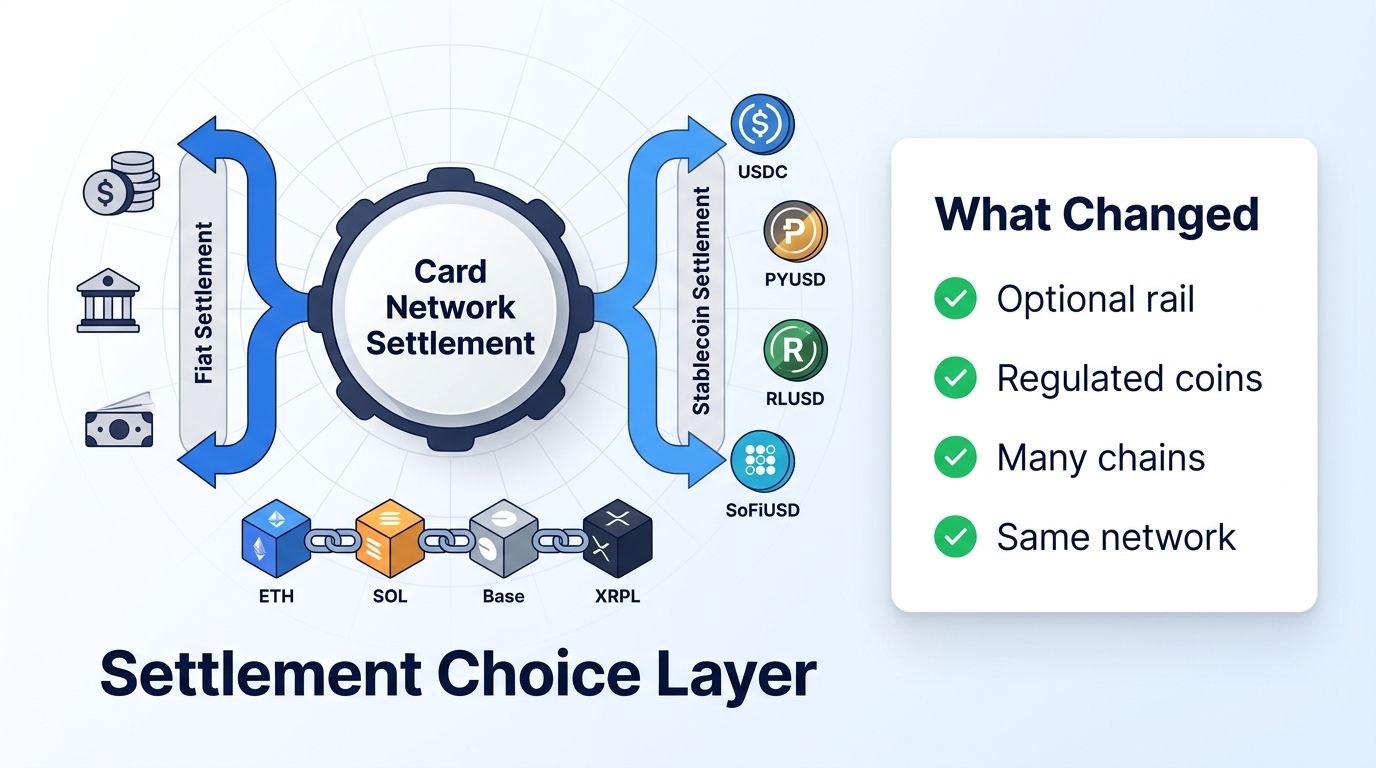
Mastercard said it will support regulated stablecoins including Circle's USDC, Paxos-issued PYUSD, USDG, and USDP, Ripple's RLUSD, and SoFi's SoFiUSD. It also named supported networks including Arbitrum, Base, Canton, Ethereum, Polygon, Solana, Tempo, and XRPL.
The framing is choice, not replacement. Mastercard described stablecoin-based settlement as one option that partners can use alongside existing processes. That is the practical shape of institutional adoption: new rails are added to existing systems instead of forcing a sudden migration.
- Stablecoin settlement becomes an optional rail.
- Multiple regulated stablecoins are supported.
- Multiple blockchain networks are included.
- Traditional protections and processes remain part of the stack.
Why 24/7 Settlement Matters
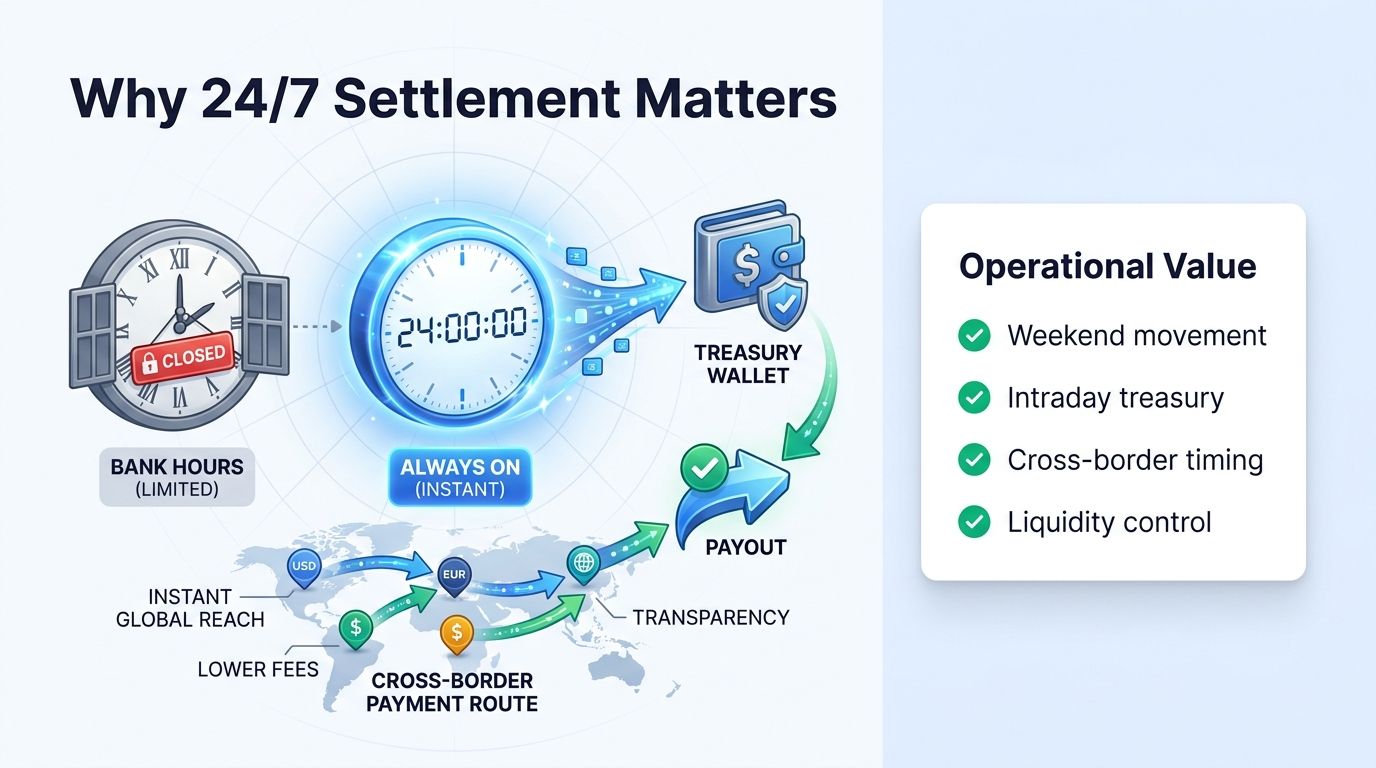
Traditional settlement timing can create liquidity gaps. Banks and payment companies may process consumer transactions quickly, but the underlying movement between institutions can still depend on batch windows, holidays, and local banking schedules. Stablecoins make always-on value transfer technically possible.
That does not mean every payment becomes instant for every user. The rollout is subject to regulation, partner readiness, and operational controls. But the direction is clear: stablecoins are being tested as liquidity management tools for institutions that need faster treasury movement.
- Weekend and holiday settlement can reduce timing gaps.
- Intraday options can improve treasury flexibility.
- Cross-border payments can benefit from clearer settlement timing.
- Regulation and partner controls still define rollout speed.
How This Affects Public Blockchains
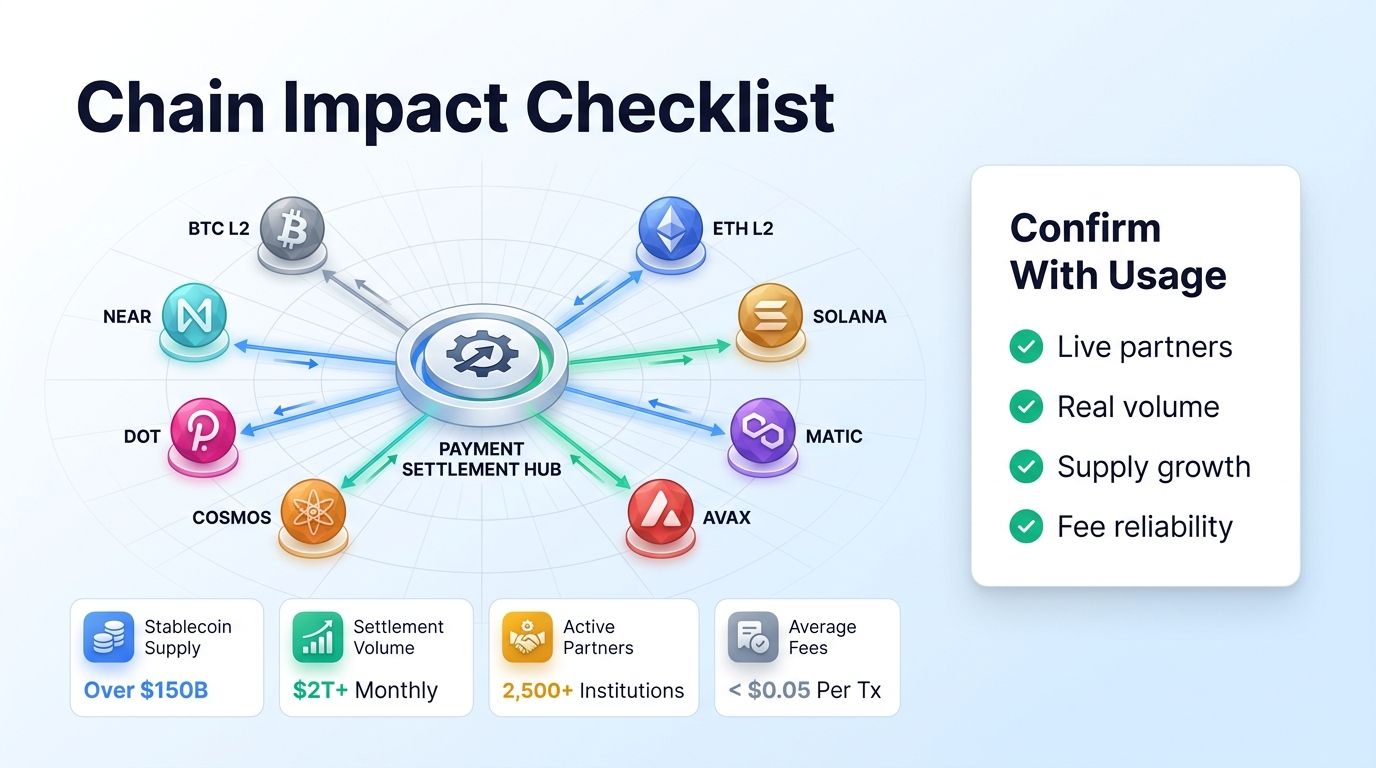
The chain list matters because payment settlement can create recurring transaction demand. Ethereum, Solana, Base, Arbitrum, Polygon, XRPL, Canton, and Tempo are not identical networks. They differ by fee model, finality, developer base, regulatory positioning, and institutional connectivity.
For traders, the better read is not to chase every chain name. Watch whether actual settlement volume appears, which partners go live first, and whether stablecoin supply grows on the networks used. Announcements are useful. Usage is the confirmation.
- A chain mention is not the same as live volume.
- Stablecoin supply can reveal adoption.
- Settlement transactions may differ from DeFi transactions.
- Partner rollout matters more than chain marketing.
What Traders Should Watch
The investable part of a payment settlement story is indirect. It can show up in stablecoin issuer growth, public chain usage, payment infrastructure companies, and assets connected to settlement demand. It can also fail to move markets if the rollout is slow or private.
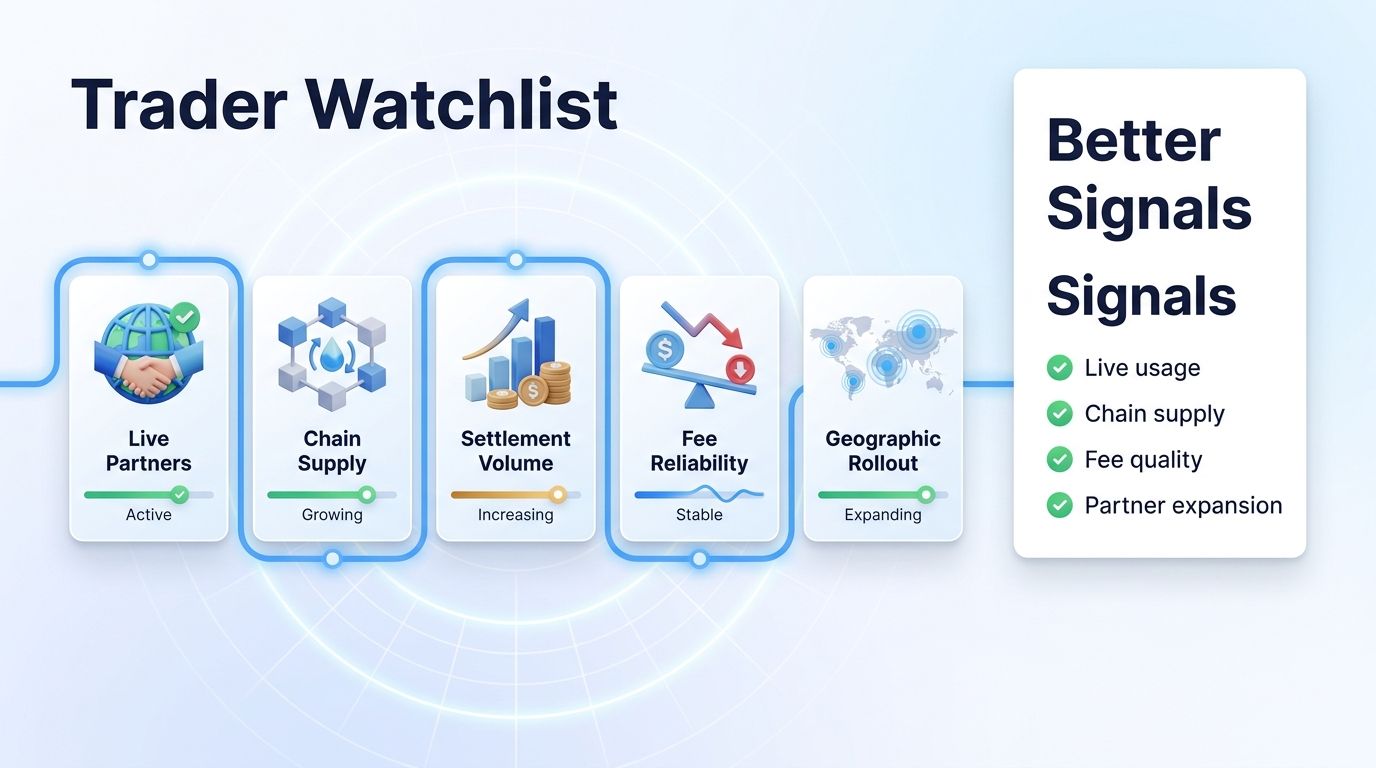
A disciplined trader should track live partners, supported geographies, volume disclosures, stablecoin supply by chain, and whether the chosen networks show sustained transaction growth. Those indicators are more useful than simply counting press release names.
- Track actual stablecoin supply by chain.
- Watch partners that move from expected support to live support.
- Check whether fees stay predictable during peak demand.
- Separate payment utility from short-term token speculation.
The Institutional Adoption Pattern
The Mastercard announcement shows a pattern that is becoming common in 2026: institutions do not adopt crypto by removing their existing controls. They adopt by adding blockchain settlement as another option inside a familiar compliance, treasury, and operational environment.
That matters because many early crypto narratives expected payment networks to be displaced. The more realistic path is integration. Stablecoins can sit beside fiat rails, while banks and payment processors decide when a digital asset rail is useful for liquidity timing, cross-border movement, or programmable settlement.
For market analysis, that means traders should avoid a simple old finance versus crypto framework. The adoption story is becoming a hybrid system where regulated stablecoins, public chains, bank partners, and existing card networks share the same workflow.
- Institutional adoption often adds rails instead of replacing rails.
- Compliance and dispute processes still matter.
- Hybrid infrastructure can grow slower but more durably.
- Stablecoin utility may show up in operations before price.
How to Separate Real Adoption From Marketing
A strong stablecoin settlement story should eventually produce measurable activity. Traders can start by tracking whether named partners move from expected support to public live usage. Then they can watch whether stablecoin supply rises on the supported chains and whether settlement-related transfers become consistent.
The weakest signal is a chain being named in a press release. The strongest signal is a chain handling repeat payment or settlement flows with predictable fees and no operational issues. Between those two points are pilot programs, limited geographies, and partner-specific rollouts.
This is why patience matters. A large payment network can validate the category without creating an immediate trade. The better trade may appear later, when data confirms which stablecoins, chains, and service providers capture recurring activity.
- Watch live partner status.
- Track stablecoin supply by chain.
- Look for repeat transfer patterns.
- Wait for usage before assigning value.
FAQ
What is stablecoin settlement?
It is the use of regulated stablecoins as a settlement asset between payment network participants.
Which stablecoins did Mastercard name?
Mastercard named USDC, PYUSD, USDG, USDP, RLUSD, and SoFiUSD in its June 2026 announcement.
Does this replace fiat settlement?
No. Mastercard framed stablecoins as an additional option alongside existing settlement processes.
Why does this matter for traders?
It can create recurring stablecoin and blockchain usage, but traders should wait for live volume and partner rollout data.