
MoneyGram's MGUSD announcement is a good example of how stablecoins are moving from crypto-native trading into everyday payment infrastructure. The interesting part is not only that a stablecoin exists. The interesting part is where it sits: inside a consumer money movement app that already serves cross-border users.
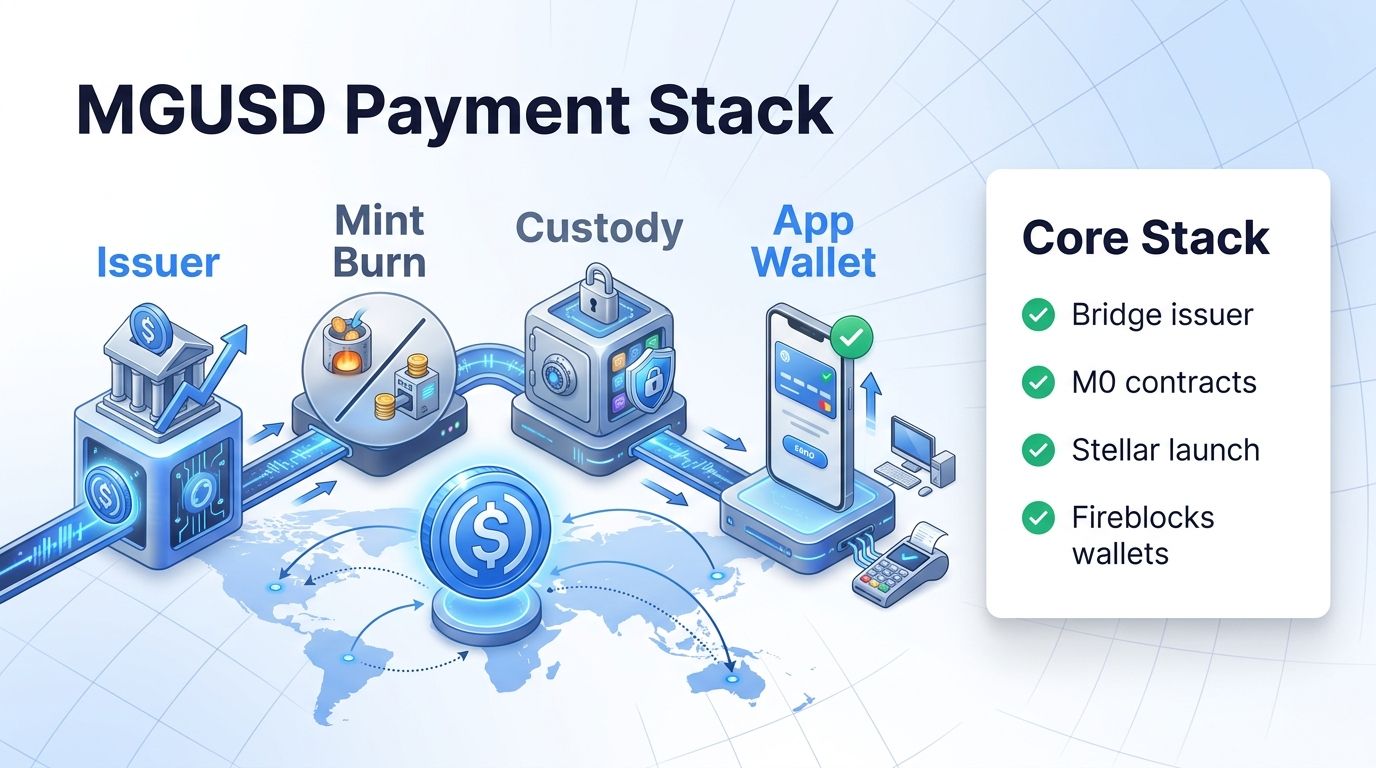
According to the June 2, 2026 announcement, MGUSD launches in the U.S. market, is issued with support from Bridge, uses M0 smart contract infrastructure, launches on Stellar, and is held by MoneyGram in Fireblocks wallets for movement into customer wallets embedded in the MoneyGram app.
What Is MGUSD?
MGUSD is a U.S. dollar stablecoin built for MoneyGram's own network. MoneyGram described it as the foundation for a growing suite of financial services across its global network. That wording matters because MGUSD is not being framed as a speculative token. It is being framed as payment infrastructure.
The product design is simple on the surface. A customer can hold a stable dollar-denominated balance in a self-custodial wallet inside the MoneyGram app. Behind that experience are issuance, minting, custody, and blockchain settlement partners.
- Bridge, a Stripe company, supports issuance.
- M0 provides smart contract infrastructure.
- Stellar is the launch blockchain.
- Fireblocks wallets support MoneyGram operations.
Why Remittances Fit Stablecoins
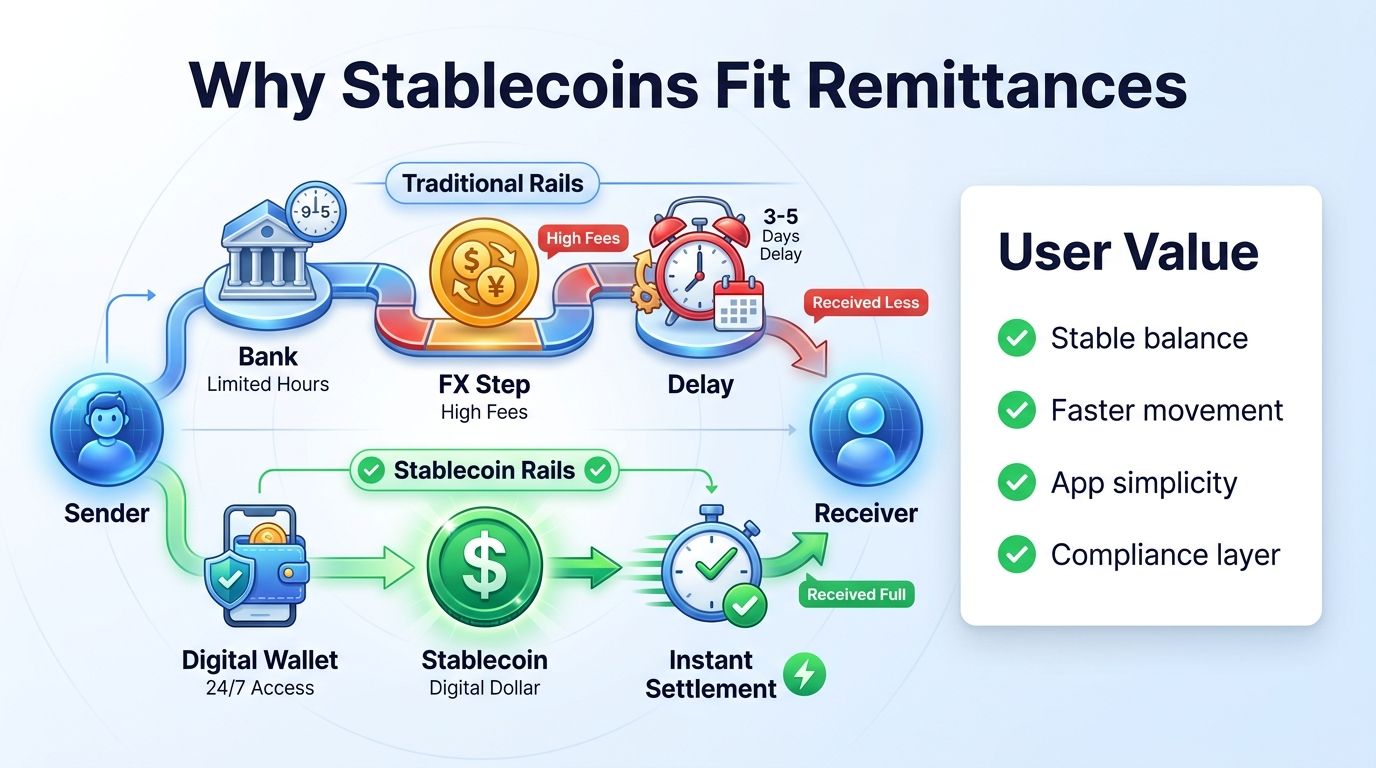
Cross-border remittances have a timing problem. Traditional rails can involve banking hours, local payout partners, foreign exchange steps, and settlement delays. Stablecoins do not remove every cost or compliance requirement, but they can make the value layer faster and more programmable.
For users, the key feature is not blockchain language. It is a stable balance that can move, settle, and potentially convert with less friction. That is why payment companies are testing stablecoin rails without asking every customer to become a crypto power user.
- Stable value is easier to understand than volatile crypto.
- Blockchain settlement can operate outside bank hours.
- Consumer apps can hide technical complexity.
- Compliance still matters for licensed money movement.
How MGUSD Differs From Trading Stablecoins
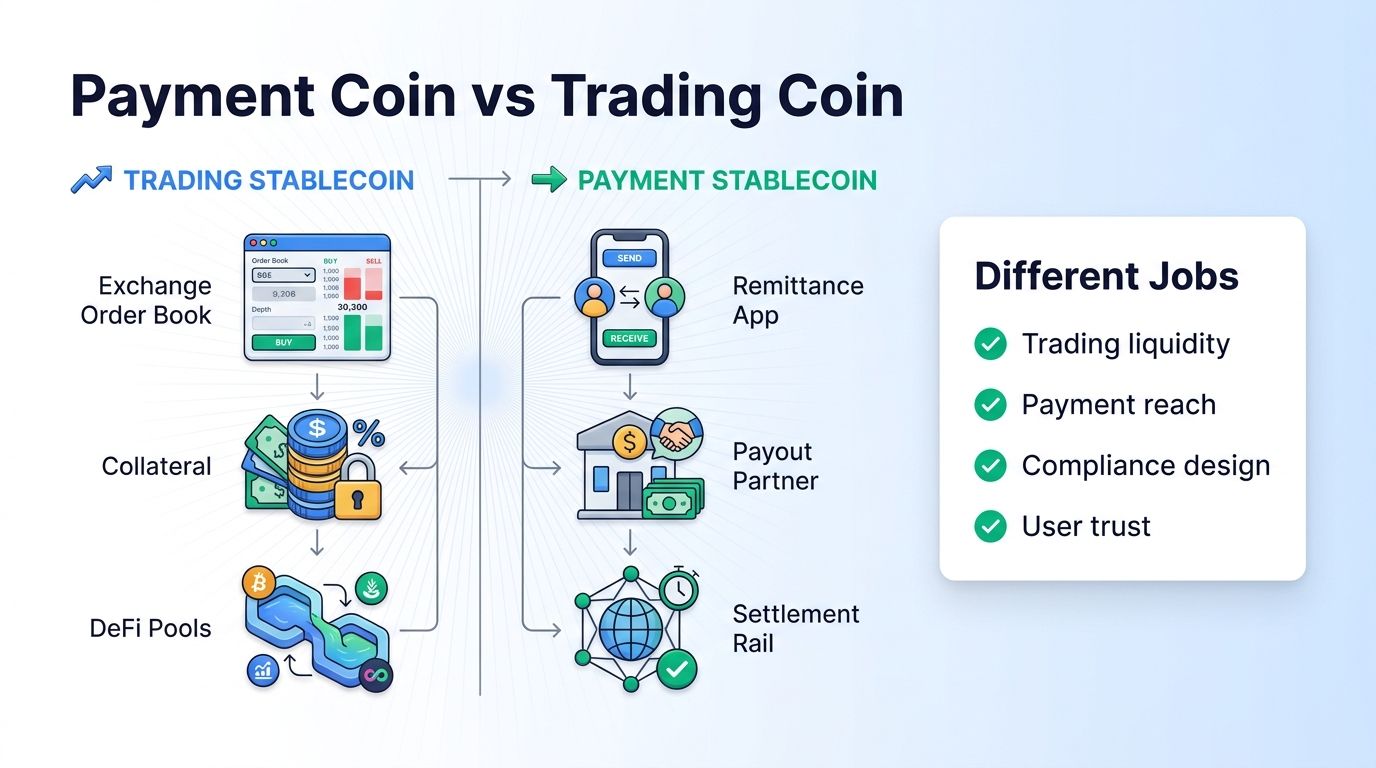
Trading stablecoins are often used as quote currency, collateral, or a parking asset on exchanges. MGUSD is different because its first job is linked to a remittance network. That changes the success metrics. Liquidity on exchanges matters less than app adoption, payout coverage, fees, reliability, and user trust.
This distinction is important for traders watching the stablecoin sector. A stablecoin can grow because traders use it. It can also grow because payment companies route value through it. These are different demand curves, and they may favor different chains, issuers, and compliance models.
- Exchange stablecoins optimize for trading liquidity.
- Payment stablecoins optimize for movement and settlement.
- Network distribution can matter more than DeFi yield.
- Consumer trust is part of the product.
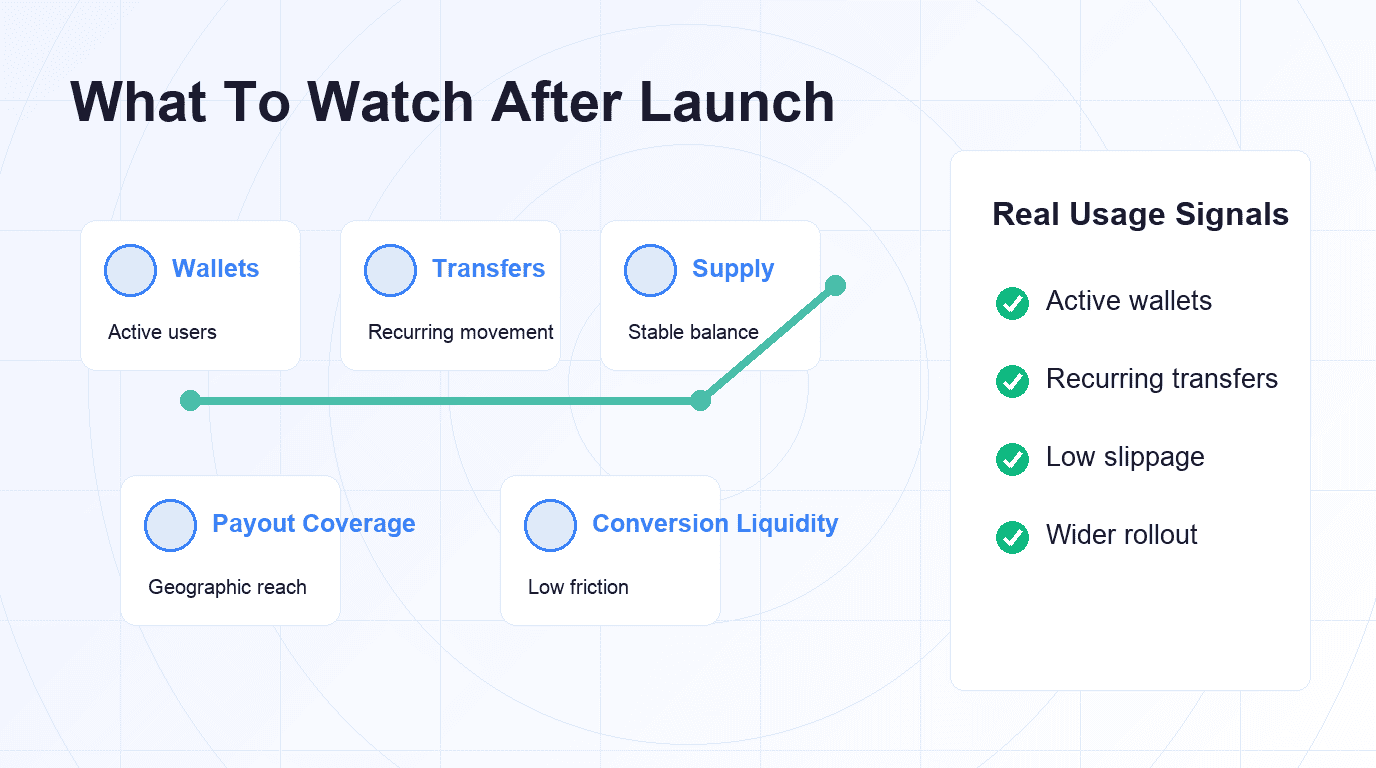
What Traders Should Watch Next
MGUSD does not automatically make Stellar, payment tokens, or remittance-themed assets a simple trade. The better question is whether payment stablecoin launches create measurable onchain volume, wallet growth, and recurring settlement activity. Real usage should show up in transfers, active addresses, and integrations.
A useful watchlist includes stablecoin supply, transfer count, average transfer size, app rollout geography, and whether liquidity venues support conversion without large slippage. If those indicators grow together, the story becomes more than an announcement.
- Watch active wallets, not only press releases.
- Track transfer count and stablecoin supply.
- Check conversion liquidity and payout coverage.
- Separate payment usage from speculative token moves.
Why This Is Bigger Than One Stablecoin
MGUSD is important because it shows how payment companies may use stablecoins as an internal product layer. A customer may never think about minting, burning, custody, or the chain underneath. They may only see a dollar balance inside an app that can move across borders with fewer delays.
That is a different adoption path from the one traders usually watch. Exchange stablecoins grow when traders need liquidity. DeFi stablecoins grow when users need yield, collateral, or settlement inside protocols. Payment stablecoins grow when apps with existing distribution decide that blockchain rails improve the customer experience or back-office settlement.
For a trader, this means stablecoin adoption should be segmented. A remittance stablecoin can be successful without becoming the deepest trading pair on an exchange. The better question is whether it increases recurring transaction volume, wallet usage, and demand for the chain and infrastructure around it.
- Payment distribution can be more important than exchange depth.
- Consumer apps can hide blockchain complexity.
- Stablecoin demand should be measured by use case.
- Recurring transfers matter more than launch headlines.
How to Watch MGUSD Without Chasing Hype
The careful way to track MGUSD is to build a simple dashboard mindset. First, watch whether the U.S. launch expands into additional regions. Second, watch whether customer wallet activity becomes visible onchain. Third, watch whether conversion liquidity develops so users can move between MGUSD, local payout options, and other dollar assets without friction.
The chain angle also deserves discipline. Stellar can benefit from more payment activity, but the relationship is not automatic. Traders should ask whether MGUSD creates network fees, partner integrations, wallet growth, and developer interest that persist after the announcement cycle. If activity remains narrow, the market impact may stay limited.
This is also a reminder not to treat every stablecoin announcement as the same trade. Western Union, MoneyGram, Mastercard, bank-issued stablecoins, and exchange stablecoins all have different routes to adoption. Similar words can hide very different economics.
- Track rollout geography.
- Watch onchain wallet activity.
- Measure conversion liquidity.
- Separate chain impact from app impact.
FAQ
What is MGUSD?
MGUSD is MoneyGram's U.S. dollar stablecoin designed to support financial services across the MoneyGram network.
Which blockchain does MGUSD launch on?
MoneyGram said MGUSD launches on Stellar.
Is MGUSD mainly for trading?
The announcement frames MGUSD as payment and remittance infrastructure, not mainly as an exchange trading asset.
What should traders watch after MGUSD?
Watch wallet activity, stablecoin supply, transfer volume, payout coverage, and conversion liquidity.