

California recorded the highest reported cryptocurrency-related fraud losses among US states in 2025, according to an Altrady analysis of FBI IC3 state data. The same data shows Oregon ranking fifth by reported losses despite a much lower complaint count than the largest states.
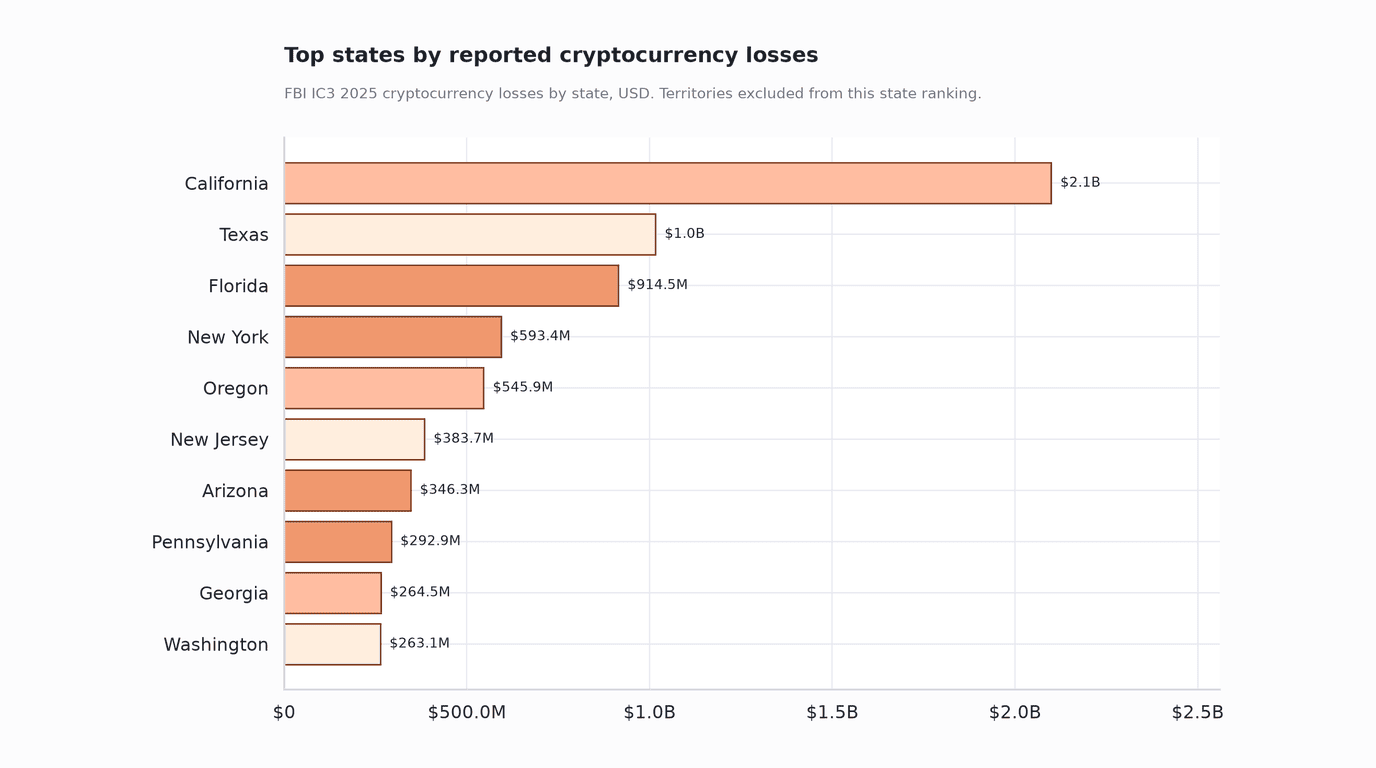
California ranked first at $2.1B in reported cryptocurrency losses. Texas followed at $1.0B, and Florida ranked third at $914.5M. New York ranked fourth, while Oregon completed the top five.
Oregon had 2,175 cryptocurrency complaints, ranking No. 25 by complaint volume. But the state reported $545.9M in losses, ranking No. 5 by total losses. That works out to about $251.0k per complaint, the highest figure among the 50 states and DC in this analysis.
The source data for this study comes from the FBI IC3 2025 Annual Report and US Census Bureau Vintage 2025 population estimates.
Key Findings
- California had the largest reported cryptocurrency loss total in the IC3 state table at $2.1B.
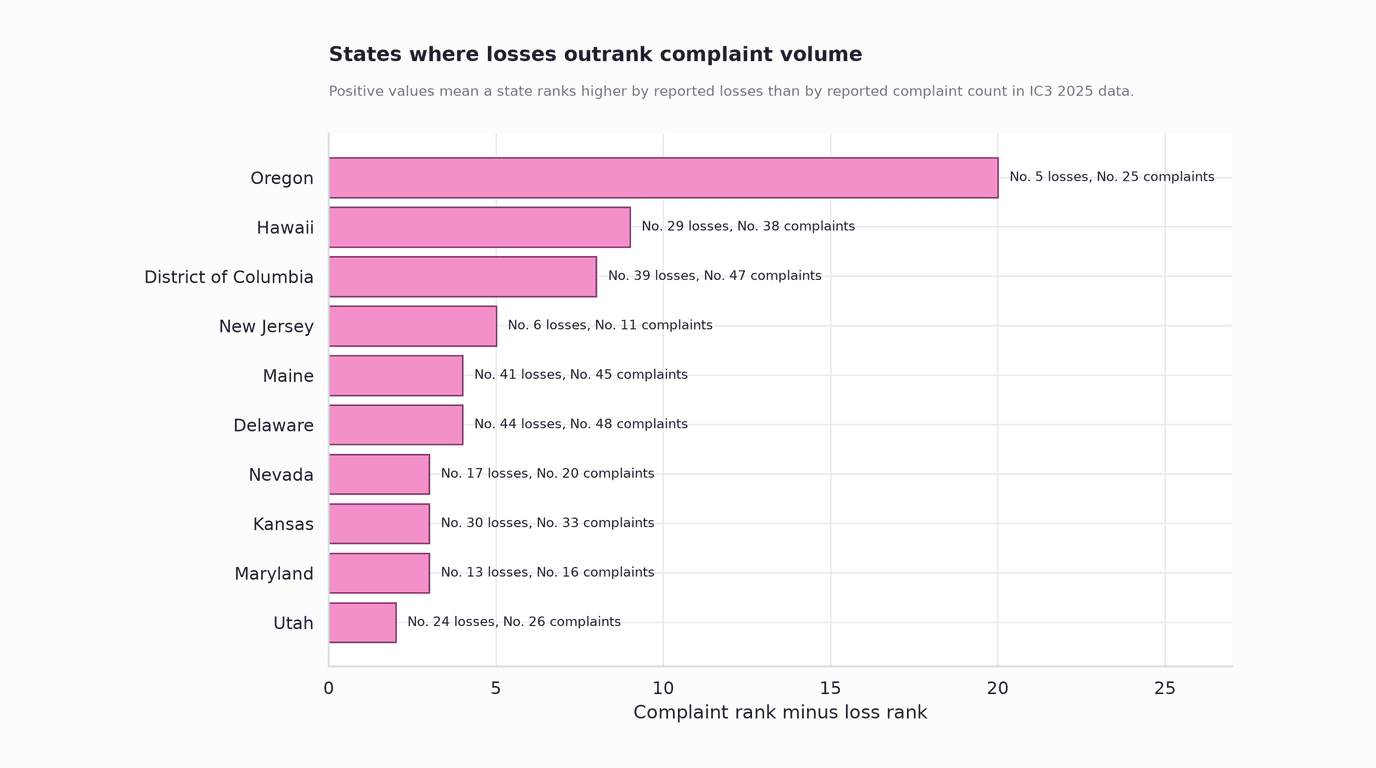
- Oregon ranked No. 25 by complaints but No. 5 by reported losses.
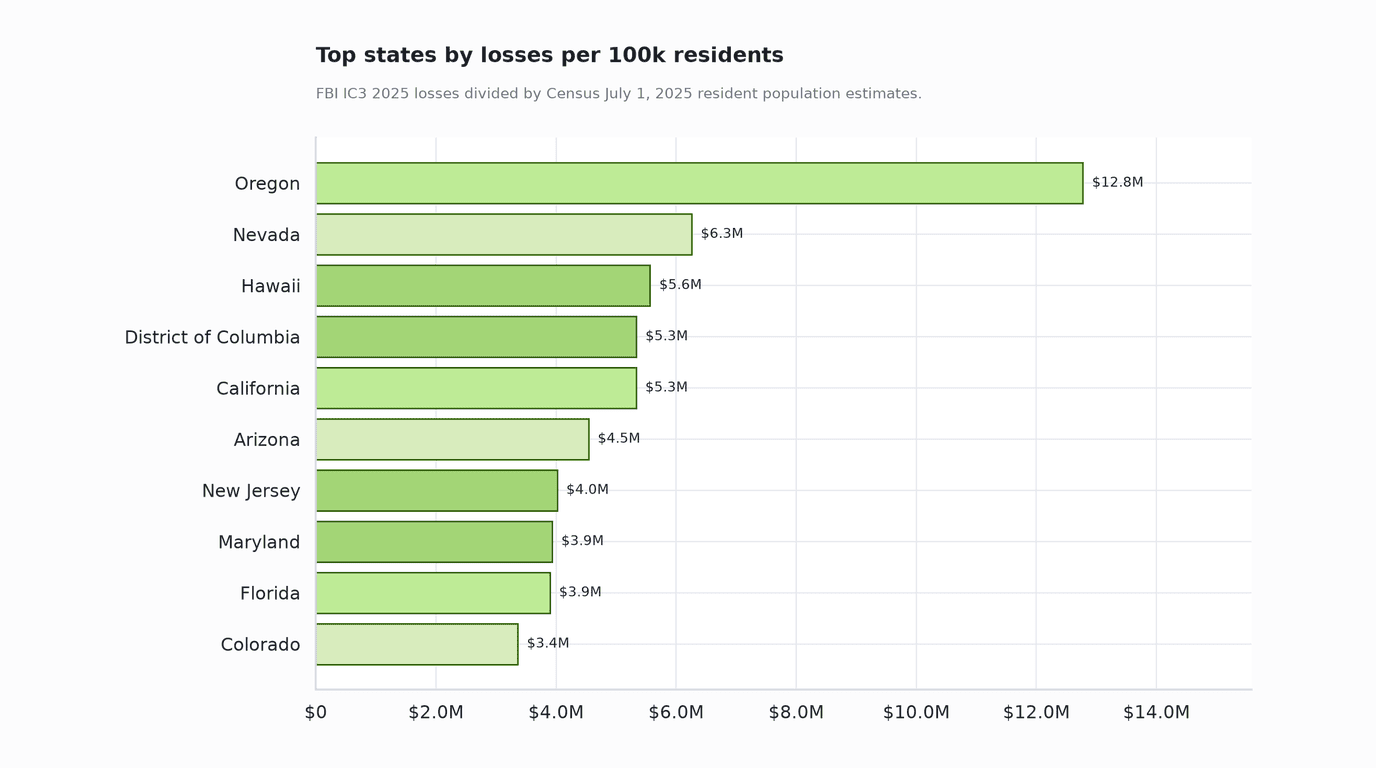
- Oregon also ranked first by reported losses per 100k residents at $12.8M.
- IC3 data is complaint data, so the figures should be read as reported losses, not a complete count of every incident.
Oregon Ranked Fifth Despite Fewer Complaints
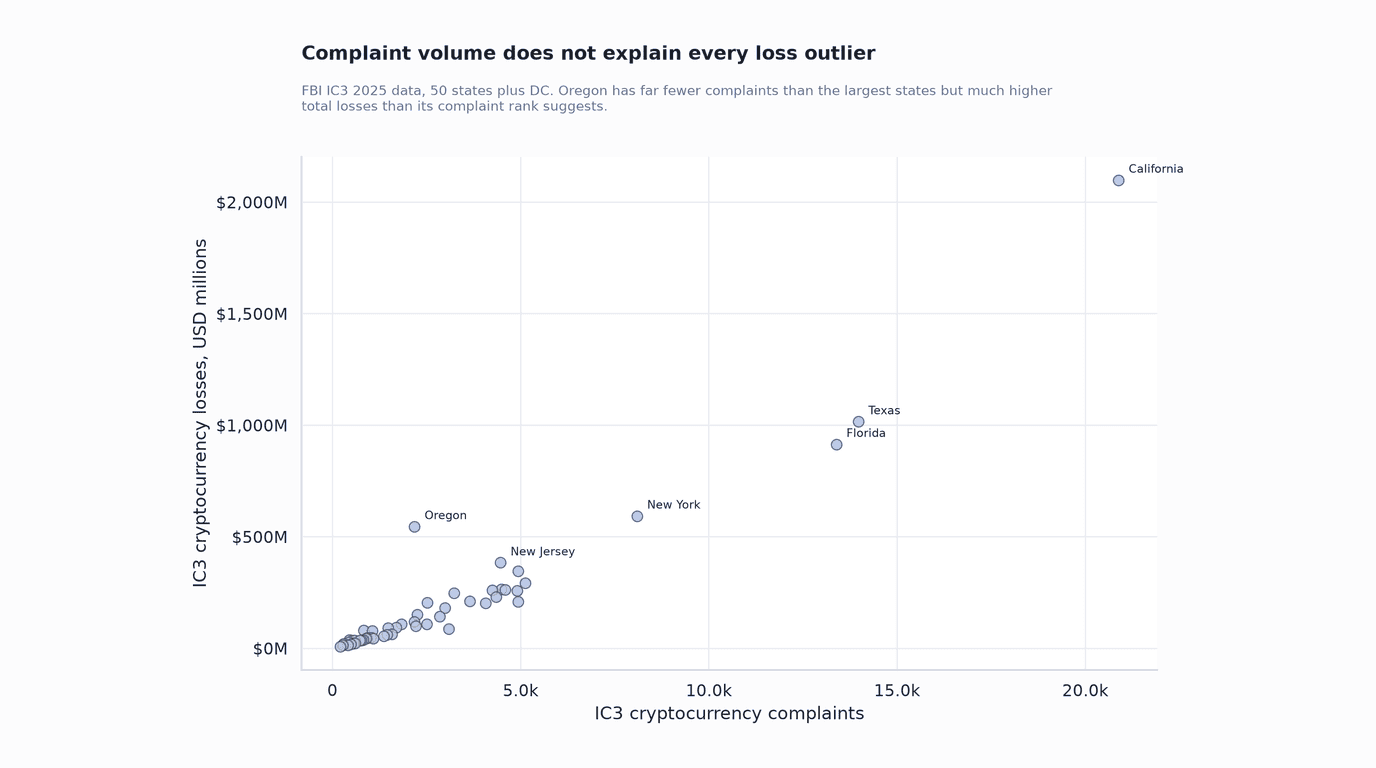
The top three states by reported losses also had the three highest complaint counts in the IC3 cryptocurrency tables. Oregon did not follow that pattern. Its complaint count placed it outside the top 20, while its reported losses placed it inside the top five.
The data does not identify the causes behind that gap. It may reflect larger reported losses per complaint, a small number of severe cases, differences in reporting behavior, or a combination of those factors. The IC3 tables show the reported totals, not the underlying case details.
States With the Highest Reported Losses
The total-loss ranking is led by large states with large complaint volumes. California, Texas, Florida, and New York held the first four positions. Oregon ranked fifth, ahead of New Jersey, Arizona, Pennsylvania, Georgia, and Washington.
Per Resident Losses Put Oregon First
Adjusting for population changes the ranking. Oregon had the highest reported cryptocurrency losses per 100k residents in the analysis, followed by Nevada, Hawaii, the District of Columbia, and California.
Complaint Counts and Losses Diverge
Complaint volume is still an important part of the picture. States with more complaints generally reported higher losses. But the relationship is not exact. Oregon sits above the main cluster when complaint counts are compared with total reported losses.
States With the Largest Rank Gaps
Comparing each state's complaint rank with its loss rank shows where reported losses were high relative to complaint volume. Oregon had the largest positive gap, ranking 20 places higher by reported losses than by complaint count.
Security and Trading Context
Benoist Claassen, CEO and Founder of Altrady, said the figures show why traders need to treat verification as part of the trading process, not as an afterthought.
Fraud losses like this show why crypto safety has to start before a trader ever connects an account or moves funds. If someone is rushing you, promising fixed profits, or asking you to send money outside a platform you can verify, slow down and check the source independently. A good trading workflow should keep the trader in control of their own exchange accounts and decisions.
Benoist Claassen, CEO & Founder of Altrady
The figures are a reminder that consumer risk in crypto often begins before a trade is placed. Fraud attempts can involve trust, urgency, fake support channels, false investment claims, or weak account security before money ever reaches an exchange.
Basic precautions include using 2FA, checking sources independently, verifying crypto exchanges before moving funds, and keeping a clear view of crypto portfolio exposure across accounts.
Tools such as Smart Trading and the risk reward calculator can support trade planning, but they do not replace source verification. If someone pressures a trader to move funds quickly, the safer response is to slow down and verify the request through a separate channel.
Methodology
This analysis uses the FBI IC3 2025 Annual Report tables for cryptocurrency complaints by state and cryptocurrency losses by state. It includes the 50 US states plus the District of Columbia. Puerto Rico and other territories are excluded from the main ranking.
Population normalization uses US Census Bureau Vintage 2025 resident population estimates. The working file used the Census state population table available as an XLSX file from the Census Bureau. Losses per complaint divide reported cryptocurrency losses by reported cryptocurrency complaint counts in the IC3 state tables.
The analysis is not a measure of all crypto fraud. It is a ranking of reported complaints and reported losses in the IC3 data. States can differ in reporting behavior, case size, and timing, so the figures should be used as a directional media and consumer-safety dataset.
Full State Ranking
The table below ranks the 50 states plus DC by reported cryptocurrency losses in the FBI IC3 2025 state table.
| Loss rank | State | Complaints | Reported losses | Losses per 100k residents | Loss per complaint |
|---|---|---|---|---|---|
| 1 | California | 20,878 | $2,099,014,715 | $5,333,498 | $100,537 |
| 2 | Texas | 13,965 | $1,016,062,841 | $3,204,253 | $72,758 |
| 3 | Florida | 13,381 | $914,525,497 | $3,897,815 | $68,345 |
| 4 | New York | 8,088 | $593,370,013 | $2,966,490 | $73,364 |
| 5 | Oregon | 2,175 | $545,938,510 | $12,774,717 | $251,006 |
| 6 | New Jersey | 4,459 | $383,662,185 | $4,018,156 | $86,042 |
| 7 | Arizona | 4,936 | $346,269,314 | $4,541,941 | $70,152 |
| 8 | Pennsylvania | 5,118 | $292,893,338 | $2,242,772 | $57,228 |
| 9 | Georgia | 4,492 | $264,502,467 | $2,340,161 | $58,883 |
| 10 | Washington | 4,589 | $263,067,281 | $3,287,922 | $57,326 |
| 11 | Virginia | 4,246 | $261,243,361 | $2,941,894 | $61,527 |
| 12 | Illinois | 4,910 | $257,919,562 | $2,027,806 | $52,529 |
| 13 | Maryland | 3,226 | $246,476,431 | $3,933,963 | $76,403 |
| 14 | North Carolina | 4,340 | $229,649,863 | $2,050,817 | $52,915 |
| 15 | Michigan | 3,648 | $210,230,468 | $2,075,759 | $57,629 |
| 16 | Ohio | 4,925 | $208,874,675 | $1,755,174 | $42,411 |
| 17 | Nevada | 2,518 | $205,388,286 | $6,257,664 | $81,568 |
| 18 | Colorado | 4,066 | $202,127,121 | $3,361,748 | $49,712 |
| 19 | Massachusetts | 2,983 | $180,158,815 | $2,518,265 | $60,395 |
| 20 | Minnesota | 2,253 | $151,658,166 | $2,601,160 | $67,314 |
| 21 | Tennessee | 2,854 | $142,006,339 | $1,941,283 | $49,757 |
| 22 | South Carolina | 2,176 | $118,509,954 | $2,127,543 | $54,462 |
| 23 | Missouri | 2,500 | $108,769,750 | $1,734,615 | $43,508 |
| 24 | Utah | 1,833 | $107,495,105 | $3,037,525 | $58,644 |
| 25 | Indiana | 2,211 | $99,629,036 | $1,428,715 | $45,061 |
| 26 | Alabama | 1,687 | $93,813,940 | $1,806,516 | $55,610 |
| 27 | Connecticut | 1,480 | $91,039,266 | $2,468,195 | $61,513 |
| 28 | Wisconsin | 3,092 | $87,426,944 | $1,463,755 | $28,275 |
| 29 | Hawaii | 826 | $79,759,336 | $5,566,598 | $96,561 |
| 30 | Kansas | 1,057 | $78,062,429 | $2,621,991 | $73,853 |
| 31 | Oklahoma | 1,581 | $62,394,493 | $1,513,222 | $39,465 |
| 32 | Kentucky | 1,453 | $60,156,299 | $1,305,797 | $41,401 |
| 33 | Louisiana | 1,366 | $53,679,269 | $1,162,345 | $39,297 |
| 34 | Idaho | 1,023 | $48,296,733 | $2,379,462 | $47,211 |
| 35 | New Mexico | 914 | $45,229,204 | $2,127,934 | $49,485 |
| 36 | Arkansas | 1,084 | $44,064,469 | $1,414,685 | $40,650 |
| 37 | Iowa | 887 | $43,685,423 | $1,348,987 | $49,251 |
| 38 | Mississippi | 815 | $38,286,775 | $1,296,029 | $46,978 |
| 39 | District of Columbia | 448 | $37,013,584 | $5,336,099 | $82,620 |
| 40 | New Hampshire | 767 | $36,481,772 | $2,577,594 | $47,564 |
| 41 | Maine | 524 | $35,795,026 | $2,529,909 | $68,311 |
| 42 | Montana | 590 | $35,136,688 | $3,069,527 | $59,554 |
| 43 | Nebraska | 730 | $34,861,429 | $1,727,519 | $47,755 |
| 44 | Delaware | 436 | $26,893,098 | $2,537,200 | $61,681 |
| 46 | West Virginia | 556 | $23,208,701 | $1,314,087 | $41,742 |
| 47 | South Dakota | 603 | $23,169,159 | $2,477,736 | $38,423 |
| 48 | North Dakota | 300 | $20,083,064 | $2,512,399 | $66,944 |
| 49 | Alaska | 482 | $18,610,389 | $2,524,230 | $38,611 |
| 50 | Rhode Island | 414 | $14,125,096 | $1,267,369 | $34,119 |
| 51 | Wyoming | 273 | $13,695,308 | $2,326,155 | $50,166 |
| 52 | Vermont | 212 | $7,532,107 | $1,168,379 | $35,529 |
FAQ
Which US state reported the most crypto fraud losses in 2025?
California reported the highest cryptocurrency-related losses in the FBI IC3 2025 state table, with about $2.1B in reported losses.
What did the data show about Oregon?
Oregon ranked No. 25 by cryptocurrency complaint count but No. 5 by reported cryptocurrency losses. It also had the highest reported losses per complaint in this analysis.
Does IC3 data include every crypto fraud case?
No. IC3 data is based on complaints submitted to the FBI. It should be read as reported losses, not a complete count of every incident.
How did Altrady calculate losses per resident?
The analysis divided each state or district's reported cryptocurrency losses by its Census Vintage 2025 resident population estimate, then multiplied by 100,000.
How can crypto traders reduce fraud risk?
Traders should verify sources independently, use account protections such as 2FA, avoid rushed money movement, and be careful with anyone promising fixed profits.