
Crypto swing trading is all about precision: catching meaningful price moves without getting chopped up by volatility. One of the secrets is knowing how to use technical indicators that complement each other, revealing different layers of the market like trend, momentum, volatility, and volume.
If you’re wondering which tools actually work for crypto swing trading setups, here’s the deal: the best indicators aren’t the flashiest or the newest. They’re the ones that consistently help you spot direction, confirm moves, and time entries and exits.
Read below about the five technical indicators most swing traders rely on and how to use them together to build smarter strategies.
Top Technical Indicators to Use in Crypto Swing Trading Strategies
1. Relative Strength Index (RSI): Timing Reversals
The Relative Strength Index (RSI) is a staple in any swing trader’s toolkit. It measures momentum by comparing recent gains and losses, giving a quick snapshot of whether an asset is overbought or oversold.
Best for: Momentum and reversals
Typical range: 0-100 (above 70 = overbought, below 30 = oversold)
When Bitcoin or Ethereum’s RSI spikes above 70, it often signals that a pullback could be near. On the flip side, an RSI dipping below 30 can hint that sellers are exhausted and a bounce is on deck.
In crypto swing trading, RSI helps you time entries and exits around short-term reversals - perfect for catching those 10-20% swing moves without holding through full-blown corrections.
Pro tip: Combine RSI with moving averages to filter false signals. For example, if RSI shows oversold but the price is above the 200-day MA, it’s often a solid buy-the-dip setup.
2. Moving Averages (MA): The Backbone of Trend Analysis
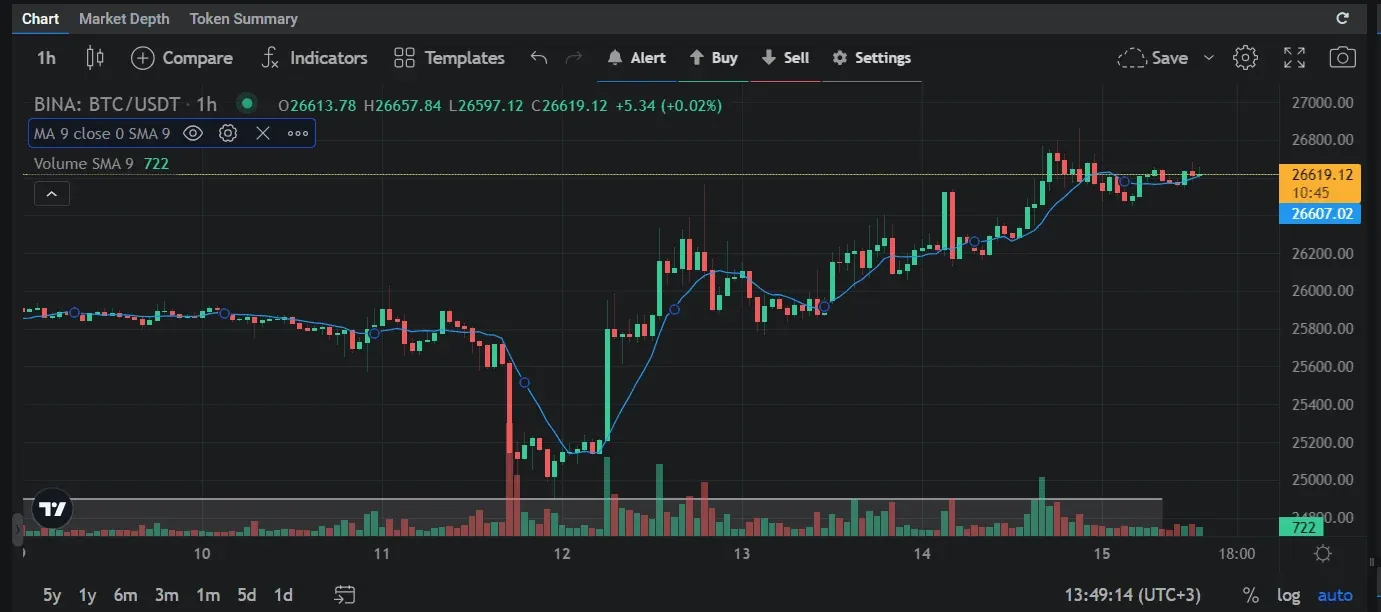
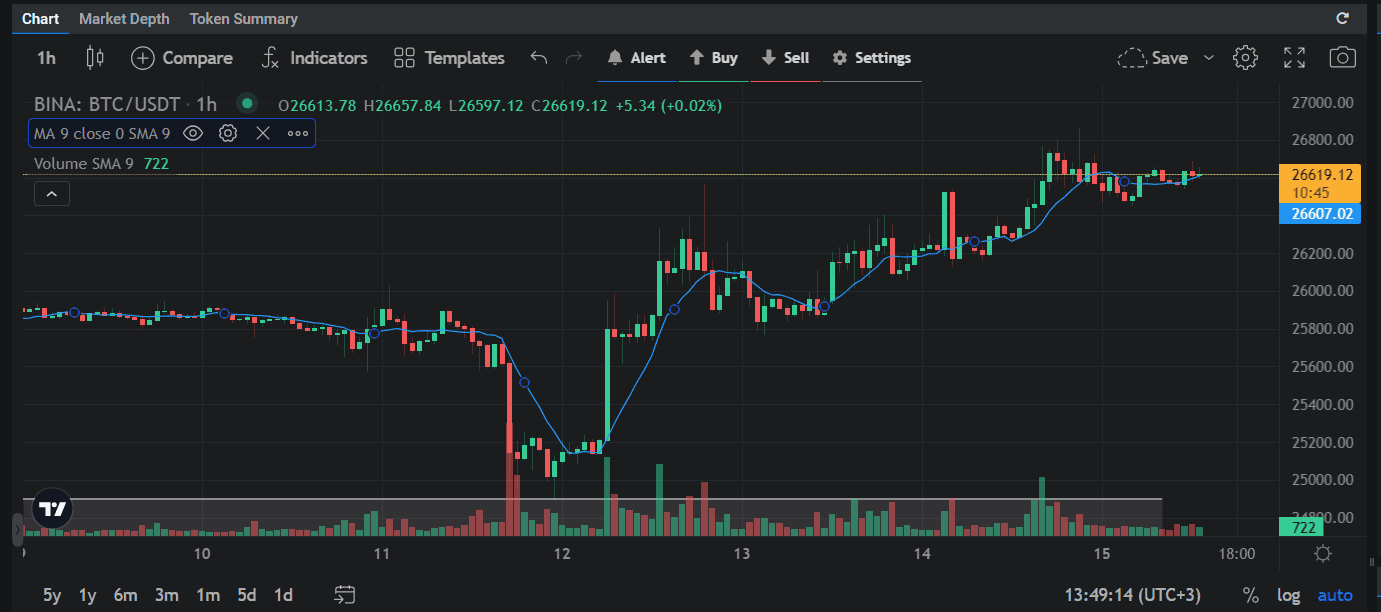
Moving averages smooth out noisy crypto price action to show the true trend direction. They’re simple, yet incredibly effective for swing trading setups.
Best for: Identifying trend direction
Popular types: Simple Moving Average (SMA) and Exponential Moving Average (EMA)
When the short-term MA (like the 50-day) crosses above the long-term MA (like the 200-day), that’s a golden cross - a bullish signal. The opposite (a death cross) suggests potential downside.
For swing traders, MAs act as both trend filters and dynamic support/resistance zones. When price pulls back to an MA in an uptrend, it often sets up a clean bounce trade.
Pro tip: Watch for confluence. If price bounces off the 50-EMA while RSI exits oversold territory, that’s a strong confirmation signal.
3. MACD (Moving Average Convergence Divergence): Spotting Momentum Shifts
The MACD blends trend and momentum analysis by using two EMAs (usually 12 and 26) to show how momentum is changing.
Best for: Momentum and trend strength
Key signals: MACD line crossing signal line (trend change), or divergence between price and MACD
When the MACD line crosses above the signal line, momentum is turning bullish; a cross below signals bearish momentum. Watching MACD on higher time frames (4-hour or daily) helps avoid fakeouts common in crypto’s intraday volatility.
Swing traders love MACD because it shows early signs of trend reversals, especially when combined with RSI or Bollinger Bands.
Pro tip: Use MACD divergence (when price makes new highs but MACD doesn’t) as an early warning that a trend might be losing steam.
4. Bollinger Bands: Reading Volatility Like a Map
Bollinger Bands visualize volatility by placing bands around a moving average. The bands expand when volatility increases and contract when it cools down.
Best for: Volatility and breakout signals
Key concept: “Volatility squeeze” (bands narrow) often precedes big moves
When price hugs the upper band, it can signal overextension and potential reversal. When the bands tighten, it often means a breakout is coming - ideal for swing traders looking to position early.
In crypto, where volatility is the norm, Bollinger Bands help you anticipate explosive breakouts before they happen.
Pro tip: Combine Bollinger Bands with volume indicators. A breakout from a squeeze with rising volume often leads to sustained moves.

5. Volume Indicators: The Confirmation Engine
Price moves mean little without volume behind them. Volume indicators like On-Balance Volume (OBV) or Volume Profile confirm whether there’s real conviction in a move.
Best for: Confirming breakouts or reversals
If price breaks above resistance but volume is weak, the move might fade. But if volume spikes, it’s a signal that big money is stepping in-and that’s where swing traders want to be.
Pro tip: Track OBV alongside RSI or MACD. If both confirm momentum in the same direction, the probability of a successful trade increases significantly.
Why These Technical Indicators Work So Well Together
Each of these tools reveals a different layer of the market:
- RSI: Momentum shifts
- Moving Averages: Trend direction
- MACD: Strength and timing of momentum
- Bollinger Bands: Volatility and breakout context
- Volume Indicators: Market confirmation
Used together, they filter out noise and stack probabilities in your favor. For example, a swing trader might wait for RSI to leave oversold territory, check that price is above the 50-EMA, confirm momentum via a bullish MACD crossover, and then watch Bollinger Bands for a breakout - all validated by strong volume.
That’s how you turn technical indicators into an actionable trading setup.
Best Practices for Crypto Swing Trading
- Use higher time frames like the 4-hour or daily chart. They filter out crypto’s intraday chaos and focus on meaningful swings.
- Avoid overloading charts. Stick to 2-3 indicators that complement each other. Too many signals = paralysis.
- Always confirm with price action. Indicators support your analysis; they don’t replace it.
The combination of trend, momentum, volatility, and volume indicators has been tested across thousands of trades in crypto and other markets.
Key Takeaways
The best technical indicators in swing trading aren’t so much about prediction as they are about preparation. When you use RSI, MAs, MACD, Bollinger Bands, and volume together, you’re not guessing where crypto’s heading. You’re reading the market’s story in real time.
That’s how modern swing traders stay one step ahead: riding trends, timing reversals, and letting data guide every move.
Frequently Asked Questions
What are the best technical indicators for crypto swing trading?
The most effective indicators for crypto swing trading include Moving Averages (SMA/EMA) for trend identification, RSI for momentum, MACD for trend confirmation, Bollinger Bands for volatility, and On-Balance Volume (OBV) for volume analysis. Using them together provides stronger signals.
How many indicators should I use for swing trading?
Most experienced swing traders use 3-5 complementary indicators. Too few may miss important signals, while too many can create conflicting information and analysis paralysis. Choose indicators that cover different aspects: trend, momentum, volatility, and volume.
Do technical indicators work differently for crypto?
The same indicators work for crypto, but the 24/7 nature of crypto markets and higher volatility can affect their behavior. Indicators may trigger more frequently, and settings may need adjustment compared to traditional stock markets.
What is the best moving average period for crypto swing trading?
The 50-day and 200-day moving averages are widely used for identifying longer-term trends. For shorter swing trades, the 20-day EMA is popular. Crossovers between the 50-day and 200-day MAs (golden cross and death cross) are strong trend signals.
Can I rely solely on technical indicators for trading decisions?
No. Technical indicators should be part of a broader strategy that includes risk management, position sizing, and awareness of market fundamentals. Indicators help analyze price data but cannot predict future movements with certainty.
Apply These Indicators on Altrady
Altrady provides all these technical indicators through TradingView-powered charts, along with smart trading features and multi-exchange support. Practice your swing trading setups with paper trading before going live. Sign up for a free trial today.