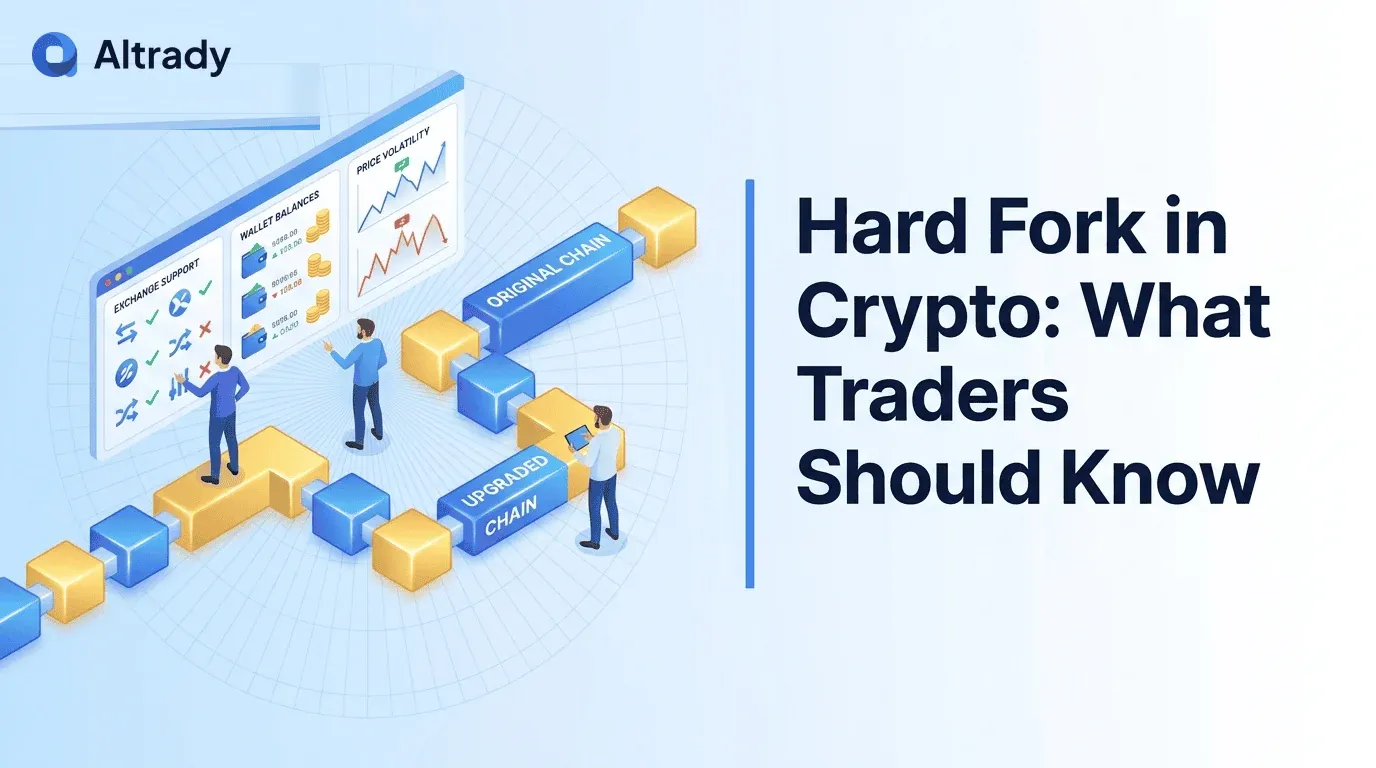

A hard fork is one of the most important events a crypto network can experience. It changes blockchain rules in a way that older software cannot fully follow.
Sometimes a hard fork is a planned upgrade. Sometimes it reflects disagreement inside a community. In some cases, the result is one upgraded chain. In other cases, two chains continue separately.
For traders, the question is practical: what happens to price, liquidity, exchange support, wallets, and open positions when a network changes its rules?
What a Hard Fork Means
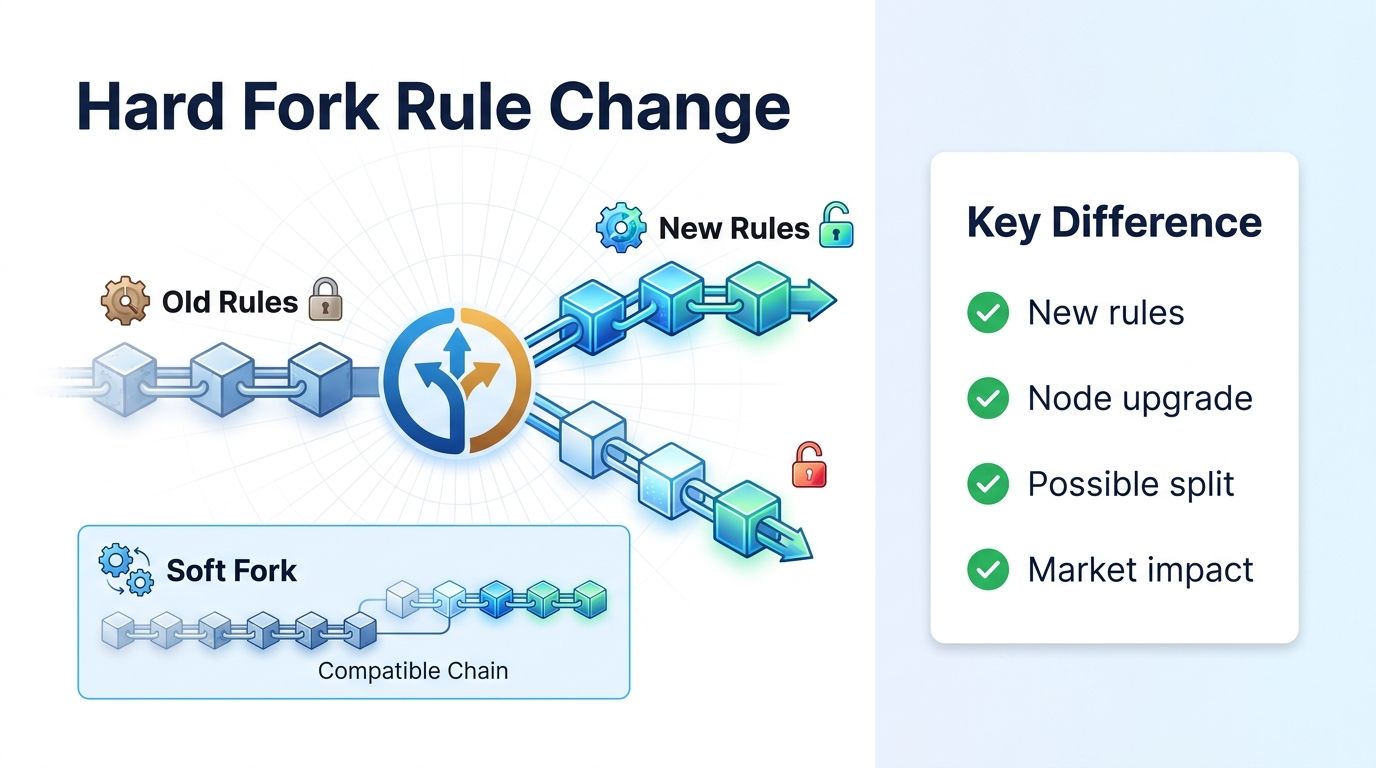
A hard fork is a non-backward-compatible change to blockchain rules. Nodes that upgrade follow the new rules. Nodes that do not upgrade may reject the new chain or continue on the old rule set.
If almost everyone upgrades, the hard fork can look like a normal network upgrade. If the community splits, two chains may keep running. Each chain can have its own token, market, developers, and exchange listings.
This is different from a soft fork, where older nodes can still remain compatible with the new rules. Hard forks are more disruptive because they require stronger coordination.
- A hard fork changes protocol rules.
- Old software may no longer be compatible.
- Some forks are planned upgrades.
- Some forks create a separate chain.
Why Hard Forks Happen
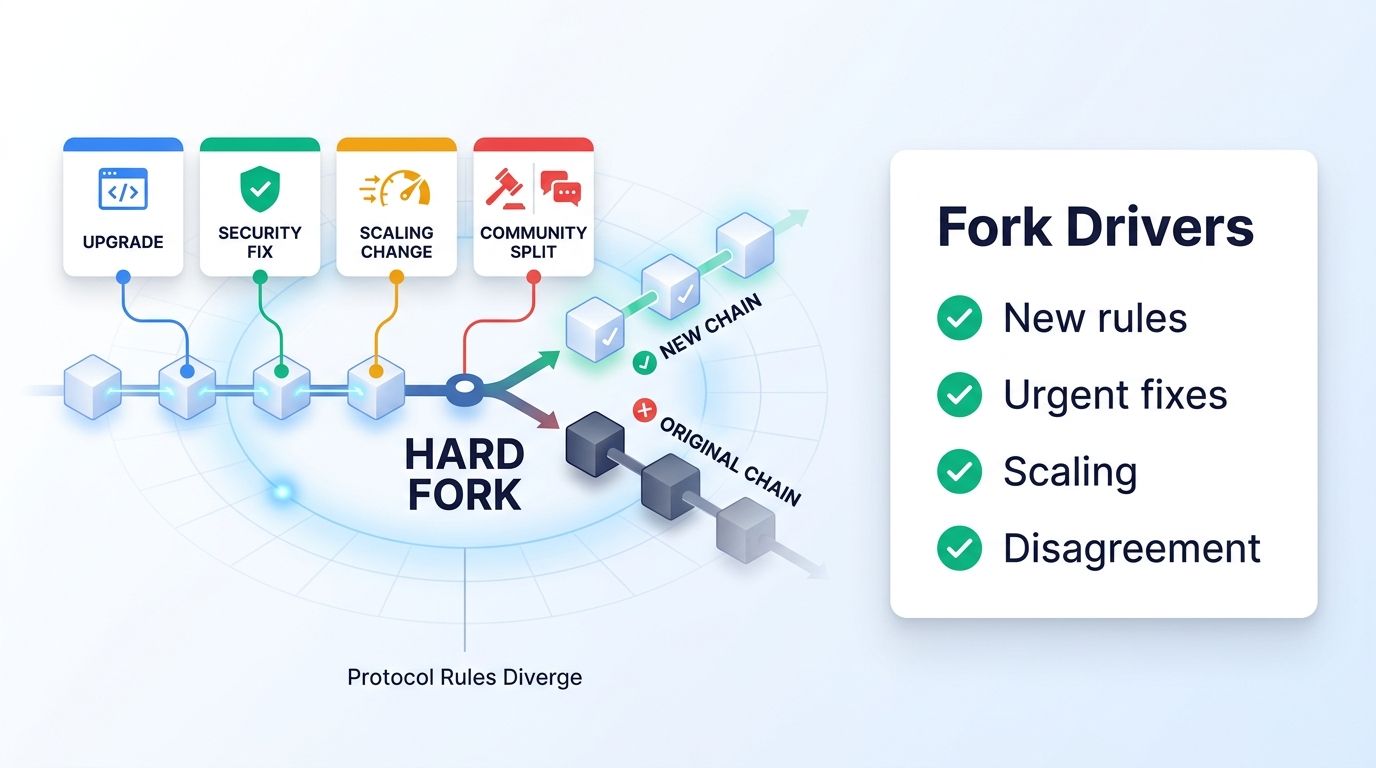
Hard forks can happen for several reasons. A network may need a major technical upgrade, a security fix, a change to fee logic, a scaling improvement, or a governance decision that cannot be added through a backward-compatible path.
Hard forks can also happen when communities disagree about the future of a chain. If one group wants different rules and enough participants support that path, a separate chain can emerge.
The market reaction depends on whether the fork is expected, whether exchanges support both assets, whether developers remain aligned, and whether users trust the new rule set.
- Technical upgrades can require new rules.
- Security changes may need fast coordination.
- Community disagreement can split a chain.
- Exchange support can shape market liquidity.
Trader Risks Around a Hard Fork
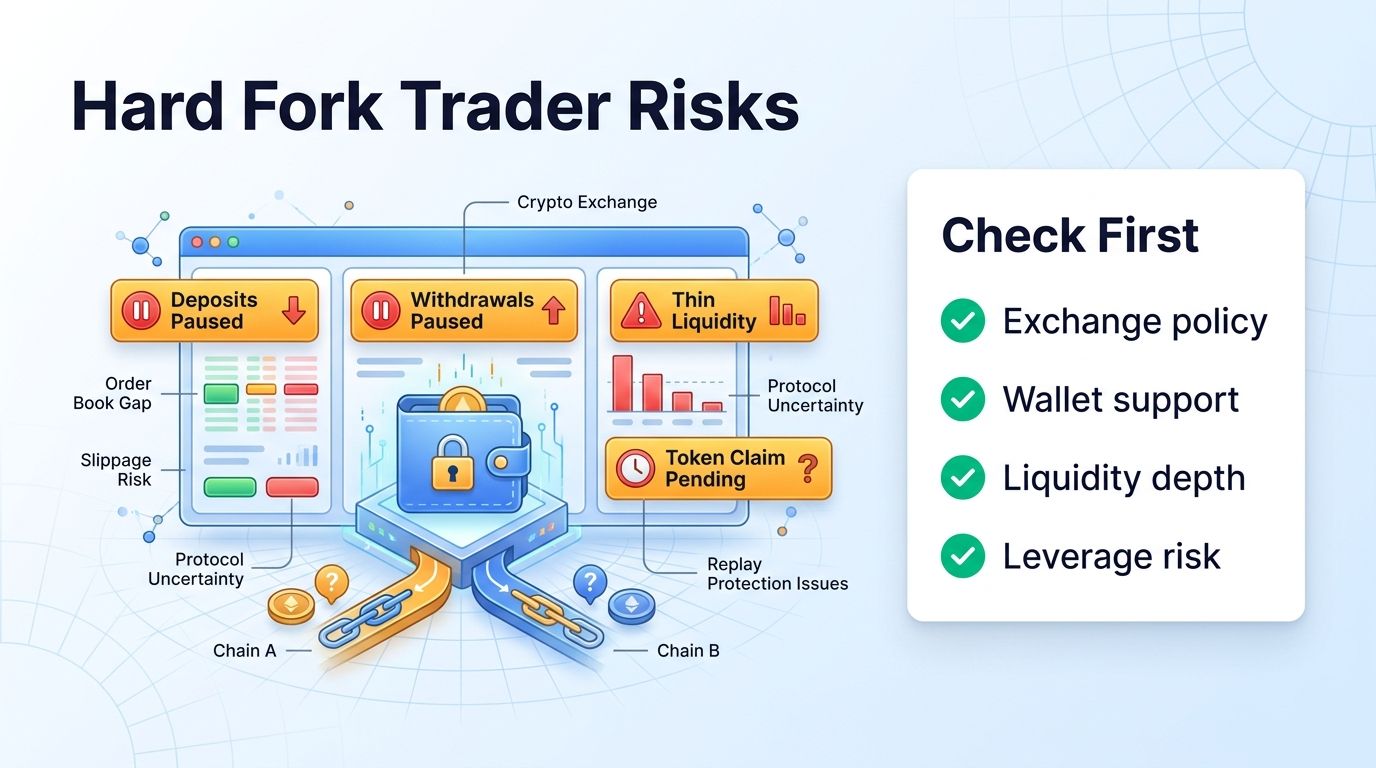
The first trader risk is volatility. Fork news can change sentiment quickly, especially when holders expect a new token or when the market is unsure which chain will attract support.
The second risk is liquidity. Some exchanges may pause deposits and withdrawals before a fork. Others may delay support for the new asset. Order books can become thinner while participants wait for clarity.
The third risk is operational. Wallet support, replay protection, token claims, tax treatment, and exchange policies can all differ. Traders should never assume that holding an asset on an exchange gives the same result as holding it in a self-custody wallet.
- Expect wider volatility windows.
- Check exchange deposit and withdrawal notices.
- Understand wallet and claim rules.
- Avoid using leverage during unclear events.
How to Prepare for a Hard Fork
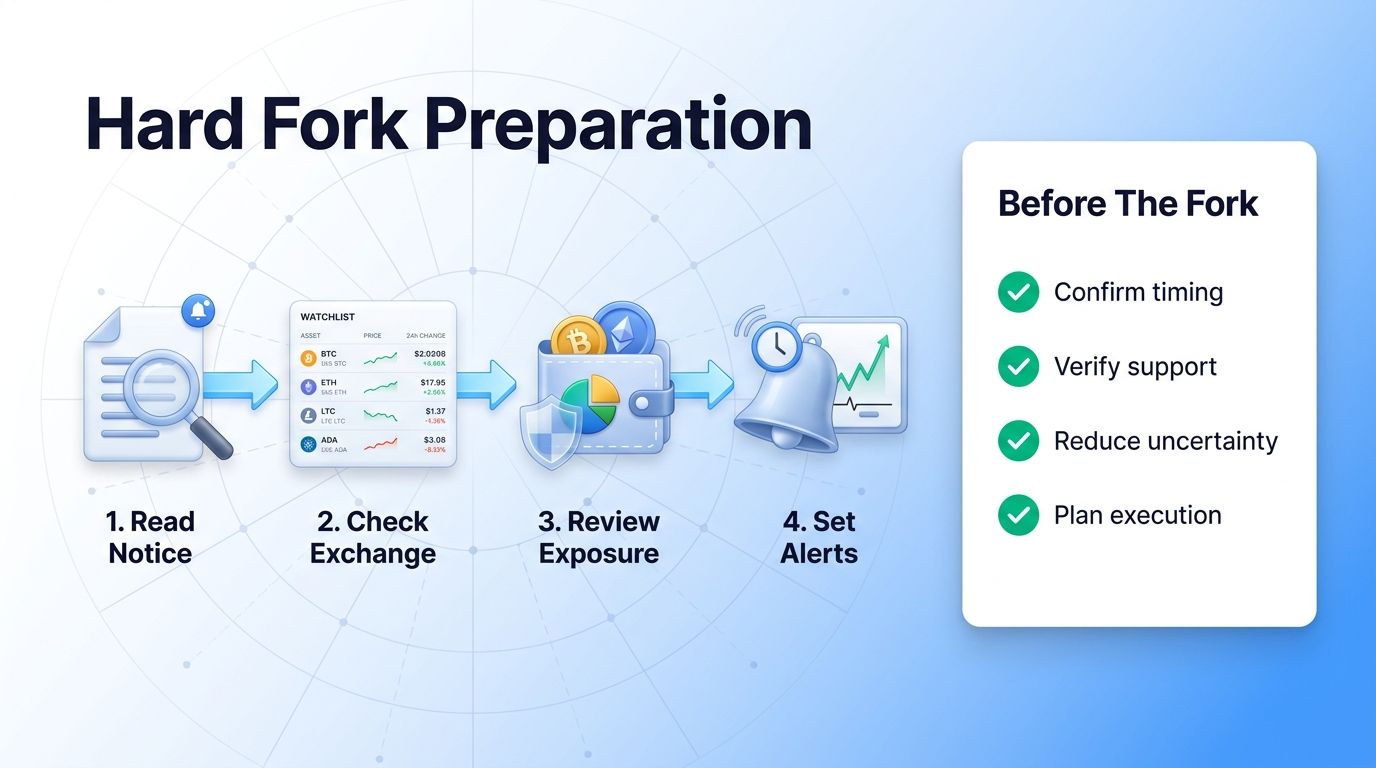
Start with official project and exchange notices. Confirm the fork date or block height, whether the exchange will support the event, and whether deposits or withdrawals will pause.
Next, review your exposure. If you hold the asset, decide whether you want to keep holding through the fork, reduce size, or wait until the market settles. If you trade derivatives, remember that exchange index rules can matter during volatile fork windows.
Altrady users can keep fork-related assets in a dedicated watchlist, set price alerts around important levels, and use Smart Trading only after the fork plan is clear. The point is to prepare before liquidity gets messy.
- Read official project notices.
- Check exchange support before the event.
- Create a dedicated watchlist.
- Use alerts instead of constant screen watching.
Hard Fork vs Airdrop vs Network Upgrade
These terms can overlap, but they are not the same. A network upgrade changes software rules. A hard fork is a non-compatible rule change. An airdrop is a token distribution event. A hard fork can sometimes create an asset claim, but not every fork creates a valuable new token.
This difference matters because traders often react to headlines before reading the mechanics. If the fork is only a coordinated upgrade with broad support, the event may not create a separate liquid market. If two chains continue, exchange support and market depth become central.
The safest habit is to read the actual notice. Look for the block height, upgrade rules, supported exchanges, wallet instructions, and whether the new chain has replay protection.
- Do not treat every fork as a token event.
- Separate upgrade mechanics from market reaction.
- Check whether two chains will continue.
- Read wallet and exchange instructions.
The Bottom Line for Traders
A hard fork is not automatically good or bad. It is a protocol event that can improve a network, split a community, or create temporary uncertainty. The trading impact depends on support, liquidity, timing, and confidence.
The best response is preparation. Know what you hold, where you hold it, what your exchange will do, and whether you are comfortable with the volatility window.
When in doubt, reduce complexity. A smaller position with clear rules is easier to manage than a large position during a chain event you do not fully understand.
- Treat hard forks as event risk.
- Confirm support before trading.
- Watch liquidity conditions.
- Keep position size aligned with uncertainty.
FAQ
What is a hard fork in crypto?
A hard fork is a non-backward-compatible change to blockchain rules. Nodes must upgrade to follow the new rules, and in some cases two chains continue separately. If nearly all participants upgrade, the event may function like a normal network upgrade. If support splits, traders may see two assets, two communities, and different exchange policies.
Does every hard fork create a new coin?
No. Some hard forks are coordinated upgrades where the network continues as one chain. A separate coin usually appears only when two chains keep operating and markets support both. Even then, the new asset may have limited liquidity, uncertain wallet support, or no meaningful exchange market, so traders should not assume that every fork creates value.
What is the difference between a hard fork and a soft fork?
A hard fork is not backward compatible, which means older software may reject the new rule set. A soft fork keeps older nodes compatible with the new rules in a more limited way. Hard forks usually require more coordination because exchanges, wallets, validators, miners, developers, and users may all need clear instructions before the event.
Should traders hold through a hard fork?
That depends on the asset, exchange support, liquidity, wallet setup, and risk tolerance. Traders should read official project notices and exchange notices before deciding. Holding through a fork can expose a trader to volatility, paused deposits or withdrawals, unclear token-claim rules, and tax questions. Reducing position size is often simpler than managing an event that is not fully understood.
How can Altrady help during hard fork events?
Altrady can help traders monitor affected assets in watchlists, set price alerts, and manage planned Smart Trading orders after the event risk is understood. It does not remove fork risk, but it can help a trader stay organized. A dedicated watchlist, alert levels, and written execution plan are useful when exchange support and liquidity conditions are changing quickly.