
Tokenization is often presented as a liquidity unlock. Put an asset onchain, split it into tokens, and the market should become easier to trade. That story is attractive, but it skips a hard truth: onchain representation and secondary-market liquidity are different outcomes.
A May 31, 2026 arXiv paper by Rischan Mafrur, titled Tokenized but Illiquid? Evidence from Real-World Asset Markets, studied non-stablecoin RWA assets using RWA.xyz and Etherscan data. The core takeaway is simple for traders: tokenized value alone does not prove that an asset is liquid.
Why TVL Can Mislead RWA Traders
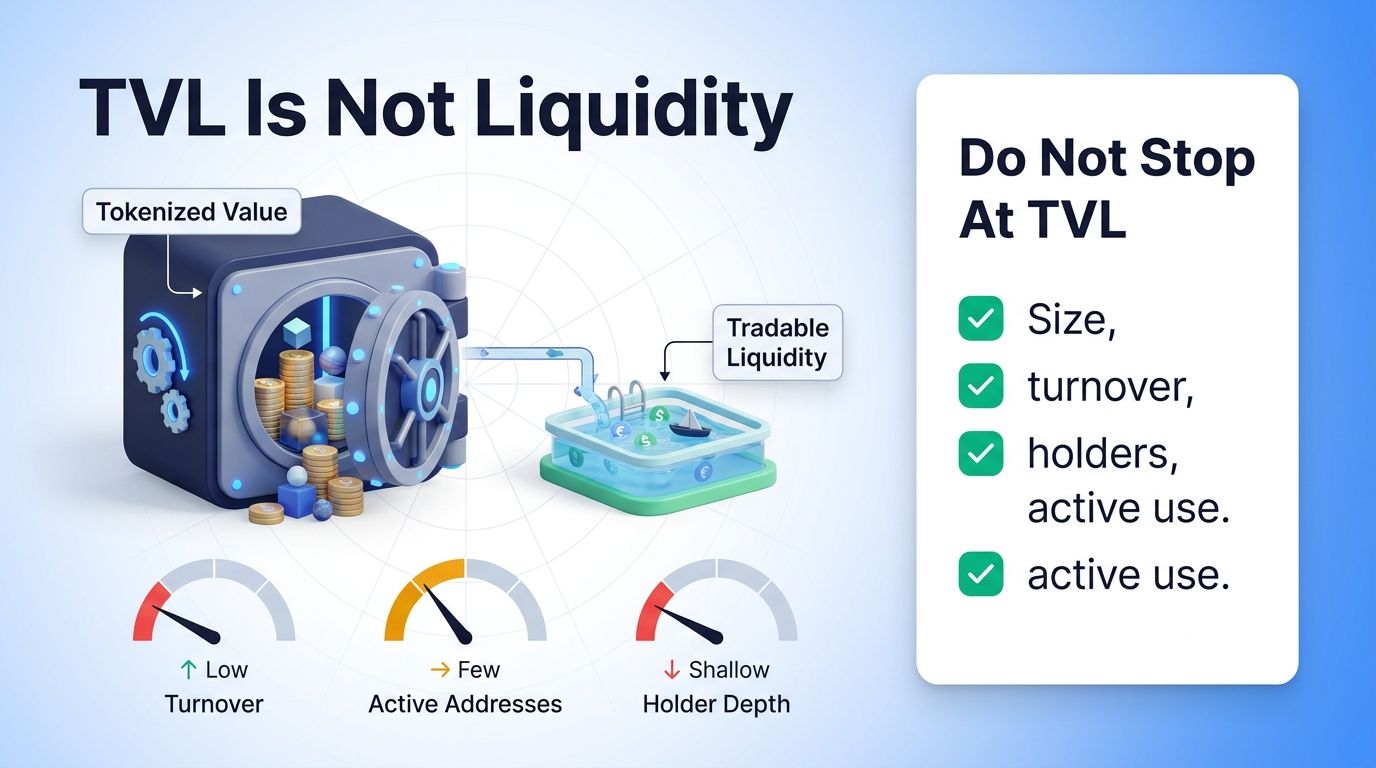
Total value can be useful, but it is not the same as tradable depth. A tokenized asset may have a large outstanding value while only a small portion changes hands. If holders rarely transfer, if active addresses are low, or if secondary venues are thin, the asset can be tokenized but still hard to exit.
This matters because traders often compare RWA products by headline value. That can favor large issuance programs while hiding the liquidity conditions that matter during a real exit. A token that looks large on a dashboard may still have poor turnover.
- TVL measures size, not exit quality.
- Outstanding value does not guarantee turnover.
- Holder count and active addresses matter.
- Venue depth matters when markets get stressed.
The Three Liquidity Signals
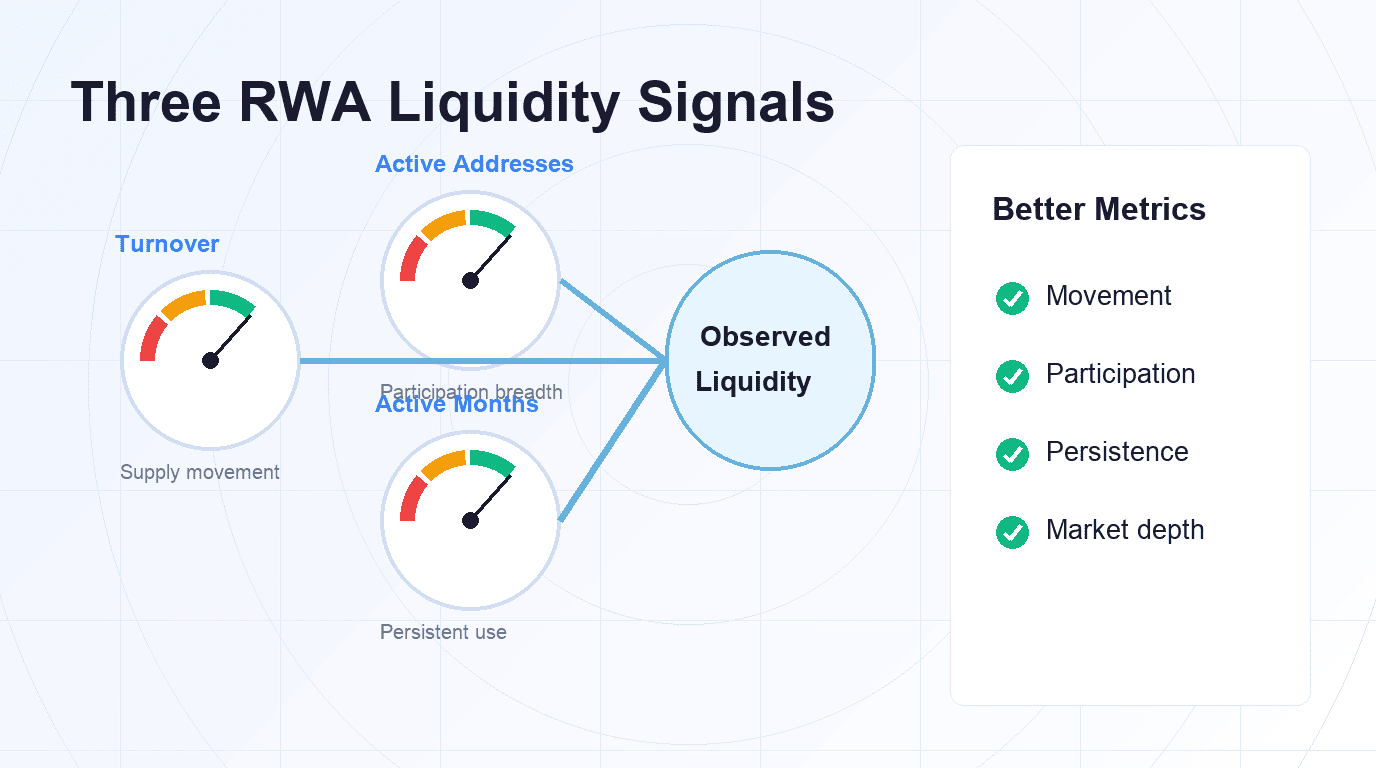
The study measured liquidity using turnover, active addresses, and an active-month indicator. That is a useful framework because it avoids relying on one headline number. Turnover asks whether the asset changes hands. Active addresses ask whether participation is broad. Active months ask whether activity persists.
For a trader, these signals are practical. A token with steady monthly activity and a broad holder base is healthier than a token with a large value figure but almost no movement. Liquidity is behavior, not only issuance.
- Turnover shows how much supply actually moves.
- Active addresses show participation breadth.
- Active months show persistence over time.
- Together, they reveal whether markets are alive.
Why Asset Categories Behave Differently
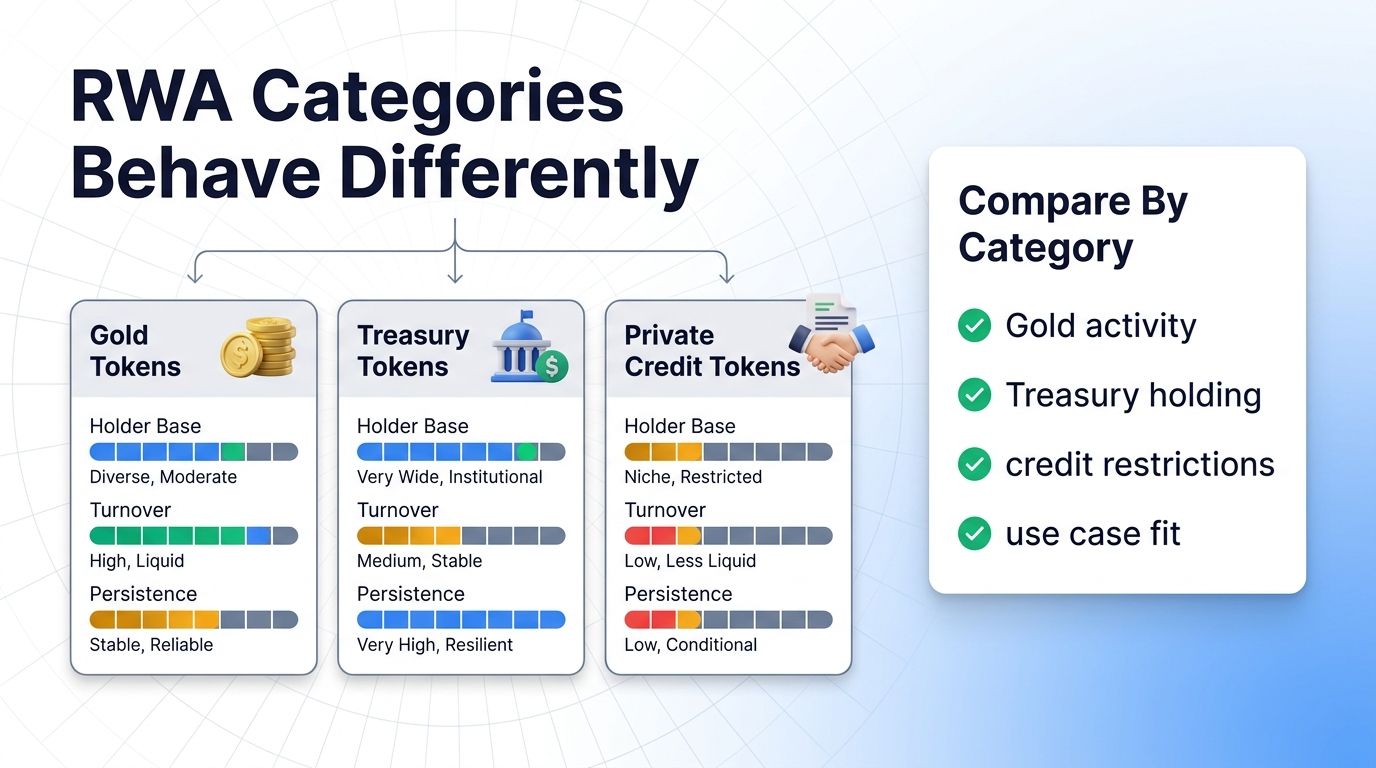
The paper found substantial heterogeneity across RWA categories. Gold-backed tokens showed broader holder bases and more persistent onchain activity than many Treasury and private-credit-related products. That does not mean gold tokens are always better. It means categories have different user bases and trading behavior.
Treasury tokens may be held for yield and cash management. Gold-backed tokens may attract a different type of holder. Private credit tokens may have more restricted access and slower transfer activity. A trader should evaluate each category by its actual use case.
- Gold-backed tokens may show broader participation.
- Treasury tokens may behave like cash management tools.
- Private credit can be more restricted and slower.
- Category behavior matters more than broad RWA labels.
A Trader Checklist for RWA Liquidity
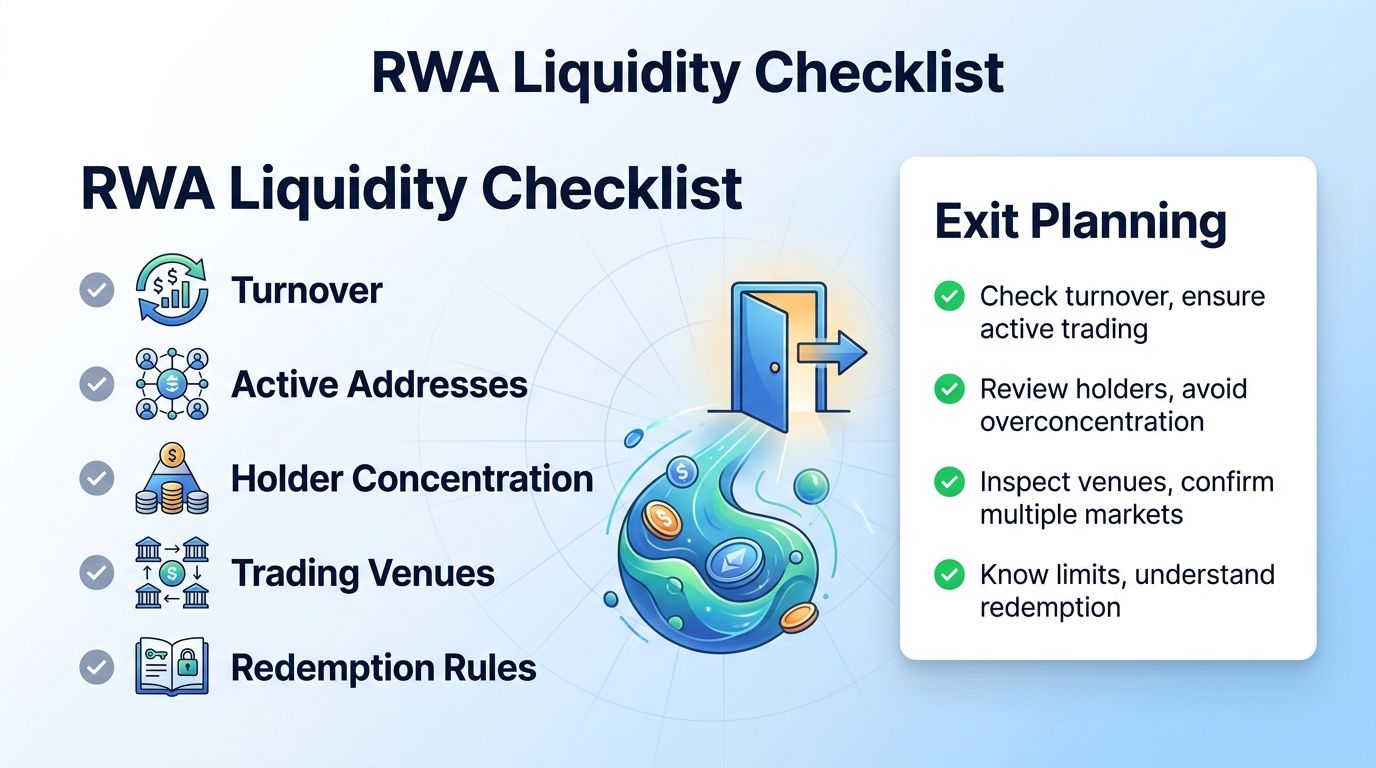
Before treating an RWA token as liquid, ask five questions. How many active addresses use it? How often does supply move? Where can it be traded? Are there transfer restrictions? What happens when many holders want to exit at once?
This checklist is especially important for traders using tokenized assets as collateral, treasury substitutes, or yield positions. The moment you need liquidity is usually the moment the market becomes less generous. Plan exits before size becomes uncomfortable.
- Check turnover before TVL.
- Review holder concentration.
- Find real trading venues and spreads.
- Understand transfer and redemption limits.
How to Think About RWA Exits
The most important liquidity question is simple: if you had to exit today, what path would you use? Some RWA tokens may have exchange markets. Others may rely on redemption windows, issuer processes, or whitelisted transfers. A token can be technically transferable but practically hard to sell.
Exit planning should come before allocation. Traders should know the expected settlement time, transfer restrictions, minimum redemption size, supported venues, and whether the asset can be used as collateral without creating liquidation risk. A yield position is not attractive if the exit path disappears when the market becomes stressed.
This is especially important for tokenized Treasuries, private credit, and commodity products. Each category has a different relationship between the token and the underlying asset. A faster blockchain does not remove offchain settlement, issuer, or redemption constraints.
- Know the exit venue before entry.
- Check redemption windows and minimums.
- Review transfer restrictions.
- Do not confuse fast settlement with deep liquidity.
Building a Better RWA Scorecard
A better RWA scorecard combines headline value with market behavior. Start with asset value, then add turnover, active addresses, holder concentration, transfer frequency, venue count, redemption clarity, and issuer transparency. The goal is to identify whether a token is actually used or simply issued.
This scorecard also helps compare categories fairly. A gold-backed token with moderate value but broad participation may be more usable than a larger product with limited holders and weak turnover. A Treasury token may be useful for cash management even if trading activity is lower, but the trader must understand that use case.
The core lesson is humility. Tokenization can improve access, recordkeeping, and settlement. It does not magically create buyers. Liquidity still has to be earned through participation, market structure, and trust.
- Combine size with activity.
- Compare by asset category.
- Score issuer transparency.
- Treat liquidity as earned, not assumed.
FAQ
What is RWA liquidity risk?
It is the risk that a tokenized real-world asset cannot be traded or exited easily despite having onchain value.
Why is TVL not enough?
TVL measures size, but liquidity depends on turnover, active participation, trading venues, and exit conditions.
Which RWA liquidity metrics should traders watch?
Watch turnover, active addresses, holder concentration, active months, spreads, and redemption rules.
Does tokenization automatically create liquidity?
No. Tokenization creates onchain representation, but secondary-market liquidity depends on participation and market structure.