
Smart contracts can follow code, but they cannot automatically know the price of ETH, the value of a token, or the result of an offchain event unless reliable data is delivered to them.
That is the job of a crypto oracle. An oracle connects blockchain applications with information that exists outside the chain, such as market prices, exchange data, interest rates, proof of reserves, or other external inputs.
For traders, oracles matter because DeFi pricing, liquidations, collateral values, synthetic assets, and automated protocols can depend on the data they provide. A weak price feed can turn into a real trading risk.
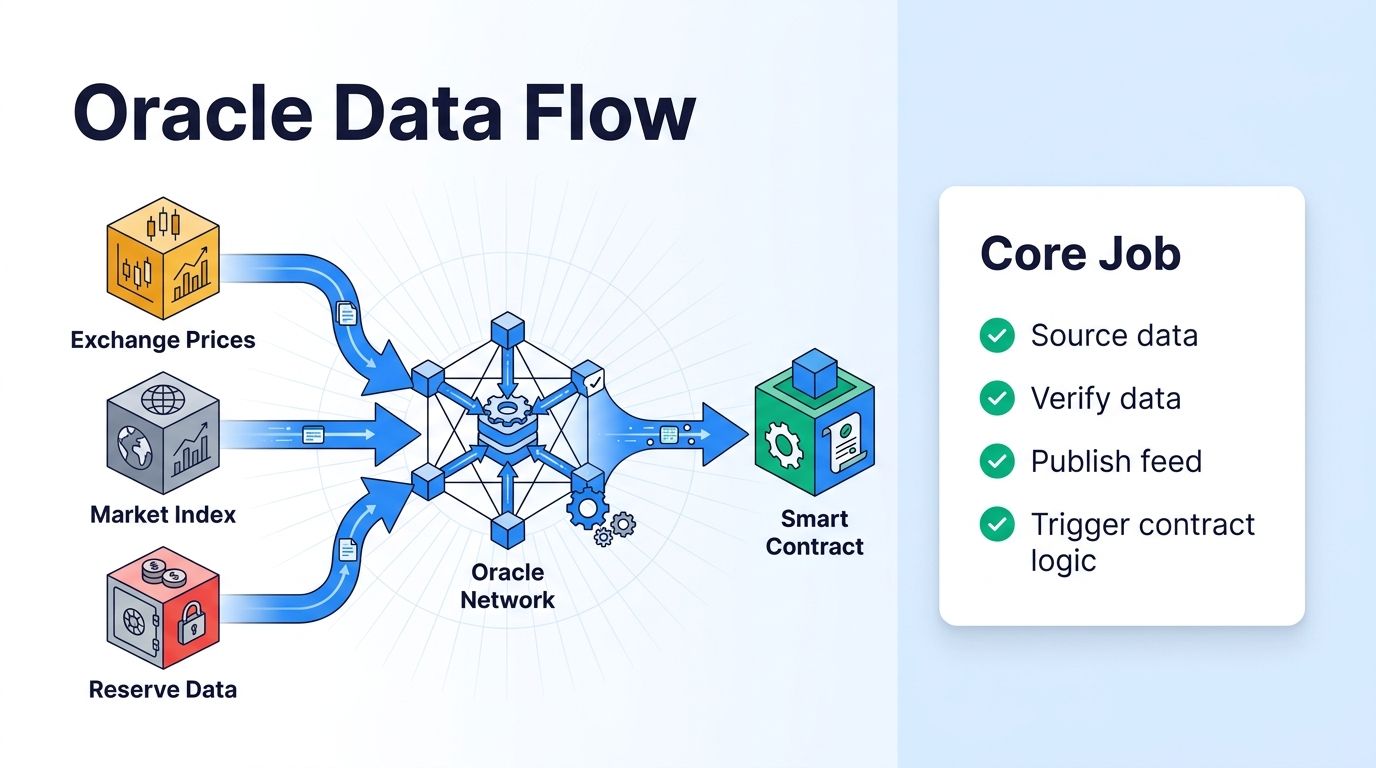
What a Crypto Oracle Does
A crypto oracle sources data, verifies it, and makes it available to smart contracts. The smart contract can then use that data to make a rule-based decision.
For example, a lending protocol may need a price feed to decide whether collateral is healthy. A derivatives protocol may need an index price. A stablecoin system may need asset prices to track collateral ratios.
The key point is that the oracle is not the same thing as the blockchain. It is the bridge between onchain code and offchain information. If that bridge is weak, the application that depends on it becomes weaker too.
- Oracles bring external data to smart contracts.
- Price feeds are the most visible use case.
- Data quality affects DeFi risk.
- The oracle layer is part of protocol due diligence.
Why Price Feeds Matter in DeFi
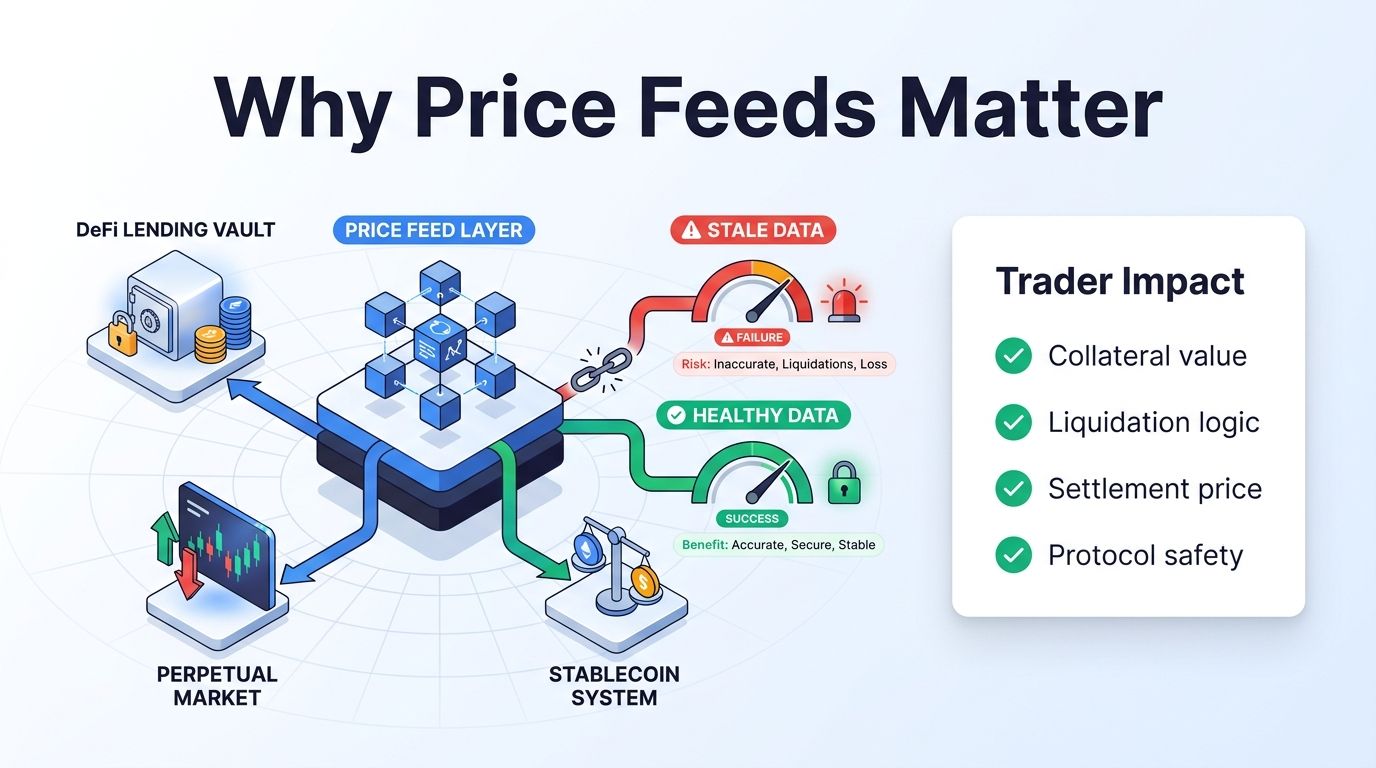
DeFi applications often need a shared view of price. If a lending protocol values ETH collateral, it needs a price that cannot be easily distorted by one thin market. If a perpetual protocol settles positions, it needs an index that reflects real market conditions.
This is why traders should care about how a protocol gets prices. A price feed that relies on too few sources, updates too slowly, or fails during volatility can create liquidation, settlement, or arbitrage problems.
Oracle design is not a side detail. It can affect the safety of a pool, the accuracy of collateral values, and the behavior of automated risk systems.
- Lending protocols need collateral prices.
- Derivatives need reliable index prices.
- Stablecoin systems need asset valuation.
- Thin or stale feeds can increase risk.
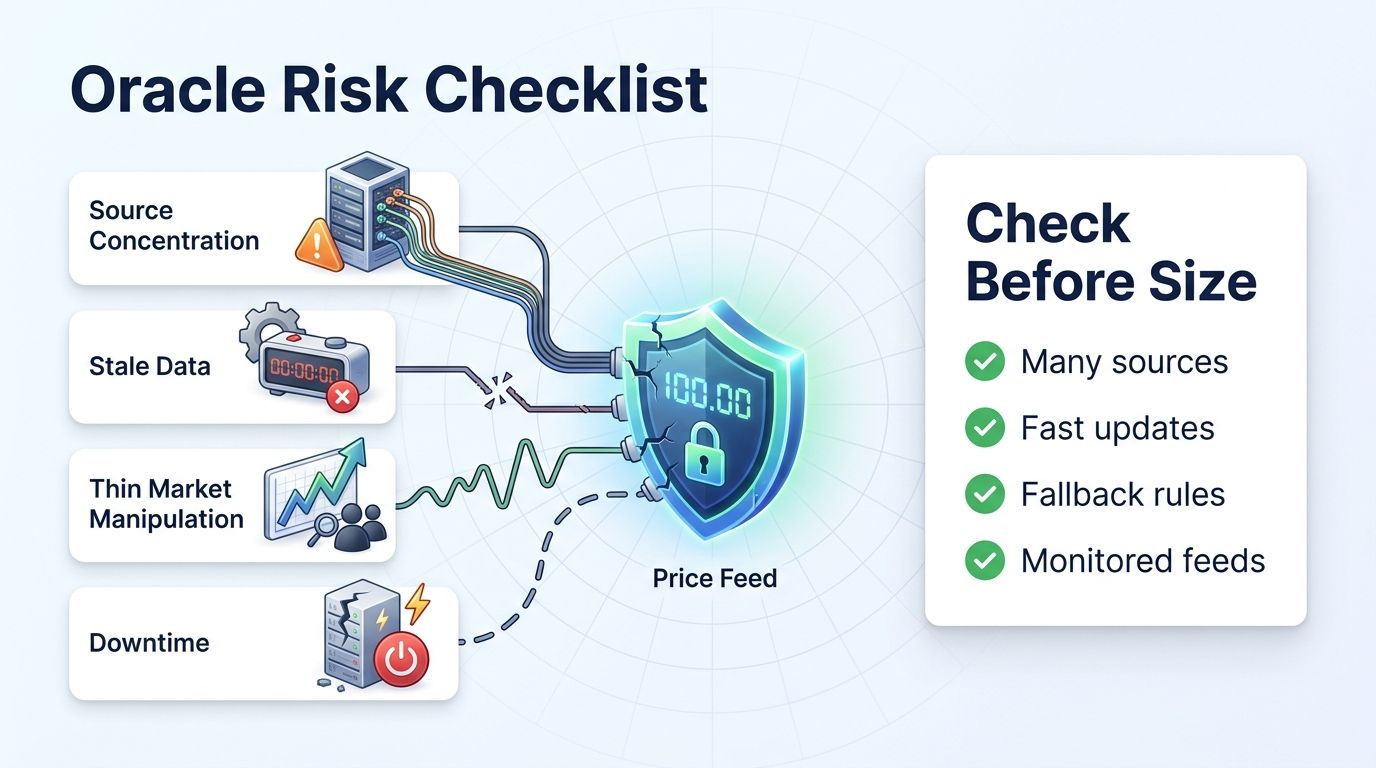
Oracle Risks Traders Should Check
The first risk is source concentration. If a feed depends on too few exchanges or venues, one abnormal market can have too much influence. The second risk is latency. A feed that updates slowly may not reflect fast crypto moves.
The third risk is manipulation. If an asset trades mostly on thin venues, attackers may try to move the reference market long enough to affect a protocol. The fourth risk is downtime. During volatility, a delayed or unavailable feed can cause unexpected protocol behavior.
Good oracle systems reduce these risks through multiple data sources, validation rules, aggregation, monitoring, and clear update logic. Traders do not need to audit every line of code, but they should know whether a protocol relies on a serious oracle design.
- Check source diversity.
- Watch update frequency.
- Review thin-asset exposure.
- Look for monitoring and fallback rules.
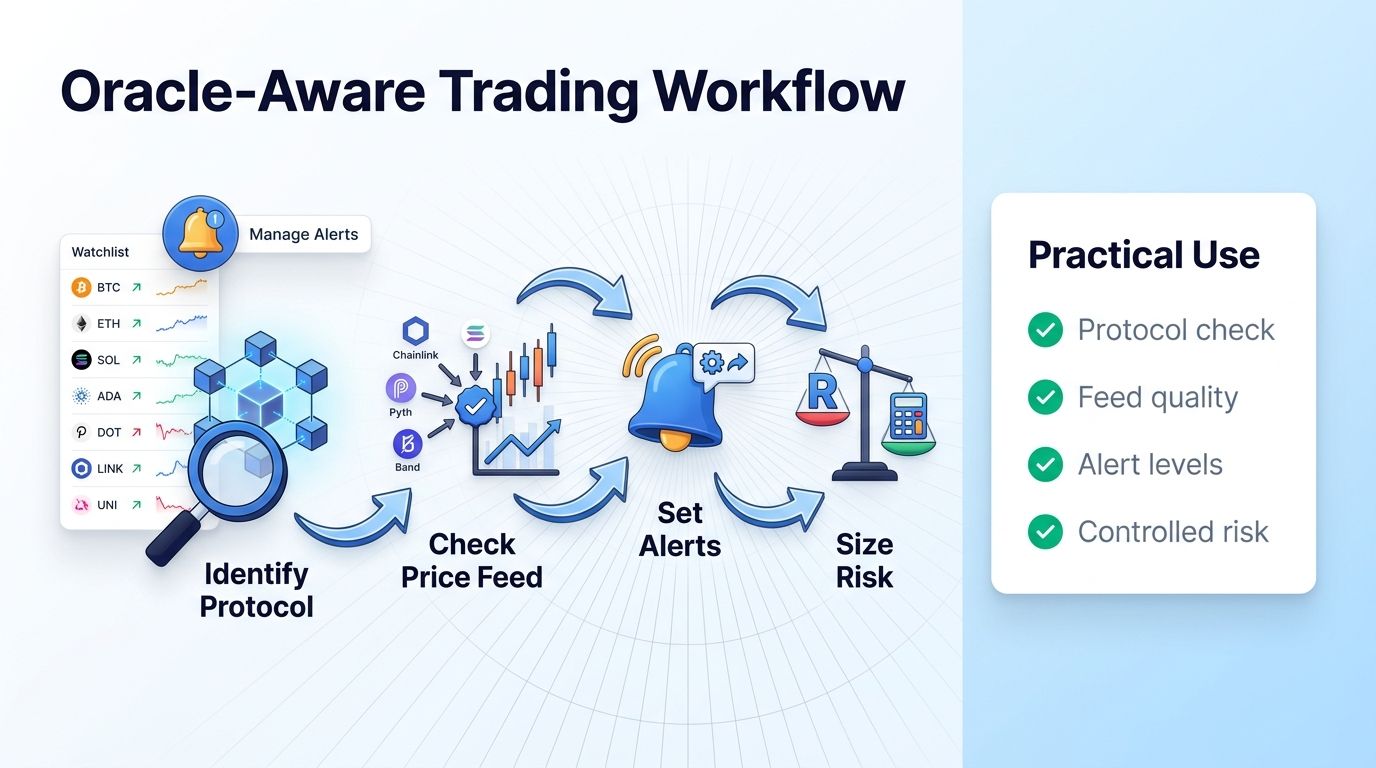
How to Use Oracle Awareness in Trading
Oracle awareness is most useful when you trade or monitor DeFi assets. Before using a lending market, leveraged protocol, synthetic asset, or RWA token, ask what price feed it uses and what happens if the feed is delayed.
For centralized exchange trading, oracle risk may not directly control your order book. But it can still affect tokens connected to DeFi protocols. A protocol incident can move the token price, change liquidity, and create sudden volatility.
In Altrady, traders can track affected assets with watchlists and price alerts. When a DeFi token depends heavily on oracle data, alerts around key price levels and news-driven volatility can help you react faster without staring at charts all day.
- Check the oracle before using DeFi leverage.
- Watch protocol tokens for oracle incidents.
- Use alerts around key risk levels.
- Avoid sizing positions from price alone.
Oracle Questions for Due Diligence
Before trusting a protocol, ask simple questions. Which oracle provider or design does it use? How many data sources feed the price? How often does the feed update? What happens when prices move quickly? Is there a pause or fallback mechanism?
These questions are especially important for small assets, new DeFi markets, and protocols that use volatile collateral. A blue-chip asset with deep market data is usually easier to price than a new token with limited venues.
The more leverage or collateral risk involved, the more important the oracle layer becomes. A trader can be right about direction and still lose if the protocol's risk system reacts to bad data.
- Identify the data source.
- Check update frequency.
- Review fallback logic.
- Match position size to data quality.
The Bottom Line on Crypto Oracles
Crypto oracles are not just developer infrastructure. They are part of the market structure that supports DeFi pricing, collateral, automated execution, and risk controls.
For traders, the lesson is simple. If a protocol relies on a price feed, understand the feed before you trust the market. A clean chart is helpful, but a clean chart cannot show every hidden dependency inside a protocol.
Oracle quality will become more important as tokenized assets, DeFi lending, and automated smart-contract markets grow. Traders who understand that layer will have a clearer view of risk.
- Oracles connect smart contracts to external data.
- Price feed quality affects DeFi safety.
- Oracle incidents can move protocol tokens.
- Risk review should include data infrastructure.
FAQ
What is a crypto oracle?
A crypto oracle is a system that delivers external data, such as market prices or reserve information, to smart contracts so they can use it in onchain logic. The oracle gathers or receives information, checks it through a defined process, and publishes the result in a format that blockchain applications can read. Without that data bridge, many DeFi contracts would not know current market conditions.
Why do smart contracts need oracles?
Smart contracts cannot directly know offchain information on their own. They can enforce rules onchain, but they need a data source when those rules depend on prices, reserves, events, or other external inputs. Oracles provide the bridge between external systems and blockchain applications, which is why oracle quality can affect collateral, liquidation, settlement, and automated trading logic.
Are crypto oracles only used for price feeds?
No. Price feeds are the most common example because DeFi lending, derivatives, and collateral systems need reliable asset prices. But oracles can also support proof of reserves, event data, weather data, randomness, cross-chain messages, identity checks, and other inputs. The basic idea is always the same: bring trusted external information into smart-contract logic.
What is oracle risk in DeFi?
Oracle risk is the chance that a protocol uses stale, manipulated, unavailable, or poorly sourced data, which can affect collateral values, liquidations, or settlement logic. It becomes more serious when the asset is thinly traded, the protocol uses leverage, or the feed depends on too few sources. Traders should treat oracle risk as part of position sizing, not only as a developer issue.
How should traders use oracle information?
Traders should treat oracle quality as part of protocol due diligence, especially before using DeFi leverage, lending markets, synthetic assets, or tokens tied to protocol risk. A practical review checks the oracle provider, source diversity, update frequency, fallback rules, and incident history. If the data layer looks fragile, the trade deserves smaller size or no exposure.